
- - -
- hours mins seconds
to get your checks by
Tuesday, Nov. 10th

 0
You have no items in your shopping cart.
Year End Check Run: Cutoff, Outstanding Items and the New Year
Last updated: November 6, 2026
The last check run of the year is treated as an ordinary run with a worse date. It is not. It carries a cutoff, a review of everything still outstanding, and two decisions about next year that are far easier to make now than in the first week of January.
Quick Summary
Work backwards from the date you want items in the mail, publish a cutoff, then spend the saved time on the outstanding list rather than on printing. For a business on the cash method, IRS guidance states that under the cash method you generally deduct expenses in the tax year in which you actually pay them, which is why the timing of the run matters beyond tidiness.
- Publish a cutoff and hold it, including for the people who ask nicely.
- Run early in the last week, not on the final afternoon.
- Review every outstanding item, which is the real year end work.
- Never write an outstanding check back to income. It is the payee's money.
- Keep the numbering continuous across the year end.
- Order stock in December, because January is when shortages show up.
The table below sets out the sequence and what each step produces.
| Step | When | What it produces |
|---|---|---|
| Publish the cutoff | Early December | A date everyone has seen in writing |
| Review outstanding items | Before the run | A chase list and a reissue list |
| Run and mail | Mid final week | Payments out with time to spare |
| Order stock and set numbering | Same week | A January that starts without a gap |
This page is general information about payment process. It is not tax, legal or accounting advice, and the timing of deductions and the unclaimed property rules that apply to you depend on your circumstances and your state, so treat your accountant as the authority.
If the run shows the stock is thin, business checks are printed to your existing layout and numbering, which is the part people forget to check until the printer is loaded.
What this guide covers
- When should the last run happen?
- How do you set a cutoff that holds?
- What do you do with outstanding checks?
- How should you void and reissue?
- What about numbering and stock?
- What does the accountant need?
- What goes wrong most often?
When should the last run happen?
Early enough that approval, signing and mailing all finish before the cutoff you set. In practice that means the middle of the last working week, because the three steps after printing are the ones that absorb the delay.
Timing also has a consequence beyond tidiness. For a business on the cash method, IRS guidance states that under the cash method you generally deduct expenses in the tax year in which you actually pay them, so a run that slides into January takes those deductions with it.
How do you work the date backwards?
- Fix the date you want items in the mail.
- Subtract signing time, including the second signature your policy requires.
- Subtract approval time for the people who will be on holiday.
- Subtract a day for exceptions, because there are always exceptions.
- Publish the result as the cutoff, in writing, to everyone who submits invoices.
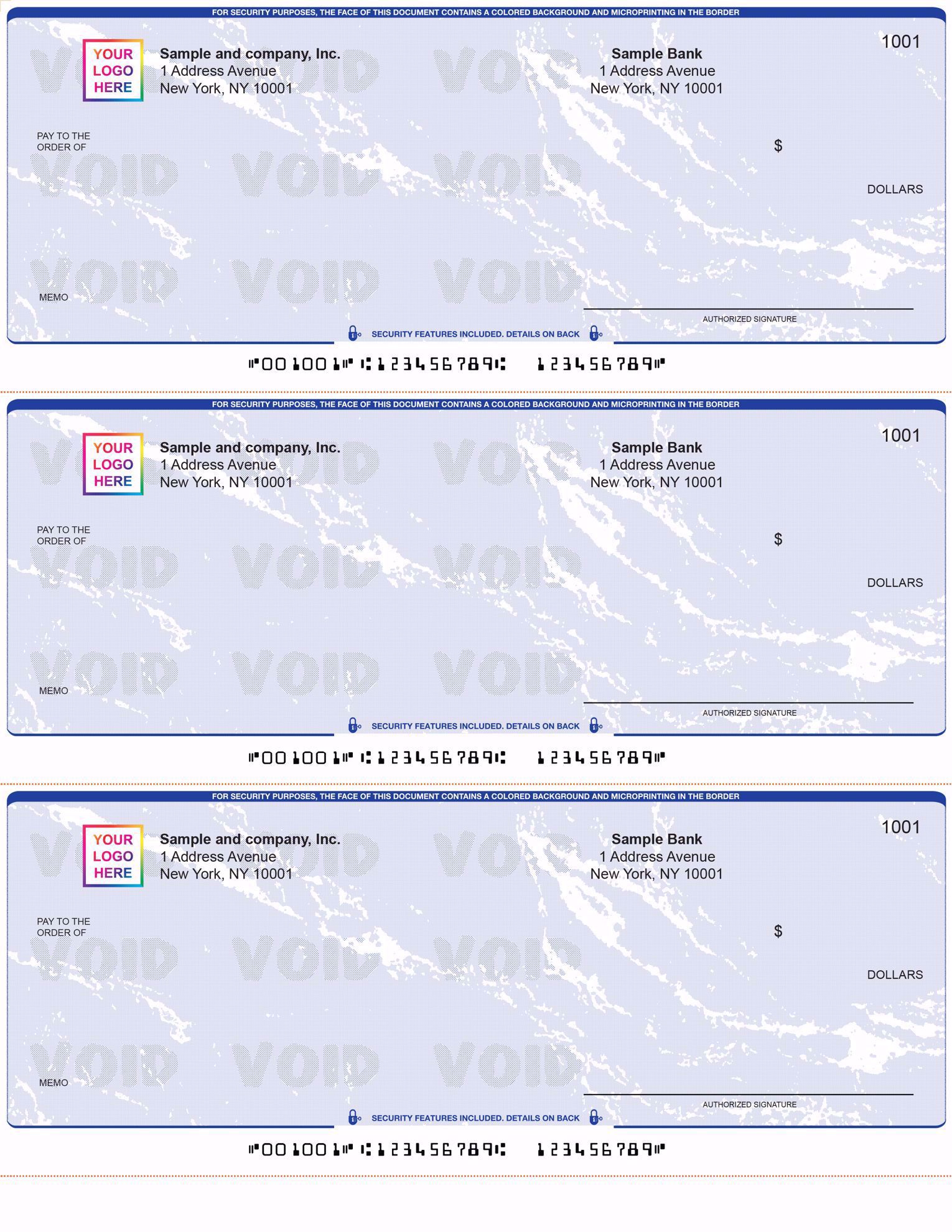
A large run goes faster on three per page stock. See three on a page accounting software checks for that format.
How do you set a cutoff that holds?
By deciding in advance what happens to anything that arrives late. A cutoff without a stated consequence is a suggestion, and the exceptions granted in the last week are what turn a clean close into a reconciliation problem.
- Say where late invoices go, which is the first run of January.
- Name one person who can grant an exception, and only one.
- Log every exception with the reason, on the day.
- Ban unrecorded manual items, which is where the register breaks.
- Repeat the cutoff twice before it arrives, not once.
The manual item is the real risk. A handwritten payment made after the run, from a book in a drawer, is the one that never reaches the register and surfaces as an unexplained debit in February.
What do you do with outstanding checks?
Treat the list as the main piece of year end work. Printing this year's payments takes an hour. Working out why a payment from April is still sitting uncashed takes longer and matters more.
- Produce the outstanding list with ages, not just a total.
- Split it by reason: recently issued, never received, disputed, unknown.
- Contact the payee on anything beyond a few months old.
- Reissue where the payee never received the item, with a stop on the first.
- Flag the genuinely unclaimed for your state's reporting process.
An outstanding check is not your money. It stays the payee's property, which is why writing the balance back to income is the one thing not to do, and why old items may become reportable unclaimed property in your state.
Our guide to how long a business check is good for covers the banking side of an aged item, and the obligation behind it outlives the bank's willingness to pay.
How should you void and reissue?
Only on confirmed facts, and always in the register first. The temptation in December is to clear the list by voiding everything old, which creates a worse problem if one of those items is still in circulation.
- Confirm the item was never presented against the bank record.
- Place a stop payment wherever there is any doubt.
- Record the void against the original number, with the date and the reason.
- Mark the physical item and keep it in the file rather than the bin.
- Issue the replacement with a new number, cross referenced to the first.
A check register is what makes that sequence provable afterwards, and check signing policy covers who may authorize a reissue in the first place.
What about numbering and stock?
Keep one continuous sequence across the year end. A gap in the numbers is how a missing item announces itself, and restarting at the first of January throws that away for the sake of tidiness nobody benefits from.
December is the right moment for the stock questions, because every answer takes longer in January.
- Count what each location actually holds, rather than what the last order was.
- Check the printed details against your current bank and address.
- Review the stub fields against what your team now needs to record.
- Confirm the next number so the new order continues the sequence.
- Order before the holidays, not in the first week back.
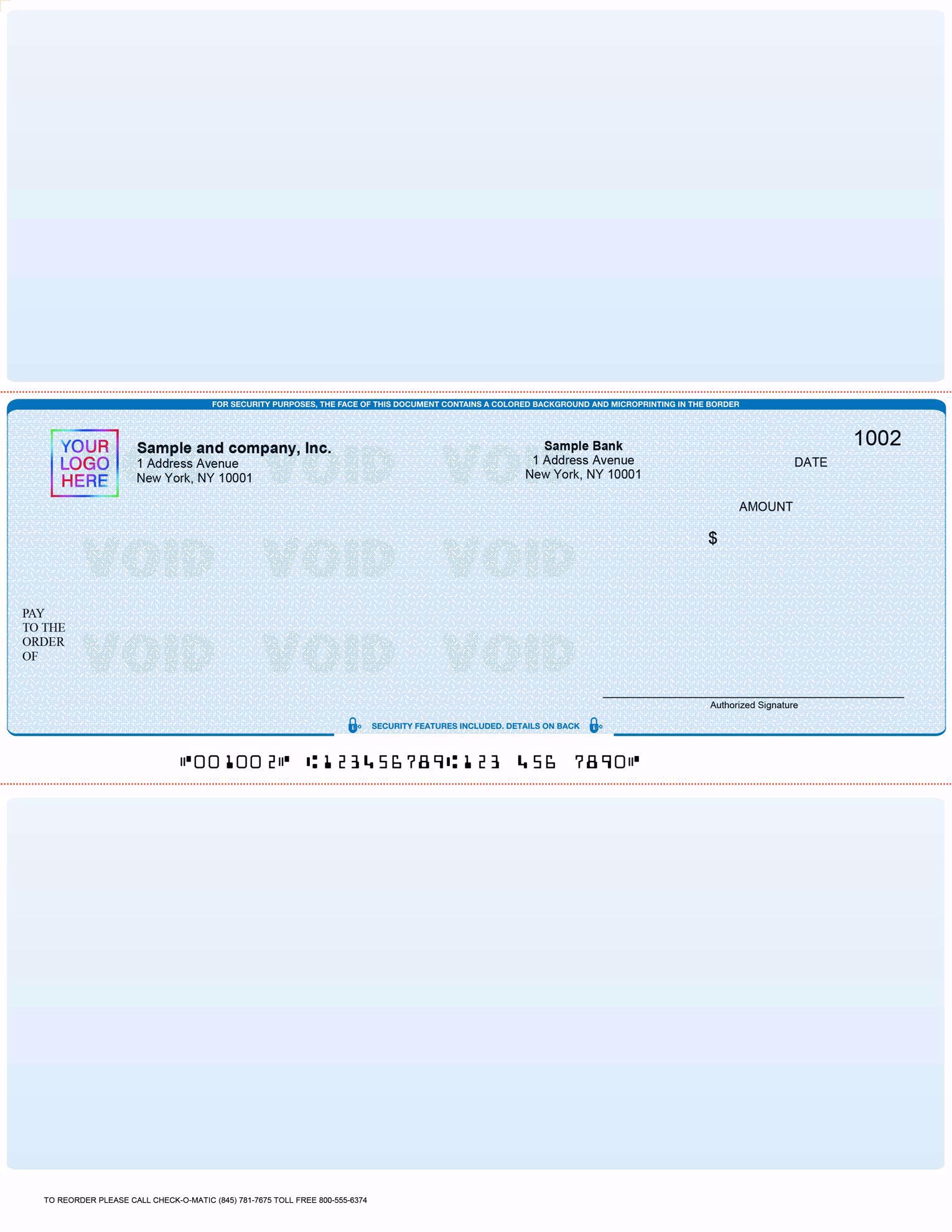
A middle position gives two record areas per payment. See check in the middle accounting software checks for that layout.
What does the accountant need?
Four documents, assembled while the detail is fresh. Handing these over in January, rather than answering questions about them in March, is the entire payoff for the work above.
- The register for the full year, complete and in sequence.
- The outstanding list at the cutoff, with ages and reasons.
- Voided and stopped items, with references and dates.
- The bank reconciliation, tying the register to the statement.
Keep a note of anything you could not resolve. An unexplained item that is flagged is a question, and the same item unflagged is a finding.
What goes wrong most often?
The same five things, in businesses of every size. None of them are accounting errors. All of them are process gaps that only appear in the one week of the year when half the approvers are away.
| What happens | Why it hurts | The fix |
|---|---|---|
| A manual item written after the run | Never reaches the register | Lock the manual book after the cutoff |
| Old items voided in bulk | One may still be in circulation | Confirm each one, stop where unsure |
| Unclaimed amounts taken to income | The money is not yours | Hold, notify, then report to the state |
| Numbering restarted in January | A missing item stops being visible | Continue the sequence across the year |
| Stock ordered in January | A run waits on delivery | Count the cupboard in early December |
Who should hold the blank stock over the holidays?
Whoever normally does, under the same lock, and not the person covering for them. A quiet building with unusual access patterns is exactly the moment to leave the custody arrangement alone rather than improvise one.
Count the unused stock before the break and again on the first day back, and write both counts down. It takes two minutes and it is the only way to know that nothing moved while the office was empty.
Related reading
- Check register covers the record the whole close depends on.
- How long is a business check good for covers aged and stale items.
- Check signing policy covers approvals during a holiday period.
- Check washing covers protecting a large batch in the mail.
What to do next
Put the cutoff date in writing this week and send it to everyone who submits invoices. Then produce the outstanding list with ages, because that one report decides how much work the close actually is.
Then check the stock cupboard. Business checks are printed to continue your existing numbering, and high security business checks suit the larger payments a year end run tends to contain.
About the Author
December is our busiest month, and the orders tell the same story every year. Somebody has opened the last box, found four sheets in it, and realized the next payment run is on Thursday.
The deduction timing point here follows IRS guidance on accounting periods and methods. When an expense falls, and what your state expects for unclaimed property, are questions for your accountant and your state administrator.