
- - -
- hours mins seconds
to get your checks by
Tomorrow, Nov. 5th

 0
You have no items in your shopping cart.
Wire Transfer vs Check: Reversibility, Speed and Records
Last updated: November 4, 2026
Most comparisons of these two payment methods argue about speed. Speed is the easy part. The difference that decides real payments is what happens on the morning you discover the payment was wrong.
Quick Summary
A check stays under your control until the bank pays it, and you can stop payment for six months. A wire is a payment order that cannot be canceled or amended once the receiving bank has accepted it, unless that bank agrees. That asymmetry, not speed, is the reason to pick one over the other.
- Stop payment lasts six months under the Uniform Commercial Code.
- An oral stop lapses in 14 calendar days unless confirmed in a record.
- You carry the burden of proving loss if a stopped item gets paid anyway.
- An accepted wire needs the receiving bank's agreement before it can be canceled.
- Wired funds are available next business day after the bank receives the payment.
- Only a check stub carries invoice detail that travels with the payment.
Side by side, the two methods differ on four things that matter to a finance team.
| Factor | Business check | Wire transfer |
|---|---|---|
| Can you pull it back | Stop payment while unpaid, effective six months | Not once accepted, unless the receiving bank agrees |
| Speed to the recipient | Mail plus deposit plus availability | Available next business day after receipt |
| Detail that travels | Stub listing invoices and references | Short reference field, often truncated |
| Paper trail | Numbered item, endorsement, image | Bank confirmation and reference number |
This page is general information about payment methods. It is not legal or banking advice, and your bank's agreement and your state's version of the commercial code govern your position, so treat your bank and your counsel as the authority.
If the detail that travels with a payment matters to you, business checks can be printed with a stub sized for the references your customers ask for.
What this guide covers
- What is the real difference between the two?
- Can you cancel a wire transfer?
- Can you stop payment on a check?
- When does the money become available?
- Which method suits which payment?
- What about remittance detail and records?
What is the real difference between the two?
Control over the payment after it leaves. A check is an instruction you can withdraw while the item is unpaid. A wire is a payment order designed to settle, and the rules that govern it are built around finality rather than second thoughts.
That design difference is deliberate. A funds transfer system has to be able to treat a settled payment as settled, otherwise no recipient could rely on money arriving. The cost of that reliability falls on the sender.
Why does finality matter in practice?
Because the error you need protection against is almost never the bank's. It is a wrong account number, a duplicate payment, a disputed delivery, or an instruction that came from someone impersonating a supplier. All four are recoverable on a check that has not yet been paid.
Can you cancel a wire transfer?
Only in narrow circumstances, and mostly before acceptance. The funds transfer article of the Uniform Commercial Code says that once an order has been accepted, cancellation or amendment of the order is not effective unless the receiving bank agrees, though a funds transfer system rule may also permit it.
What if you catch it quickly?
Timing is the whole question. The same article makes a cancellation or amendment effective if notice is received at a time and in a manner affording the receiving bank a reasonable opportunity to act before it accepts the order. In practice that is a very short window.
- Call the bank first, because the clock is running against acceptance.
- Expect a security procedure, since a communication is not effective unless verified under it or agreed by the bank.
- Do not rely on an unaccepted order lapsing. An unaccepted order is canceled by operation of law at the close of the fifth funds transfer business day, which is far too slow to help.
- Ask the bank to contact the receiving institution, which is a request rather than a right.
Plan on recovery being a negotiation. A wire sent to the wrong party is recovered by cooperation and goodwill, not by a form.
Can you stop payment on a check?
Yes, while the item is unpaid. The Uniform Commercial Code says a customer may stop payment of any item drawn on the customer's account or close the account, as long as the order reaches the bank in a way that gives it a chance to act before it pays the item.
Two numbers in that section decide how useful the right is. A stop payment order is effective for six months. An oral order lapses after 14 calendar days if it was not confirmed in a record within that period.
Numbered stock is what makes a stop payment request precise. See blank checks on the middle for that layout.
What do you have to prove?
Your loss, if the bank pays the item anyway. The same section puts the burden of establishing the fact and amount of loss on the customer, which turns your own records into the evidence.
- Confirm the stop in writing the same day you call.
- Record the reference number the bank gives you.
- Note the check number, amount and payee exactly as issued.
- Keep the invoice or reason that made you stop it.
- Diary the six month expiry so a long running dispute does not outlive the order.
Our guide to the check register covers where those details belong, and check signing policy covers who may authorize a stop in the first place.
When does the money become available?
For an electronic payment, federal availability rules require a bank to make the funds available for withdrawal no later than the business day after the banking day on which it received the payment. That sounds immediate, and the definition of received is what makes it less so.
The rule says an electronic payment is received when the receiving bank has both payment in actually and finally collected funds and information on the account and amount to be credited. Missing or mismatched account information delays the credit even where the money has arrived.
Do any checks get the same treatment?
Some do. The same availability rules give next day availability to listed categories, including Treasury checks, Postal Service money orders, Federal Reserve and Federal Home Loan Bank checks, certain state and local government checks, cashier's, certified and teller's checks, same bank branch checks and a limited amount per banking day.
The ordinary business check is not on that list, and several of those categories move to the second business day when the deposit is not made in person.
Which method suits which payment?
Choose by how much you would mind being unable to reverse the payment. That single question sorts almost every case a finance team meets.
| Payment | Usual choice | Why |
|---|---|---|
| Routine supplier invoices | Check | Reversible while unpaid and carries invoice detail |
| A closing or title payment | Wire | Deadline is immovable and the counterparty is known |
| First payment to a new vendor | Check | Keeps a route back if the details prove wrong |
| Release of goods held at a port | Wire | Settlement has to be provable within the day |
| Disputed or part accepted work | Check | Leaves the stop payment right intact |
Those are defaults rather than rules. A supplier who will only release stock against same day funds has settled the question for you.
What about remittance detail and records?
This is where the humble stub still wins. A check can carry a list of the invoices a payment settles, printed in a space the recipient's accounts team actually reads, while a wire usually carries a short reference field that gets truncated somewhere along the route.
- Send remittance detail separately for wires, by email on the same day.
- Keep the bank confirmation reference against the invoice in your ledger.
- Seal check stubs out of view because they show payment detail.
- Reconcile both methods the same week, not at month end.
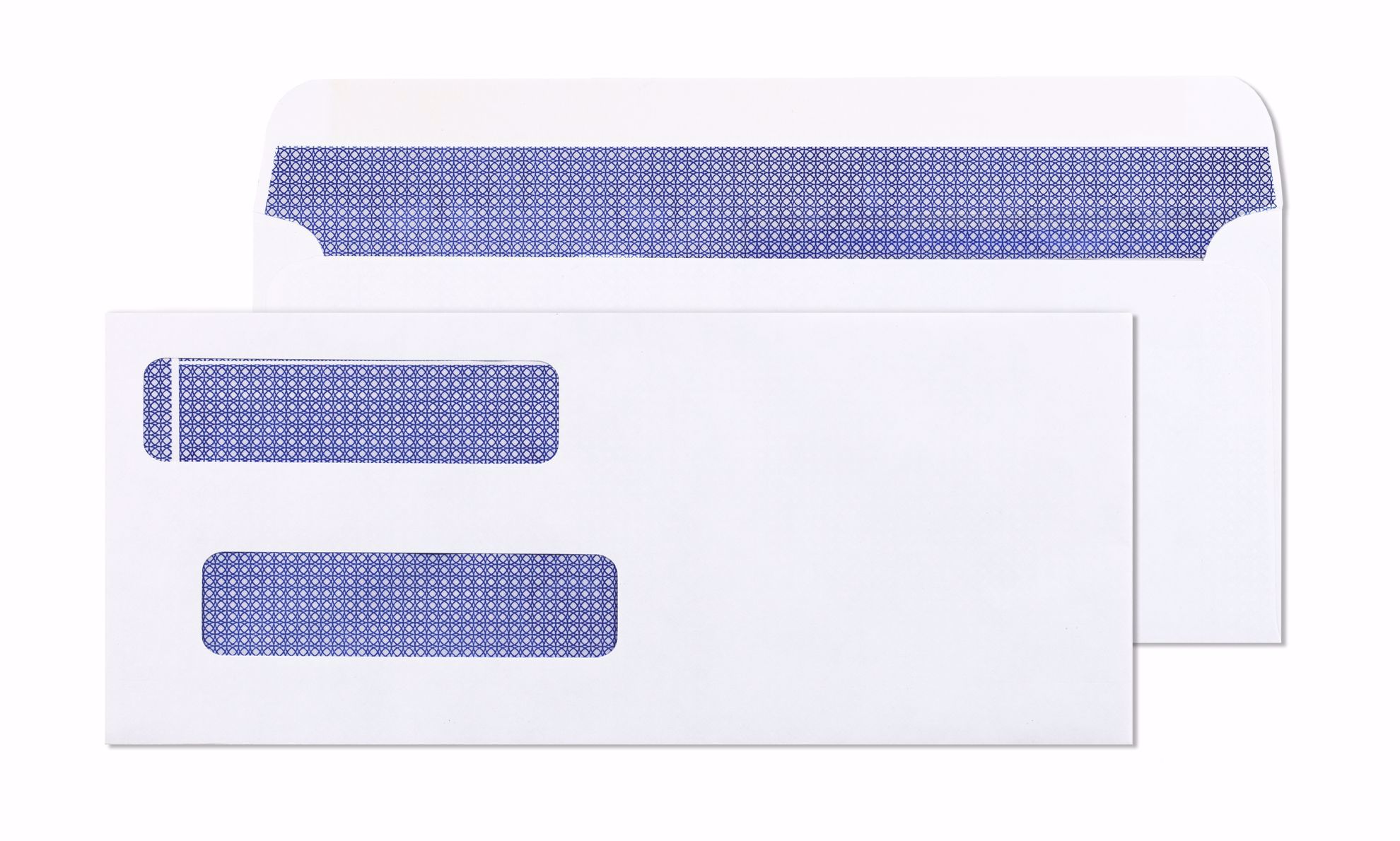
See double window envelopes for the format that shows the addresses and nothing else.
Related reading
- Check register covers recording stops, voids and reissues.
- How long is a business check good for covers stale dating.
- High security business checks covers stock for larger payments.
- Check washing covers protecting a mailed payment.
What to do next
Write down which payments your business sends by wire and ask one question of each: would we accept this money being unrecoverable. Anything that fails that test belongs on a reversible instrument until the counterparty is beyond doubt.
Then make sure the reversible option is set up properly. Business checks are printed to your layout and numbering, and high security business checks add tamper resistance where amounts are large.
About the Author
We print check stock for American businesses that still want a route back when a payment goes wrong. Customers who have lost a wire tend to order the next batch with a wider stub and a second signature line, which tells you what the experience teaches.
The cancellation points here follow the funds transfer article of the Uniform Commercial Code, the stop payment points follow its article on bank deposits and collections, and the availability points follow the federal funds availability regulation. Your bank's agreement and your state's enactment govern your own position.