
- - -
- hours mins seconds
to get your checks by
Monday, Oct. 26th

 0
You have no items in your shopping cart.
Trust Account Checks: What the Rules Require
Last updated: October 23, 2026
Guides to trust accounting explain the ledgers and the monthly reconciliation. Almost none of them tell you what has to be printed on the check itself, which is the part a compliance reviewer can see in seconds.
Quick Summary
Trust account checks are ordinary business checks held to stricter rules, because the money in the account belongs to someone else. State rules on safekeeping client property decide how the check must be titled, who signs it, what the memo line records, and how long the paper trail is kept.
- The check has to read as a trust check. Wisconsin's rule requires wording such as Trust Account or Client Account on the face, with the firm name and address and the account name in the upper left corner.
- An acronym on its own may not be enough. One rule states that an acronym without further elaboration does not clearly designate a client or trust account.
- Starter checks are ruled out. The same Wisconsin rule says starter checks are not acceptable for an IOLTA account, and a voided check gets reviewed to confirm the format.
- A lawyer signs every check. Minnesota's lawyer responsibility board requires at least one lawyer signature on every trust check, whatever the amount.
- The memo line is a record, not a courtesy. It has to identify the client matter and the reason for the disbursement.
- No cash, ever. Disbursement is by check to a named payee or an authorized transfer, not by a check payable to cash and not at an ATM.
The table below maps each recurring rule to the part of the check or stationery that has to carry it. Every row is explained further down.
| What the rules ask for | Where it lives on the check |
|---|---|
| The account is identifiable as a trust account | Printed account name line, spelled out, not an acronym |
| Every disbursement is traceable | Pre-printed sequential number, issued in order |
| The firm behind the account is named | Firm name and address in the upper left corner |
| Each payment names a client matter and a purpose | Memo line, plus a voucher stub where there is more to record |
| A lawyer authorizes the payment | Signature line, with a second line where the firm requires two |
| Trust and operating payments never get mixed up | A separate book, in a different color and style, stored apart |
What follows is background on how trust checks and their records work. It is not legal or accounting advice. Safekeeping rules sit in each state's own code of professional conduct, and those rules govern your firm, so put the detail past your state bar and your accountant before you approve any order.
Setting up a new account? Business checks can be printed to any of the specifications below, with production starting the day the proof is approved.
What this guide covers
- What is a trust account check?
- Can you write checks from a trust account?
- What has to be printed on a trust account check?
- Why does the memo line matter so much?
- Who has to sign a trust account check?
- What checks can be deposited into a trust account?
- How do you keep trust and operating checks apart?
- What records do the checks have to support?
- Do trust account checks expire?
- What should you specify when you order?
What is a trust account check?
A trust account check is a check drawn on an account that holds money belonging to someone other than the business writing the check. In a law firm that money is client money: settlement proceeds, advance fees that have not been earned yet, and funds held for court costs. The account is titled to show the funds are held in a fiduciary capacity, and the check inherits that title.
That single fact changes everything about the document. An ordinary business check only has to instruct the bank. A trust check has to prove, months later, whose money moved and why.
Is a trust account check the same as an escrow check?
In practice they are the same idea under different labels. Lawyers usually say trust account, title companies and property managers usually say escrow account, and both describe an account holding other people's money with the same duty to keep it separate and traceable. The wording printed on the check follows whichever term the governing rules use.
What does IOLTA mean on a trust account?
IOLTA stands for Interest on Lawyers Trust Accounts. It is the pooled account used for client funds that are too small or held too briefly to earn interest for the client, with the interest going to the state program instead. Funds large enough to earn for a single client go in a separate interest bearing account, which Minnesota's board says should be titled as a trust account for that named client.
The distinction matters when you order, because the two accounts need separate check stock with separate numbering.
Can you write checks from a trust account?
Yes, to a named payee. Trust rules allow money to leave the account by check made out to a person or a company, or by an authorized bank transfer. What they rule out is any route that removes the name of the recipient from the record.
- No checks payable to cash. New Mexico's trust account manual treats a check written to cash as evidence of commingling or worse.
- No counter or ATM withdrawals. New Mexico's manual also states a lawyer may not withdraw cash from the trust account at a bank counter or at an ATM.
- No paying firm bills from trust. Earned fees move to the operating account first, by check or transfer, and the firm pays its own creditors from there.
- No disbursing against uncleared funds. Deposited items have to clear before a check is written against them.
Can a trust account have a debit card?
Treat it as off limits. Guidance that bars cash withdrawals at a counter or an ATM leaves a card with nothing permitted to do, and a card creates a payment with no payee name, no signature and no memo line. Minnesota's board also states that a non-lawyer may not withdraw client funds at all, which a shared card would make impossible to control.
Can you write a trust check before the deposit clears?
No, and the usual workarounds are specifically rejected. Minnesota's board says a post-dated check or an instruction not to cash it yet is not an acceptable substitute for waiting for funds to clear. The same guidance notes local items generally take about three business days, while out of town items can take ten days or more.
Our guide to how long it takes for a check to clear covers what drives those timings on the banking side.
What has to be printed on a trust account check?
More than most firms realize. Wisconsin's supreme court rule on trust property, SCR 20:1.15, sets out the check format directly: trust account checks must be pre-printed and pre-numbered, must show the lawyer or firm name and address and the account name in the upper left corner, must include words such as Client Account or Trust Account, and must carry a memo line that identifies the client matter and the reason for the disbursement.
That same Wisconsin rule also closes the shortcut new firms reach for. It states that starter checks are not acceptable for an IOLTA account, and the regulator reviews a voided check from the printed stock to confirm the formatting is right.
Is writing IOLTA on the check enough?
Not everywhere, and this is where firms get caught. Wisconsin's rule says an acronym such as IOLTA, used without further elaboration, does not clearly designate a client or trust account. New Jersey's IOLTA program asks for the opposite treatment: it asks that the word IOLTA not appear on checks or deposit slips at all, and that the phrase Attorney Trust Account be used instead, preferably on the second line.
The practical answer is to spell it out. A printed line reading Attorney Trust Account or Client Trust Account satisfies the rule that wants elaboration and the program that wants the acronym left off. Check your own state's wording before you approve the proof, because this is a detail the printer cannot guess for you.
| Printed element | What the rules say | Safe approach when ordering |
|---|---|---|
| Account name | Must identify the account as a client or trust account; an acronym alone may not qualify | Print the phrase in full on its own line |
| Firm name and address | Required in the upper left corner alongside the account name | Use the firm's registered name, not a trading shorthand |
| Check number | Pre-printed and pre-numbered; canceled checks numbered consecutively | Start a distinct number range for each trust account |
| Memo line | Must identify the client matter and the reason for the payment | Choose a format with a full width memo line or a voucher stub |
| Signature lines | A lawyer must sign; some firms require a second signature | Order two lines if your written plan calls for two |
| Starter stock | Not acceptable on an IOLTA account | Order printed stock before the account receives client funds |
Security printing sits alongside those requirements rather than replacing them. Our guide to blank check security features explains what each feature does, and high security business checks covers the stock that carries them.
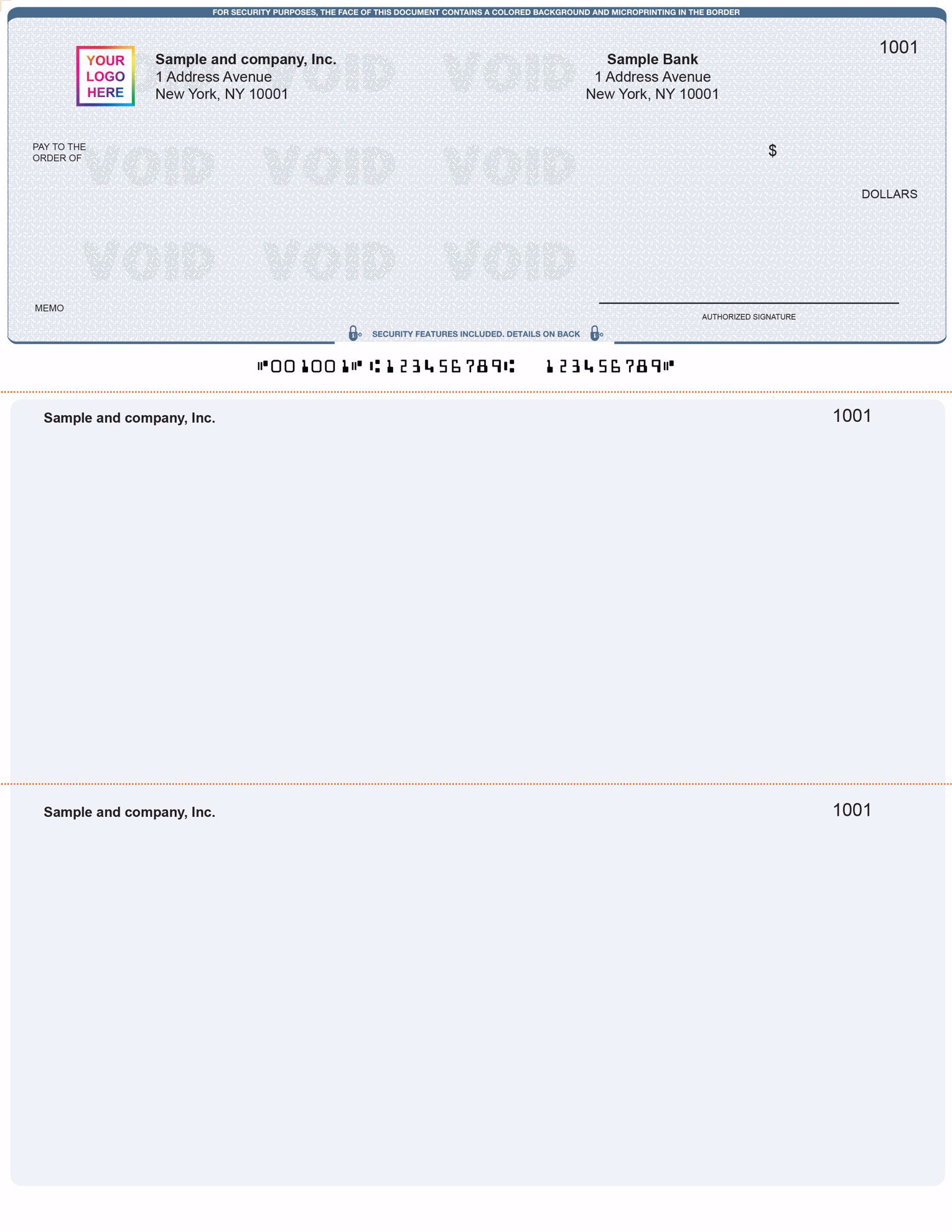
A voucher layout like this one puts the recorded detail next to the payment. See computer checks for the printed formats, or check position guide if you are matching stock to accounting software.
Why does the memo line matter so much?
Because on a trust check the memo line is part of the required record, not a note to yourself. Wisconsin's rule requires it to identify the client matter and the reason for the disbursement. Florida's rule, 5-1.2, requires the canceled check to identify the client or case by name or number in the memo area, and requires the disbursements journal to carry the reason for every entry.
Left blank, the check proves money moved and nothing else. A reviewer then has to take your word for whose money it was.
- Name the matter, not the person. A file number or matter name survives a client with several active files.
- Say what the payment was for. Filing fee, expert invoice, settlement distribution, refund of unearned fees.
- Use the stub when the memo line runs out. A voucher stub has room for the matter, the invoice reference and the approval.
- Never leave the stub blank. New Mexico's manual lists blank or incomplete check stubs as a warning sign of possible misconduct.
Who has to sign a trust account check?
A lawyer, on every check. Minnesota's board states that at least one lawyer must sign a trust account check regardless of the amount, and that a non-lawyer may serve as a second signatory only where the firm requires two signatures. The same guidance states a non-lawyer may not withdraw client funds from the account.
New Mexico goes further on who may be on the account at all. Its rule requires an attorney licensed in that state to be a signatory, and bars non-lawyers from being signatories, with the firm's written trust account plan naming everyone who has signing authority.
- Write the plan around roles. A plan built on job titles survives a change of managing partner.
- Keep the signer list short. Every extra signer is another person whose signature a reviewer has to match.
- Split assembling from authorizing. The person who pulls the invoice and fills the check is not the person whose signature releases it.
- Route the statement elsewhere. Give the unopened bank statement to someone who does not write trust checks.
Our guides to check signing policy and who signs a business check cover how to write that down and how the bank records who may draw on the account.
What checks can be deposited into a trust account?
Only money that belongs to someone else. Client funds go in: settlement checks, advance fees that have not been earned, and money held for court or filing costs. Firm money stays out, and New Mexico's manual lists an operating or personal account check written into the trust account as a warning sign.
When a single check mixes earned and unearned money, the whole item goes into trust first and the earned portion is moved out afterwards by a check or transfer payable to the firm. Paying the firm's share straight out of trust to a third party skips the step that creates the record.
What does the deposit side of the paper trail need?
Deposit records are part of the required file, not an afterthought. New Mexico's manual requires duplicate deposit slips to be kept for each trust account, and Florida's rule requires deposit slips plus a cash receipts record that identifies the date, the source and the client or matter.
Wisconsin's investigation findings bear this out in a mundane way. Using the wrong deposit slip, or failing to endorse a deposit item, is logged as a law office error rather than a bank error, so it lands on the firm.
- Order deposit slips with the same trust wording as the checks, so a slip cannot be used on the wrong account by accident.
- Use duplicate slips so the firm keeps a copy without anyone transcribing it.
- Endorse every item the same way, with a stamp rather than a hand written line.
- Record the source on the slip, because a bank statement line will not tell you later.
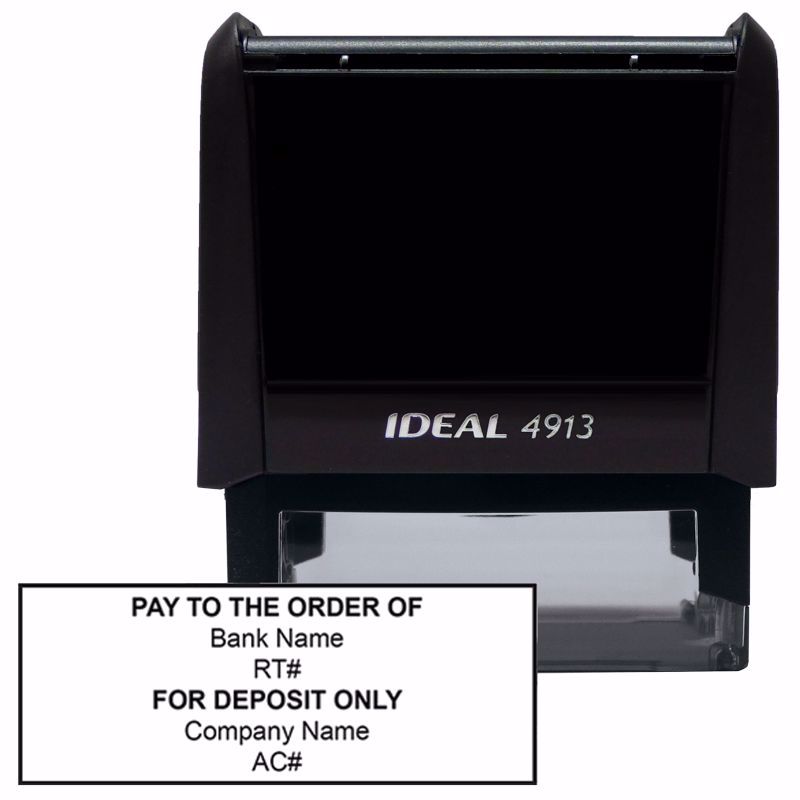
See endorsement stamp and deposit stamp for checks for the stamp options, how to endorse a check for the wording, and how to fill out a business deposit slip for the slip itself.
How do you keep trust and operating checks apart?
Make them impossible to confuse at arm's length. The cheapest control in trust accounting is visual: order the trust book in a different color and style from the operating book, and store the two checkbooks in different places in the office so nobody reaches for the wrong one in a hurry.
A single check written from the wrong book is not a clerical slip. It is either a firm payment made with client money or client money paid out with no trust record, and both are the findings that trigger a review.
- Different color and style for trust stock, so the mistake is visible before the check is signed.
- Separate number ranges for each account, logged when the stock arrives.
- Separate storage, locked, with one named custodian and a deputy.
- Separate deposit slips and stamps, so the deposit side cannot cross over either.
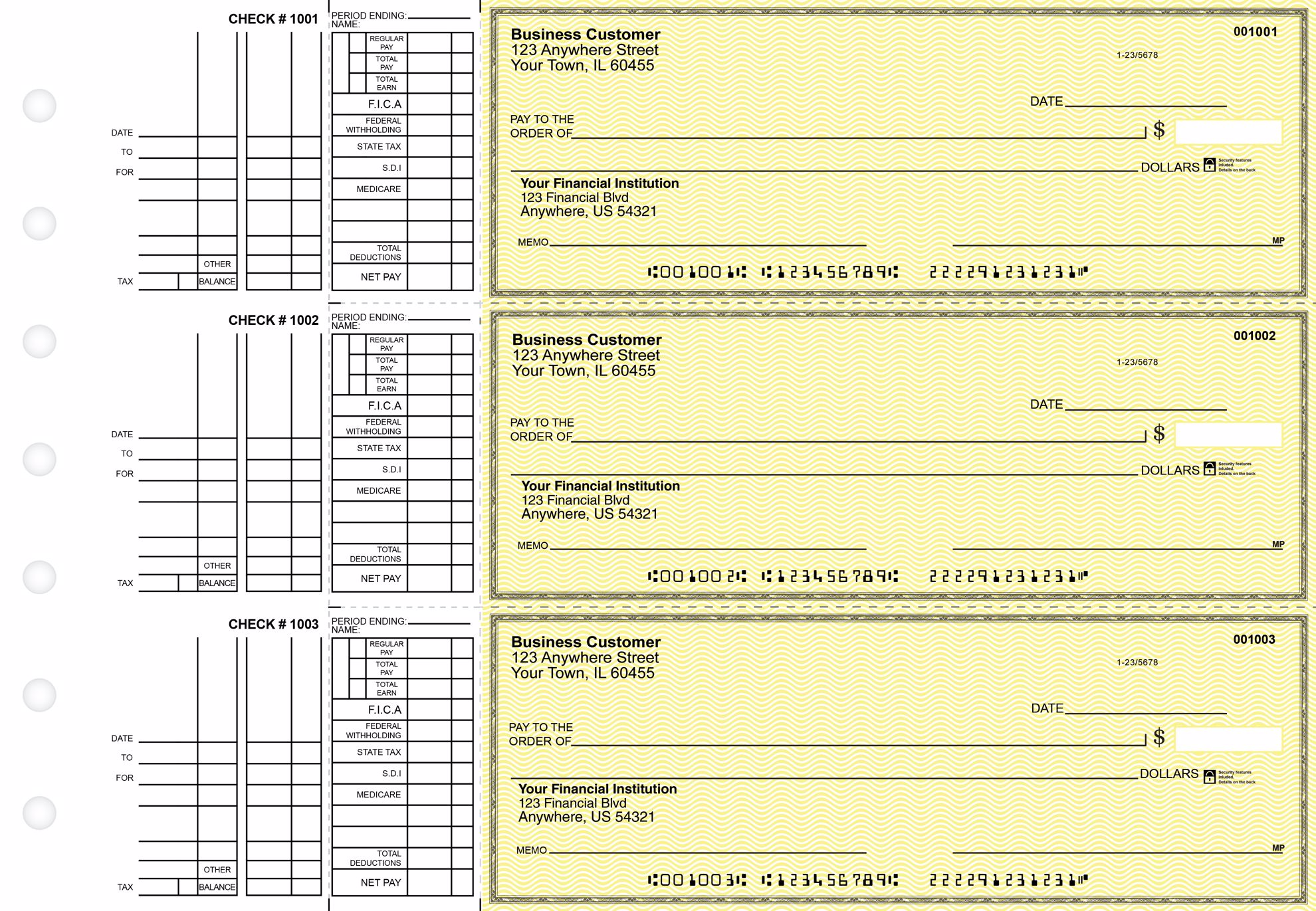
Firms that write trust checks by hand usually want a bound book with a duplicate record. See manual business checks for those formats, or multi purpose business checks if some are hand written and the rest are printed.
What records do the checks have to support?
The check is one piece of a file that has to balance three ways. Trust rules ask for a running record of money in and out, a separate ledger for every client, and a monthly reconciliation that ties both to the bank. The check, the stub and the deposit slip are what make those entries provable.
- A receipts and disbursements journal with the date, the client or matter, the check number and the reason for each entry.
- A separate ledger per client or matter showing receipts, disbursements and the unexpended balance.
- Bank statements and canceled check copies for every trust account.
- Duplicate deposit slips and the checkbook or stubs themselves.
- A written monthly reconciliation, kept rather than discarded once it balances.
What is a three way reconciliation?
A three way reconciliation compares three figures that must agree: the bank balance, the firm's own trust ledger or checkbook balance, and the total of all individual client ledger balances. New Mexico's rule requires a written reconciliation of those three at least monthly. Florida's rule requires a monthly reconciliation of the bank balance against the checkbook and journal, listing deposits in transit and outstanding checks by date and number, then a monthly comparison of that reconciled total against the total of the client ledgers.
Listing outstanding checks by number is where the printed sequence earns its place. A check number that cannot be accounted for is the one thing a reconciliation cannot explain away.
How long must trust account records be kept?
Longer than most firms expect, and the period varies by state. New Mexico requires records to be kept for five years after the representation ends, and to be produced within ten days of a request. Florida requires reconciliations and listings to be kept for at least six years, and trust records for six years after the final conclusion of each representation.
A check register is the running list that turns a drawer of printed stock into a sequence you can defend.
Does an annual filing apply as well?
In some states, yes. California requires attorneys each year to register every client trust account that was open during the reporting period, complete a self assessment and certify compliance with the safekeeping rules. Florida's rule requires a detailed annual listing of the unexpended balance held for each client or matter.
Do trust account checks expire?
Six months is the line the banking code draws. Past that date the bank may turn the item away, and it may equally honor it in good faith and charge the account, so neither result is something a firm can plan around. Certified checks sit outside the rule, because the bank that certified the item is the one on the hook.
Bar guidance is often stricter than the banking rule. Minnesota's board treats a trust check as potentially stale after about 90 days and asks the firm to investigate uncashed checks, then reissue or write to the client rather than leave the item outstanding.
- Review outstanding checks every month as part of the reconciliation, not once a year.
- Contact the payee before the item goes stale, while the address you hold is still current.
- Void and reissue rather than re-date. A re-dated check breaks the link to the original entry.
- Keep the void, marked and filed in number order, so the sequence stays complete.
See how long a business check is good for for the banking side, and what is a voided check for handling the void itself.
What should you specify when you order trust account checks?
Decide these eight things before you approve a proof. Each one maps to a rule above, and each one is far harder to fix after the stock is printed and the numbering has started.
| Decision | What to confirm before printing |
|---|---|
| Account wording | The exact phrase your state expects, spelled out rather than abbreviated |
| Firm block | Registered firm name and address, positioned upper left with the account name |
| Starting number | A range that does not overlap the operating account or any earlier trust stock |
| Format | Voucher stub for software printing, or a bound book with duplicates for hand writing |
| Signature lines | One or two, matching the written trust account plan |
| Color and style | Visibly different from the operating stock already in the office |
| Deposit slips and stamp | Duplicate slips carrying the same trust wording, plus an endorsement stamp |
| Timing | Printed stock in hand before the account receives client money |
You do not have to order trust stock through the bank that holds the account. Our guide to ordering checks outside your bank explains what the printer needs instead, and ordering business checks for the first time walks through a first order end to end.
Related reading
- Types of business checks sets the voucher layouts named above beside every other format.
- Business checks vs personal checks covers why a firm account needs printed business stock.
- Check signing policy covers the written document your firm adopts.
- Check register shows how to log each issued number so a gap is obvious.
What to do next
Start by reading your own state's safekeeping rule for the exact account wording, then pull a blank check from your current trust book and compare it line by line against the table above. Most firms find one or two gaps, usually the memo line or the account name.
Then bring the stock up to the rule. The account wording, the starting number and the number of signature lines are all specified by you on a business checks order, and high security business checks put tamper resistant stock under the same imprint. Production runs the same day, with delivery the next.
About the Author
Checks Next Day is a U.S. check printer whose daily work includes trust and escrow stock for law firms, title companies and property managers. Three imprint questions reach us at proof stage more than any others: how to word the account line, where to start the numbering, and whether one signature line is enough.
This guide was built around those three questions and checked against published state rules on safekeeping client property. Those rules are written state by state, so treat your own bar's wording as the one that counts.