- - -
- hours mins seconds
to get your checks by
Tomorrow, Nov. 25th

 0
You have no items in your shopping cart.
Third Party Check: How to Sign One Over, Deposit or Accept It
Last updated: November 24, 2026
Someone hands you a check that was written to them, signs the back, and tells you it is now yours. Whether you can actually deposit it depends far less on that signature than on your bank's policy, the deposit channel you use, and how the original check was made out.
This guide explains how these checks work, how to sign a check over correctly, why so many banks and apps refuse them, and how a business should decide whether to take one at all.
Quick Summary
A third party check is a check the original payee signs over to someone else, who then tries to deposit or cash it. It is legal under the Uniform Commercial Code, which calls this a special indorsement, but no bank is required to accept one. Federal banking guidance says each bank sets its own policy and can insist that the original payee be present.
- It takes two signatures. The original payee writes "Pay to the order of" plus the new payee's name and signs, then the new payee endorses it again.
- Acceptance is the bank's choice. No federal rule obliges a bank to take one, so call ahead.
- Mobile apps usually reject them. Most apps require the endorsement of the payee named on the front plus "For mobile deposit only".
- If it bounces, the depositor pays. The bank can reverse the funds and the new payee has to pursue the person who wrote the check.
- "And" means both must sign. A check payable to two names joined by "and" needs both endorsements before anyone can sign it over.
- A reissued check is usually better. Asking the writer for a new check in your name avoids almost every problem below.
Here is how the most common situations tend to play out.
| Situation | Who must sign | Where it is most likely to work | Risk to the person receiving it |
|---|---|---|---|
| Signed over, both people at a branch with ID | Original payee, then new payee | A branch whose policy allows it | Medium |
| Signed over, deposited in a mobile app | Both, plus the app's wording | Often rejected | High, rejection or reversal |
| Payable to "A and B" | Both payees | A branch | Medium |
| Payable to "A or B" | Either payee | Any channel the bank allows | Low |
| From a stranger who wants money sent back | Not applicable | Do not accept it | Very high, a known scam pattern |
This page is general information about how checks are handled. It is not legal or banking advice. Your account agreement and state law govern, so check with your bank before relying on any of it for a specific item.
If you pay people by check, business checks printed with your exact business name make it easy for payees to deposit them directly, with no need to sign anything over.
What this guide covers
- What is a third party check?
- How do you sign a check over to someone else?
- Can you deposit a third party check?
- Will a bank cash a signed over check if you are not a customer?
- What happens if a signed over check bounces?
- How do you spot a third party check scam?
- Should your business accept third party checks?
- What are safer alternatives to signing over a check?
- Related reading
- What to do next
What is a third party check?
A third party check is a check that passes to someone other than the person it was originally written to. Three parties are involved: the writer who signed the front, the original payee named on it, and the third party who receives it after the original payee endorses it over.
Here is a typical example. A customer writes a check to Maria for catering. Maria owes her supplier, so she endorses the check over to the supplier instead of depositing it and writing a new one. The supplier is now the third party trying to collect on a check that never named them on the front.
Is a third party check legal?
Yes. Section 3-205 of the Uniform Commercial Code describes a special indorsement as one that names the person the check is now payable to, and says the check can then be negotiated only by that person's indorsement. In plain terms, once Maria writes the supplier's name above her signature, only the supplier can deposit it.
Legal and accepted are different questions, though. The code makes the transfer valid, but it does not force any bank to take the item. That gap between the law and bank policy is where most of the trouble starts.
How is it different from a check made out to two people?
A check with two payees is not a third party check, because both people are named on the front. What matters is the joining word. Under Section 3-110 of the code, a check payable to two people "or" each other can be negotiated by either one, while a check payable to two people "and" each other needs both. Insurance and settlement checks are the usual examples.
How do you sign a check over to someone else?
Signing a check over takes a specific endorsement on the back, not just a signature. A bare signature turns the check into bearer paper that anyone holding it could try to cash, so the new payee's name has to be written in.
- Turn the check over and work inside the endorsement area at the top of the back.
- Write "Pay to the order of" followed by the new payee's full name, exactly as their bank account shows it.
- Sign your name below, matching the name on the front of the check.
- Have the new payee endorse it with their own signature underneath when they deposit it.
- Go to the bank together if you can. Many banks will only consider a third party item when the original payee is present with identification.
The full set of endorsement types, including restrictive ones, is covered in how to endorse a check. If the check names a business rather than a person, read how to cash a business check first, because a check payable to a company is generally meant for the company's own account.
Can you sign over a business check?
Only an authorized person can endorse on the business's behalf, and the endorsement should show the business name, the signer's name and title. In practice most banks are even less willing to take a business check signed over to an individual than a personal one, because the payee on the front is the company.
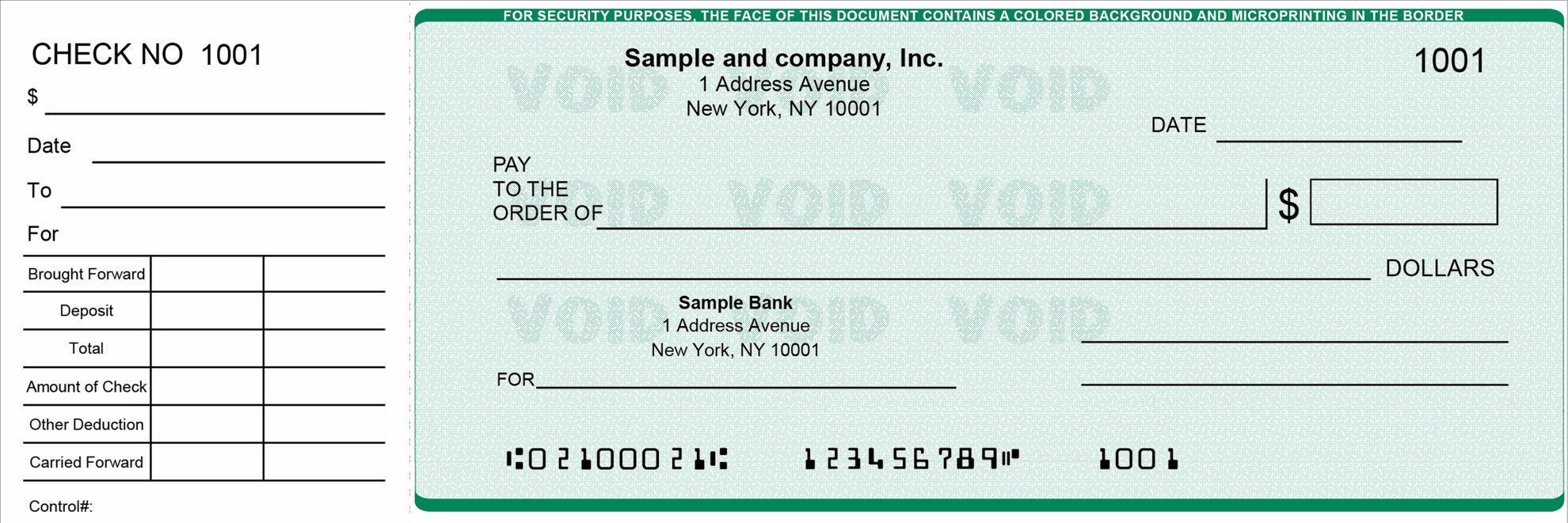
A personal check with an attached register stub. Personal checks are the items most often signed over to a third party, and the stub is where the writer records who it was originally made out to.
Can you deposit a third party check?
Sometimes, at a branch, if your bank's policy allows it. Federal banking guidance is explicit that a bank sets its own policy on whether to accept or reject third party checks, is not legally required to accept them, and can require the original payee to be present to verify the signature.
Why do banks refuse third party checks?
Banks refuse them because the risk sits with the bank if the endorsement turns out to be forged. Under Section 3-420 of the code, paying a check to someone not entitled to it is conversion, and the bank that took it can be liable. A few practical reasons follow from that:
- The bank cannot verify the first signature. It has no record of the original payee's signature if they are not its customer.
- Forged endorsements are a known fraud pattern. Stolen checks are often "signed over" by the thief.
- Bounced items are harder to recover. Three people are involved instead of two.
- Anti fraud rules tighten over time. Many banks simply ban third party items to keep teller decisions simple.
Can you mobile deposit a third party check?
Usually not. Most banking apps require the endorsement of the payee named on the front together with wording such as "For mobile deposit only", and they reject checks endorsed to someone else. That wording comes from bank policy rather than from the code itself.
The reason ties back to federal check rules. Regulation CC gives a bank that accepted a check by image some protection if the same paper check is later deposited elsewhere, but a bank that takes the paper check loses that protection when the check carries a restrictive endorsement that does not match the way it was deposited. The mobile deposit endorsement is what makes that protection work, and a signed over check rarely carries it correctly.
Offices that take a lot of mobile deposits often standardize the wording with a deposit stamp for checks so every item matches the app's prompt.
Will a bank cash a signed over check if you are not a customer?
It does not have to. Federal banking guidance states there is no federal law or regulation requiring a bank to cash checks for non-customers, and a bank that does may charge a fee. Policies like that exist to protect against forgeries.
Your best odds are at the bank the check is drawn on, the one printed on the front, because that bank can confirm on the spot that the writer's account covers it. Even there, expect identification requirements for both payees and possibly a refusal. Check cashing outlets set their own rules and fees, which vary by operator and state.
What happens if a signed over check bounces?
If a signed over check is returned unpaid, your bank can take the funds back out of your account and may charge you a returned item fee. Federal banking guidance says the person who deposited it then has to pursue the maker of the check to recover the money.
That is the part people underestimate. You may never have met the person who wrote the check, and the friend or customer who signed it over may be your only link to them. Before accepting one, ask yourself whether you could realistically collect from the original writer if it came back.
Timing adds to the risk. Funds from a deposit can show as available before the check has actually been paid, so a balance that looks fine today can still be reversed. Our guide on how long it takes for a check to clear explains why available is not the same as final.
How do you spot a third party check scam?
Fake check scams often arrive as a third party item: a check from a company you never dealt with, endorsed or forwarded by someone who asks you to send part of the money back. The Federal Trade Commission warns that banks must make deposited funds available quickly, that seeing the funds does not mean the check is good, and that it can take weeks to discover a fake, leaving the depositor to repay the bank.
Watch for these warning signs:
- An overpayment. The check is for more than you are owed and you are asked to refund the difference.
- Urgency. You are pressed to send money by wire, gift card or app before the check clears.
- A payer you cannot connect to the deal. The company on the check has nothing to do with the person paying you.
- Signs of alteration. A payee name or amount that looks rewritten, a common result of check washing.
The FTC's guidance for small businesses is blunt: if a customer "overpays" by check and asks for the difference back, you are looking at a fake check scam.
Should your business accept third party checks?
Most businesses are safer saying no by default and making exceptions only under a written policy. A signed over check carries every risk of an ordinary check plus the risk that the first endorsement is not genuine, and your business is the one left holding it if it fails.
What should an acceptance policy include?
If you do accept them, set the rules in advance so staff are not deciding at the counter. A workable policy covers these points:
- Ask your bank first whether it accepts third party items for your account, and through which channels.
- Require the original payee to be present with photo ID that matches the endorsement.
- Check the special endorsement names your business exactly as your account does.
- Accept them only from known customers and only up to a set amount.
- Never refund an overpayment until the check has fully cleared.
- Endorse it restrictively on receipt with For Deposit Only and your account number, ideally with an endorsement stamp.
- Log the check with a copy or image, the original payee's details and who approved it.
- Offer the alternative. Ask the writer to issue a new check directly to your business.
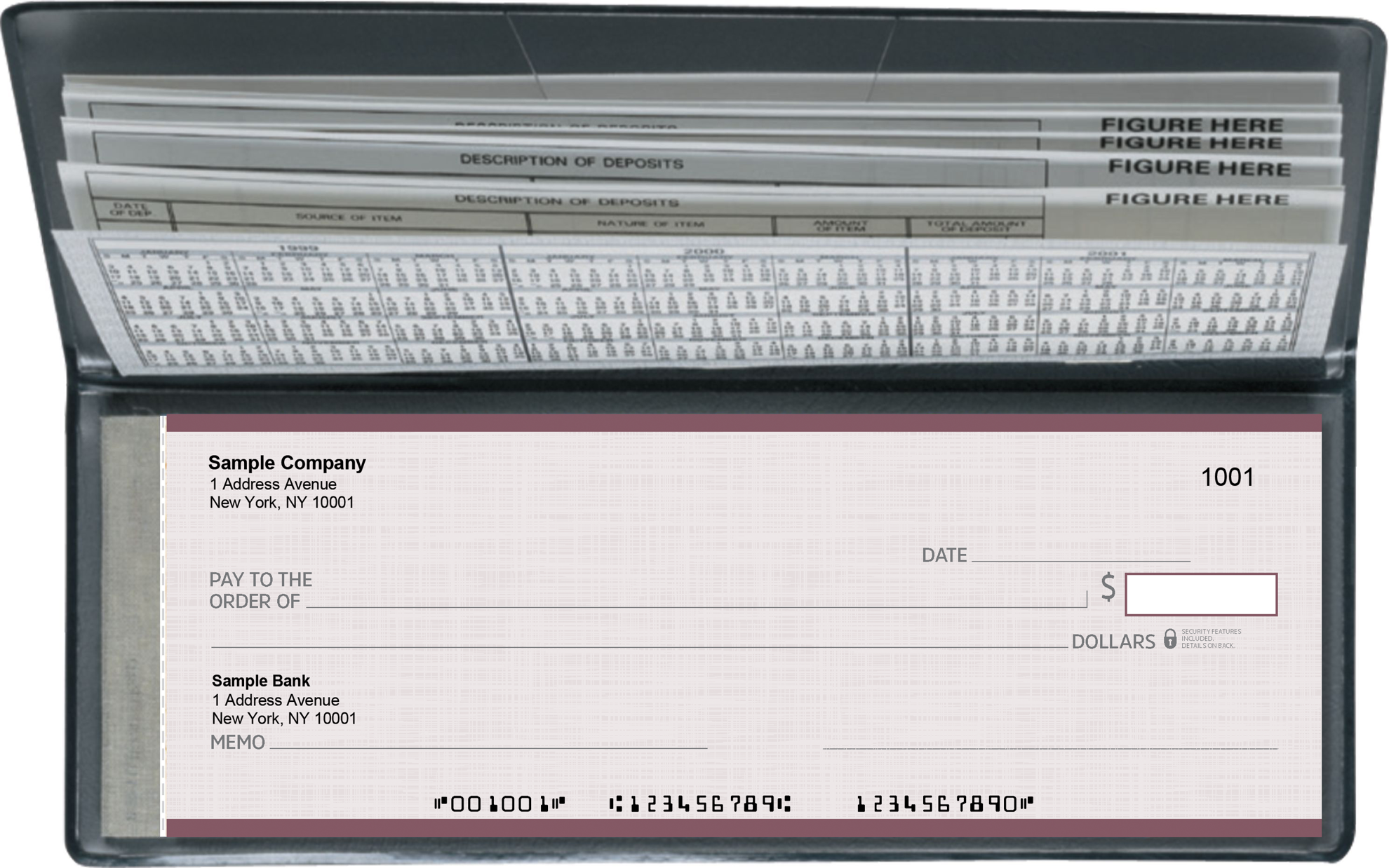
Manual business pocket checks in a checkbook cover. When a payment needs to reach a different person, writing a fresh check from your own account is cleaner than endorsing one over.
What are safer alternatives to signing over a check?
The safest alternative is almost always for the original writer to issue a new check to the right person. When that is not possible, these options avoid most third party problems:
- Deposit and pay. The original payee deposits the check into their own account, waits for it to clear, and pays the third party with their own check or transfer.
- Ask for a reissue. The writer voids or stops payment on the first check and writes a new one, which our guide on stop payment on a check walks through.
- Add the right payee from the start. If a payment always ends up with someone else, ask the payer to name that person or business directly.
- Use a joint payee check deliberately. Where two parties both have a claim, a check payable to both with "and" protects each of them.
For businesses that regularly pay on someone else's behalf, keeping your own check stock on hand is the practical fix. Manual business checks let you write a replacement on the spot rather than passing along a check you received.
Related reading
- How to endorse a check explains blank, special and restrictive endorsements.
- How to cash a business check covers why checks payable to a company are handled so strictly.
- Personal check safety lists habits that keep your own checks from being misused.
- How long a business check is good for explains stale dated checks.
What to do next
If someone has offered to sign a check over to you, call your bank before you agree. Ask whether it accepts third party items, whether the original payee must come in, and whether the mobile app will take it. If the answer to any of those is no, ask the writer for a new check in your name.
If you are the one paying, make it easy for payees to deposit your checks directly. Print the payee name in full, keep amounts clear, and use check stock with security features. Personal checks and computer checks from Checks Next Day are produced the same day for orders placed before the cutoff.
About the Author
Checks Next Day prints business and personal checks for U.S. account holders and ships them the next business day. Customers regularly ask us how to word endorsements and why a bank turned a check away, and this guide collects the answers.
The rules described here were checked against the Uniform Commercial Code sections on endorsements and conversion, Regulation CC, federal banking guidance on third party and non-customer checks, and Federal Trade Commission guidance on fake check scams. Bank policies differ, so confirm anything about a specific item with your own bank.