
- - -
- hours mins seconds
to get your checks by
Friday, Nov. 6th
Get it tomorrow
AFTER HOUR ALERT
Ooops! You missed todays deadline.
Your order will ship the next business day.
Need checks sooner?
Select the Rush +$25.00 at checkout to receive them tomorrow.
* Submit your order before 5pm EST to enjoy this offer.

 0
You have no items in your shopping cart.
Staffing Agency Payroll Checks: Pay Frequency, Records and Distribution
Last updated: November 3, 2026
A staffing agency runs payroll under conditions no other employer accepts. Starts land mid-week and assignments end without notice. The workers sit at somebody else's address. A pay cycle that is legal in one state may be too slow in the next.
Quick Summary
Two outside requirements shape staffing agency payroll checks. The state where the work happens sets how often you must pay. Federal recordkeeping guidance sets what you must be able to show for each worker. Payroll records are kept at least three years and supporting wage records for two.
- Pay frequency follows the state, and the federal table of state payday requirements is where to start.
- Weekly is in the table for states including California, Connecticut, Massachusetts, Rhode Island and Vermont.
- Longer intervals need permission in some states, such as approval by a labor commissioner.
- Fourteen record items per worker are listed in federal guidance, down to the day and time the workweek begins.
- No format is prescribed, as long as the record is complete and accurate.
- Distribution is the real failure point, so document every handover at a client site.
The table below shows how the frequency question actually arrives, with the control that answers it.
| Situation | What decides it | What to do |
|---|---|---|
| Placing into a new state | That state's payday requirement | Confirm with that state labor office before the first assignment |
| Wanting a longer cycle | Permission or an agreement, where allowed | Get it in writing before changing the cycle |
| Audit or wage complaint | Your per worker record set | Keep all fourteen items, three years for payroll records |
| Worker says no check arrived | Your handover record | Signed receipt per site, stop payment before reissue |
This page is general information about payroll process and record keeping. It is not legal or employment advice, and state wage payment law governs your obligations, so treat the state labor office and your own counsel as the authority.
On the stock, business checks can be printed with a stub laid out for hours, rate and deductions, which is the part of the record a worker reads first.
What this guide covers
- Why is staffing payroll harder than ordinary payroll?
- How often do you have to pay temporary workers?
- What records do you have to keep per worker?
- How do you get checks to workers at client sites?
- What do you do about a lost paycheck?
- Which check format suits a weekly run?
Why is staffing payroll harder than ordinary payroll?
Because almost every assumption behind a normal pay cycle is missing. A standard employer knows who is on payroll next Friday. An agency often does not know on Wednesday. The worker it adds on Thursday still expects to be paid on the same schedule.
- Headcount changes daily, so the payroll file is never settled far ahead.
- Workers sit at client addresses, which means delivery is somebody else's building.
- Assignments end abruptly, and the final item still has to reach the person.
- Several states may be in play at once, each with its own payday rule.
- Hours arrive late from supervisors who are not your staff.
None of that changes the deadline. The obligation to pay on the required schedule sits with the agency, whatever time the client sends the timesheet.
How often do you have to pay temporary workers?
At the interval the relevant state requires. The federal labor department publishes a table of state payday requirements. It says plainly that individuals should consult the relevant state labor office for official information. That is the right instinct for an agency placing across state lines.
Which states appear under weekly pay?
Weekly is listed for California, Connecticut, Iowa, Massachusetts and Michigan. It also covers New Hampshire, Puerto Rico, Rhode Island, Vermont and Virginia. New York is there too, for manual workers. Biweekly entries include Indiana, Louisiana, Maryland, Mississippi, Texas and West Virginia.
Semimonthly and monthly entries cover most of the country. Several are narrower than they look. The table limits some of them to executive, administrative and professional personnel, including Illinois, Nevada, New Mexico and Virginia. That is rarely the group an agency places.
Can you run a longer cycle?
Only where the state allows it, and usually only on paper. The table's own footnotes show the pattern.
Connecticut allows longer intervals if approved by the labor commissioner. New Hampshire allows semi-monthly or monthly with written permission from the state labor department. Wisconsin exempts employees under a collective bargaining agreement that sets a different frequency. Nebraska's payday is designated by the employer.
Treat the table as a map, not an answer. It tells you which states need a phone call before you quote a pay schedule to a client, and it is the state labor office that confirms the rule.
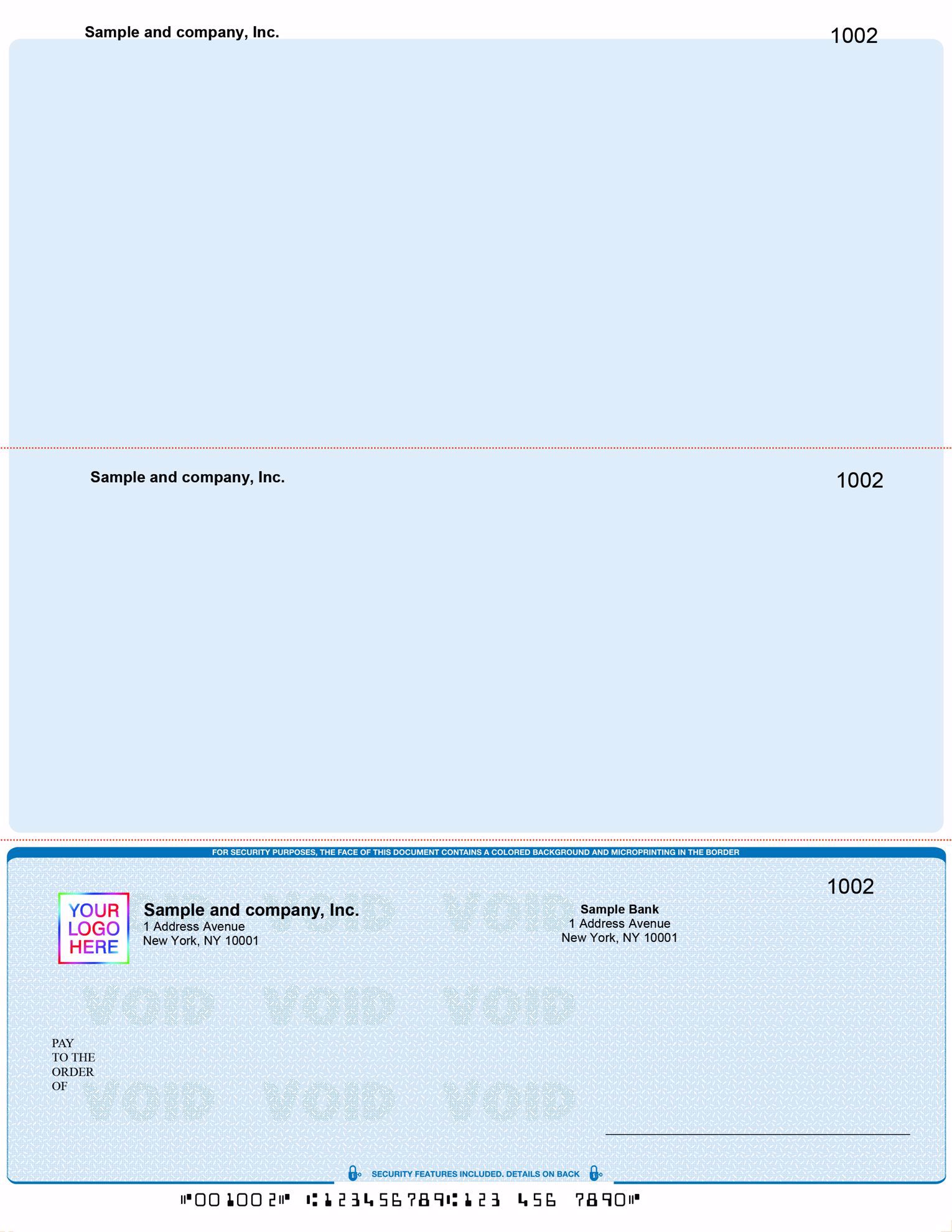
A bottom position layout leaves room above for hours and deduction detail. See business checks on the bottom for that format.
What records do you have to keep per worker?
Federal recordkeeping guidance lists fourteen items for each nonexempt worker and says no particular form is required as long as the information is accurate. For an agency, the useful detail is how specific several of those items are.
- Identity and contact: full name and Social Security number, home address with ZIP code, birth date if the worker is under 19, sex and occupation.
- The workweek itself: the day and time the workweek begins, hours worked each day, and total hours worked each workweek.
- How pay is set: the basis of payment, such as hourly, weekly or piecework, and the regular hourly pay rate.
- What was earned: total straight time earnings for the day or week and total overtime earnings for the workweek.
- What moved: all additions to or deductions from wages, and total wages paid each pay period.
- When it was paid: the payment date and the pay period the payment covers.
How long do the records have to last?
Two clocks run at once. Payroll records, collective bargaining agreements and sales and purchase records should be kept for at least three years. The records used to compute wages should be retained for two years. The guidance names time cards, piecework tickets, wage rate tables and work schedules.
It also sets out where and how. Records may be kept at the place of employment or in a central records office. They must be open for inspection by the division's representatives. For workers on fixed schedules, an employer may record the schedule and note that it was followed, then record actual hours only on an exception basis.
That last allowance rarely fits staffing. Assignment hours move, so an agency is usually better off recording actual hours and keeping the timesheet that produced them.
How do you get checks to workers at client sites?
With one documented route per site. The payroll run is rarely where an agency loses control of a payment. The loss happens in the gap between a sealed envelope leaving your office and a worker opening it on site.
- Name one receiver per client site, by job title rather than by person.
- Send a handover list with the batch and require a signature against each item.
- Set a return rule, so anything unclaimed after a stated number of days comes back to you.
- Seal individually, because a stub shows hours, rate and deductions.
- Reconcile the handover list against your register the same week.
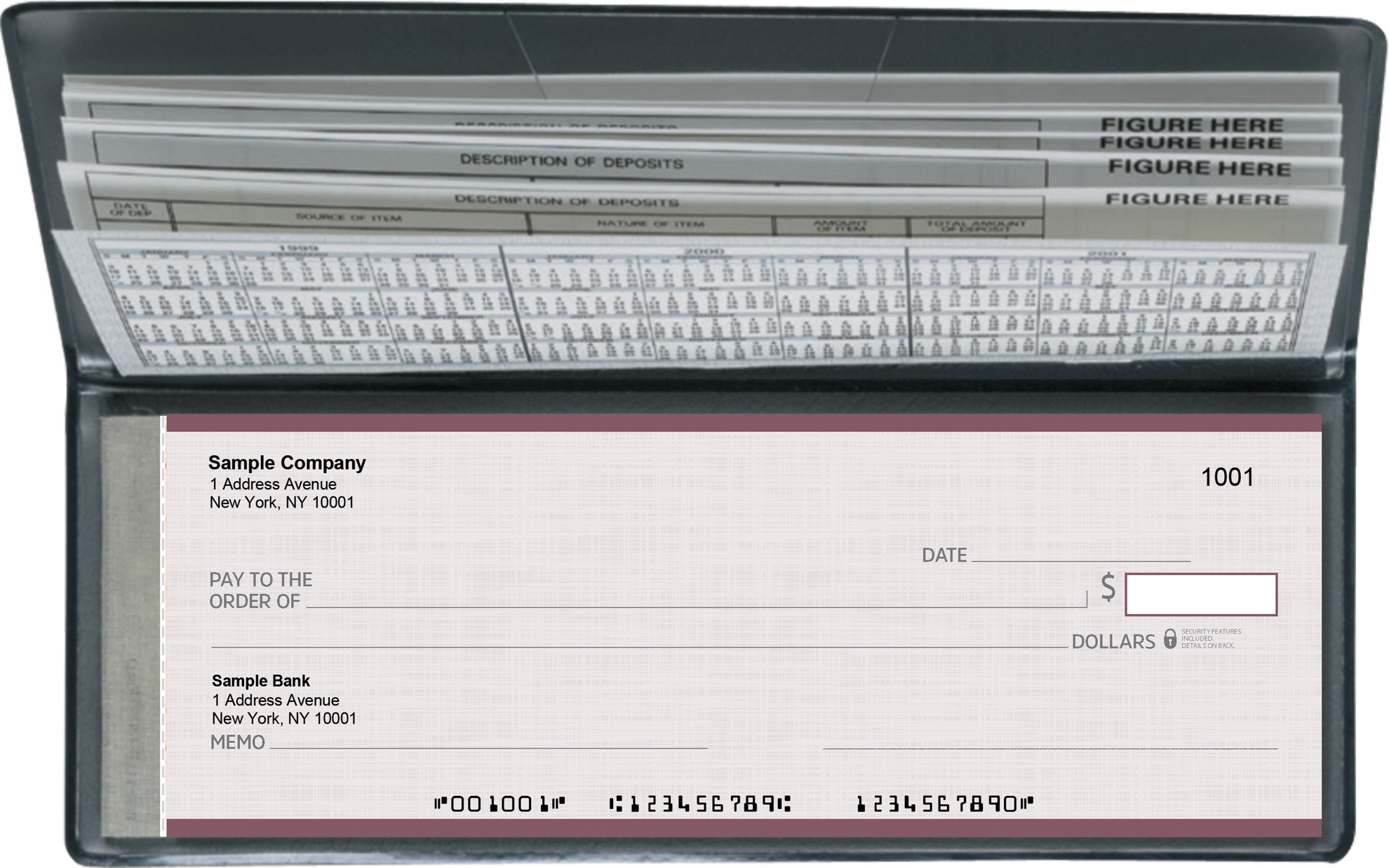
Where a supervisor writes an occasional item on site, a bound book is easier to control than loose stock. Manual business pocket checks keep the carbon copy attached, which is the record that matters later.
What do you do about a lost paycheck?
Stop the first item before you write the second. The common mistake is a quick reissue out of sympathy. That leaves two live items against one week of wages, and a reconciliation nobody can close.
- Confirm the item was never presented against your bank record.
- Place the stop payment and note the reference and the date.
- Record the stop against the original check number in the register.
- Issue the replacement with a new number, never a duplicate of the first.
- Tell the worker the old item is dead, so it is not presented later.
Our guide to the check register covers the record that makes this sequence provable, and check signing policy covers who may authorize a reissue.
Which check format suits a weekly run?
Whatever your payroll software prints to. Leave enough stub area for the pay detail, and enough security for an item handled by people outside your business.
- Match the position to your software, since the alignment is fixed by the print template.
- Choose a stub that fits hours, rate and deductions without shrinking the type.
- Keep the numbering continuous across every batch and site.
- Use tamper resistant stock where items pass through third party hands.
High security business checks cover that last point, and blank check security features explains what each printed feature does.
Related reading
- Check register covers the record behind stops and reissues.
- Check signing policy covers approval limits and delegation.
- Check washing covers protecting items in transit.
- How long is a business check good for covers stale items and reissue.
What to do next
List the states you place into and check each one against the federal payday table. Then call the labor office for any state where your cycle looks slower than the table suggests. That exercise is cheaper than one wage complaint.
Then set the stock up for the run you actually do. Business checks are printed to the position your payroll software expects, and manual business pocket checks cover the items written away from the office.
About the Author
We supply payroll stock to staffing and temporary placement firms right across the country. The orders that arrive in a hurry are nearly always weekly runs. They almost always ask for a bigger stub. Workers ask about hours and deductions more than about the amount.
The record requirements and retention periods here follow federal wage and hour recordkeeping guidance. The pay frequency points follow the federal table of state payday requirements, which tells readers to confirm with their own state labor office.