- - -
- hours mins seconds
to get your checks by
Monday, Nov. 9th

 0
You have no items in your shopping cart.
Restaurant Payroll Checks: Tips, Units and the Stub
Last updated: November 6, 2026
Restaurant payroll is the only kind where part of the wage arrives from a customer. Everything awkward about it follows from that, and most of it has to be visible on the payment the employee receives.
Quick Summary
Three federal rules shape a restaurant payroll check. The tip credit has a cash wage floor and a notice condition, a mandatory service charge is wages rather than a tip, and a tip pool has limits on who can be in it. Managers and supervisors may never receive tips from a pool.
- Cash wage floor of 2.13 dollars per hour under federal rules for a tipped worker.
- Maximum tip credit of 5.12 dollars per hour, against a federal minimum of 7.25.
- The notice is a condition, not a courtesy. No notice means no credit.
- A service charge is not a tip, and it counts in the regular rate for overtime.
- A wider tip pool needs full cash minimum wage for every worker in it.
- State law often goes further, so treat the federal position as a floor.
Here is how the three categories of money behave differently once they reach payroll.
| Money | What it counts as | Effect on the check |
|---|---|---|
| Direct cash wage | Wages | Paid by you, shown by rate and hours |
| Customer tips | Tips | Support a tip credit, reported and shown |
| Mandatory service charge | Wages, not tips | Enters the regular rate for overtime |
| Pooled tips received | Tips | Allowed only within the pool rules |
This page is general information about payroll documents. It is not legal or employment advice, and state wage law frequently sets a higher cash wage or removes the tip credit entirely, so treat your state labor office and your counsel as the authority.
On the document, business checks can be printed with a stub deep enough to show the tip credit arithmetic rather than a single net figure.
What this guide covers
- Why is restaurant payroll different?
- How does the tip credit work?
- What do you have to tell employees first?
- Is a service charge a tip?
- Who can be in a tip pool?
- How should a multi unit operator set up accounts?
- What should the stub show?
- What should a franchise group keep on file?
Why is restaurant payroll different?
Because part of the pay is not yours to begin with. A tip belongs to the employee, a service charge belongs to the business, and the two look identical on a customer's receipt. Sorting them correctly is the whole job.
- Pay varies by shift rather than by a single salary.
- Two sources of money have to be added together each workweek.
- Headcount turns over quickly, so notices and records are repeated often.
- A franchise group runs several units with one back office.
- Many workers want paper, which makes the stub the main record they read.
How does the tip credit work?
It lets part of the minimum wage be satisfied by tips the employee actually receives. Federal guidance sets the arithmetic plainly: an employer must pay a tipped worker at least 2.13 dollars per hour, the maximum tip credit an employer can currently claim is 5.12 dollars per hour, and the federal minimum wage is currently 7.25 dollars per hour.
Tips plus direct wages have to reach that minimum in each workweek. Where they do not, the employer makes up the shortfall, and the make up belongs on the stub as its own line so the employee can see what happened.
Those figures are the federal floor. A number of states require a higher cash wage, and some do not allow a tip credit at all, so the state position decides what you actually pay.
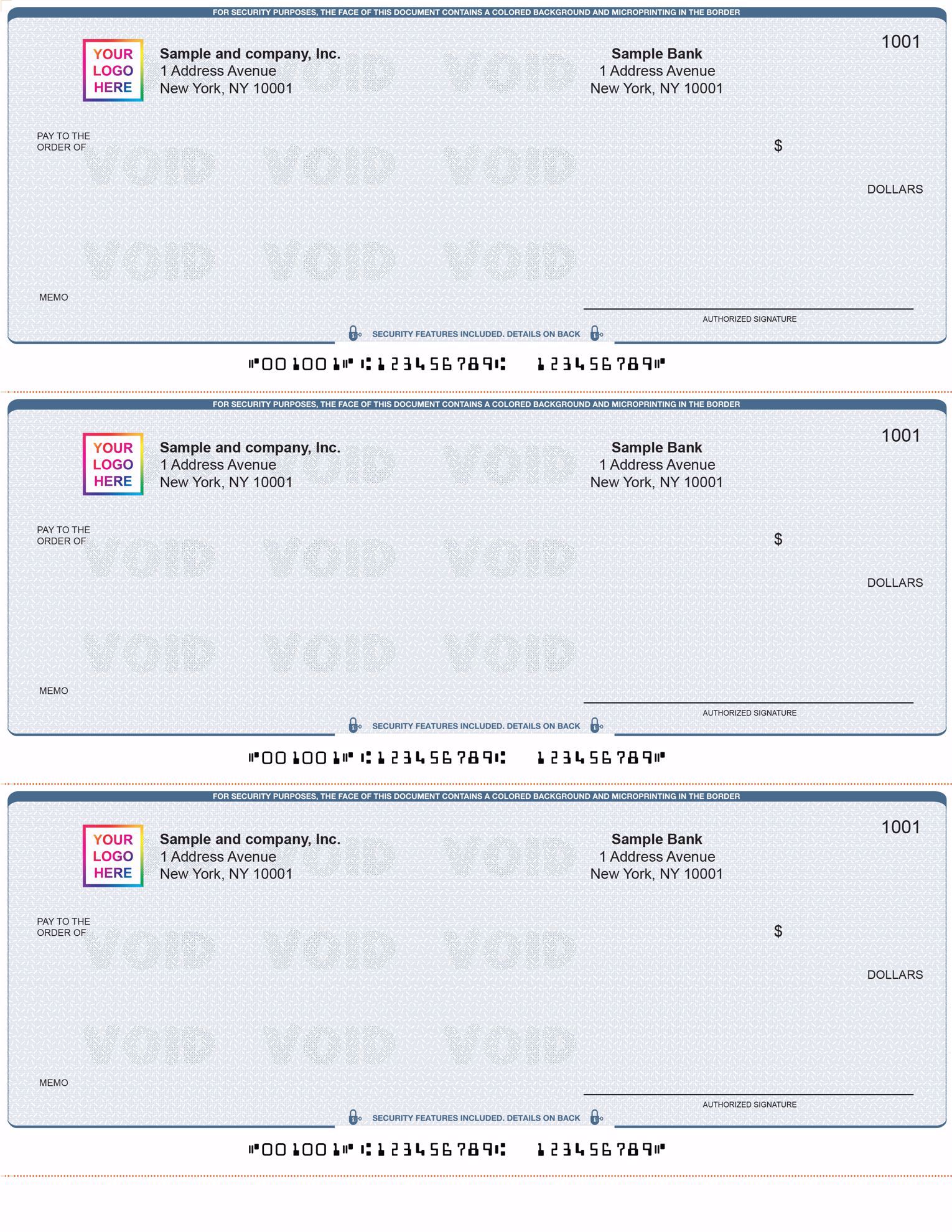
Three per page suits a payroll run with many small items. See three on a page accounting software checks for that format.
What do you have to tell employees first?
Five things, before the credit is taken. Federal guidance lists them as a condition of claiming the credit rather than as good practice, and it is explicit that an employer who does not give the notice cannot take the credit at all.
- The cash wage the employer is paying the tipped employee.
- The amount of the tip credit being claimed.
- That the credit cannot exceed the tips actually received, which is the protection for a slow week.
- That all tips are kept by the employee, except under a valid pooling arrangement.
- That the credit does not apply unless the employee has been informed of these points.
The notice may be oral or written. Give it in writing anyway, and keep a signed copy with the start paperwork, because in a business with high turnover the oral version is impossible to evidence a year later.
Is a service charge a tip?
No, and the distinction has a payroll consequence. Federal guidance states that a mandatory charge, such as a 15 percent service charge, is not a tip under the FLSA. Amounts of that kind can count toward minimum wage and overtime obligations, and they must be included in the regular rate for overtime.
That last point is the one that catches operators. Distributing service charge money to staff does not make it a tip, it makes it wages, and wages raise the overtime rate for the week in which they were earned.
Tips left on top of a service charge are still tips. The same guidance notes they can count toward tipped employee status and toward the tip credit.
Who can be in a tip pool?
It depends which kind of pool you are running. Federal guidance describes a traditional pool, which an employer may require when taking a tip credit, as limited to employees who customarily and regularly receive tips.
A wider pool is possible and it comes with a price. Pools that include other workers, such as cooks or dishwashers, are allowed only where every worker in the pool receives at least the full federal minimum wage in cash, which means giving up the tip credit for those employees.
One rule has no exception. Managers and supervisors may never receive tips from a pool, whatever hours they work on the floor and whatever the arrangement has always been in that building.
How should a multi unit operator set up accounts?
So that every payment can be traced to one unit without opening a bank account for each. Most franchise groups do this with numbering rather than with bank structure, which keeps the reconciliation simple and the banking cheap.
- Give each unit its own check number series, with no overlap between units.
- Print the unit name or number on the stock so a stray item identifies itself.
- Keep one payroll account unless a franchise agreement or lender requires otherwise.
- Store blank stock centrally, not in a unit office drawer.
- Reconcile by unit every period, which is only possible if the first point holds.
Our guide to the check register covers the record that makes a per unit reconciliation possible, and check signing policy covers who may sign at unit level.
What should the stub show?
Enough for a tipped employee to work out how the week reached the minimum wage. A net figure alone invites the question every restaurant manager has answered a hundred times, standing in a doorway during service.
- Hours by rate, separating regular and overtime.
- The direct cash wage paid by the employer.
- The tip credit claimed for the period.
- Tips reported, and pooled tips received where relevant.
- Service charge wages shown separately from tips.
- Any make up amount, deductions and the net.
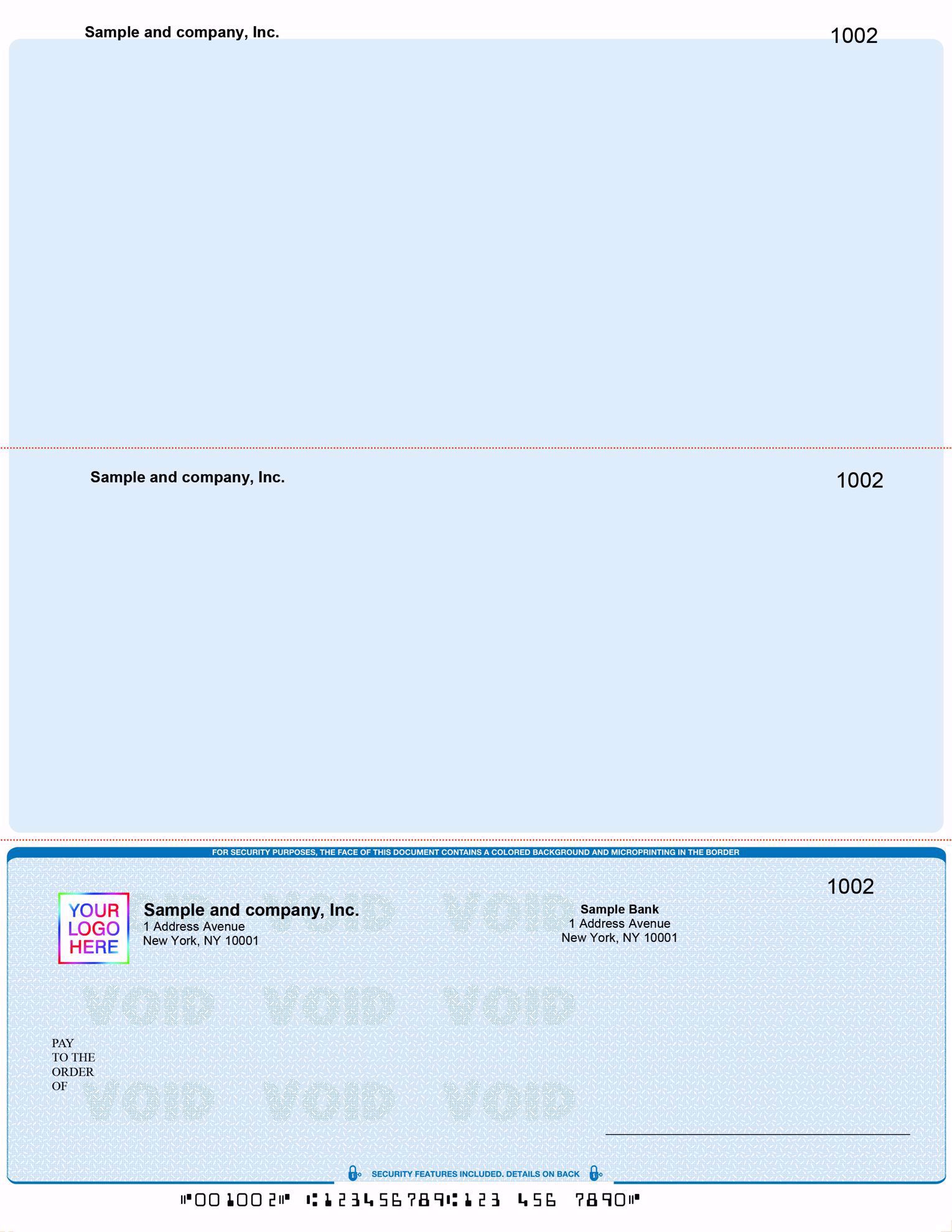
A check at the bottom leaves the most room for that detail. See check on bottom accounting software checks for the layout.
What should a franchise group keep on file?
The documents that prove the arithmetic rather than the documents that summarize it. In a group running several units, the file that matters is the one a unit manager can produce without calling head office.
- The signed tip credit notice for every tipped employee, dated at hire.
- The written tip pool arrangement, naming the roles included.
- Tip reports by employee and period, matching what went on the stub.
- Service charge distribution records, kept apart from tip records.
- The check number range issued to that unit, with voided items accounted for.
Separate the two money trails on paper, not just in the ledger. When service charge money and tip money sit in one spreadsheet, the overtime calculation is the first thing to go wrong, and it goes wrong quietly for months.
What happens when an employee works across two units?
Treat the workweek as one week for that employer, not as two part weeks. Hours worked at both units are added together for the week, and the pay record needs to show which unit the hours came from, since the per unit reconciliation still has to balance afterwards.
That is easier when the payment comes from one payroll account with a unit coded number series. The alternative, two separate checks for one workweek, makes both the overtime position and the employee conversation harder than they need to be.
Related reading
- Check register covers reconciling by unit and by series.
- Check signing policy covers approval at unit level.
- High security business checks covers stock held across several sites.
- Blank check security features covers what each printed feature does.
What to do next
Pull one tipped employee's stub from last period and try to reconstruct the week from it. If you cannot see the cash wage, the credit and the tips as separate figures, the stub is the thing to fix before anything else.
Then get the stock right for the number of units you run. Business checks are printed to your layout and numbering, and three on a page accounting software checks suit a high volume run.
About the Author
Restaurant groups are among the heaviest users of check stock we print, and the reason is turnover. New starters want to see a payment in their hand, and the stub is the first document that explains how their pay works.
The tip credit, service charge and pooling points here follow federal wage and hour guidance on tipped employees. State law often sets a higher standard, so your state labor office governs what applies to your units.