
- - -
- hours mins seconds
to get your checks by
Tomorrow, Nov. 6th

 0
You have no items in your shopping cart.
Remittance Advice: What to Send With a Check Payment
Last updated: November 5, 2026
A remittance advice is the least interesting document in accounts payable, right up to the moment a sentence on one settles a balance you were still arguing about.
Quick Summary
A remittance advice tells the payee which invoices your payment covers. Keep it factual and complete, make sure it survives the separation between the check and the paperwork, and be deliberate about any wording that describes the payment as settling a disputed claim, because the Uniform Commercial Code gives that wording real effect.
- List invoice numbers and the amount applied to each one.
- Show deductions as their own lines, with a reason and a reference.
- Put short lists on the stub, long lists on a separate sheet or email.
- A full satisfaction statement can discharge a disputed claim where the conditions in the code are met.
- An organization can designate an address for disputed debt communications in advance.
- Repayment within 90 days is the route back for a claimant who banked such an item.
Here is what each part of the document is doing, and what goes wrong when it is missing.
| Element | Why it is there | What happens without it |
|---|---|---|
| Invoice numbers | Lets the payee apply the money | Applied to the oldest balance instead |
| Amount per invoice | Splits a combined payment | Part paid invoices look unpaid |
| Deduction lines | Explains a short payment | Treated as a dispute or an error |
| Payment reference | Ties the note to the item | Nobody can match them later |
This page is general information about payment paperwork. It is not legal or accounting advice, and your state's enactment of the commercial code and your own contracts govern your position, so treat your counsel and your accountant as the authority.
On the document side, business checks can be printed with a stub deep enough to carry a real invoice list rather than a single reference.
What this guide covers
- What is a remittance advice?
- What should a remittance advice include?
- Where should the detail travel?
- Can a note on a payment settle a dispute?
- How does a business protect itself?
- How do you handle short payments?
- What does a simple remittance advice look like?
What is a remittance advice?
A remittance advice is the note that travels with a payment to explain what the money covers. It is not a receipt, it is not an invoice, and it creates no obligation by itself. Its whole purpose is to let the person receiving the money apply it to the right accounts without calling you.
No general rule forces you to send one. Businesses send them because an unexplained payment costs both sides time, and because an unexplained payment is usually applied to the oldest open balance rather than the one you intended to clear.
Who actually reads it?
The payee's cash allocation clerk, not the salesperson you deal with. Writing it for that person, in the format their ledger expects, is what gets the payment applied correctly on the first attempt.
What should a remittance advice include?
Six things, and nothing that could be mistaken for a legal position you did not intend to take.
- Your business name exactly as the payee holds it, which may not be your trading name.
- The payment date, method and reference, such as the check number.
- Each invoice number with the amount applied against it.
- Credit notes and deductions on separate lines, each with a reason.
- The total, matching the amount of the payment to the cent.
- A contact for queries, so a question reaches a person rather than a mailbox.
Keep the narrative out of it. Explanations of why a payment is late, or how you feel about an invoice, belong in an email rather than on a document that travels with money.
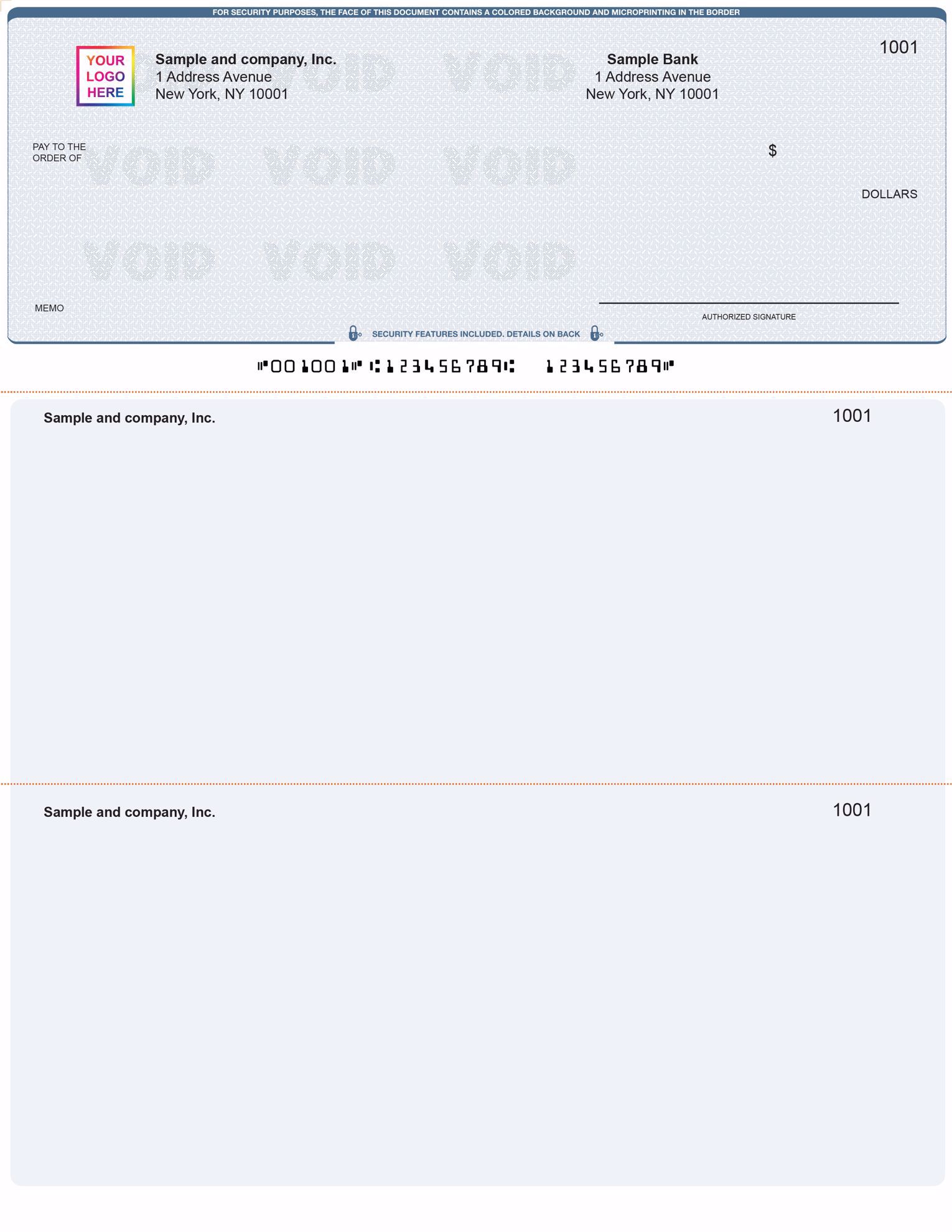
A check at the top leaves two stub areas below it. See check on top accounting software checks for that layout.
Where should the detail travel?
Wherever it will still be readable after the check and the paperwork go in different directions. That separation is the practical problem, because the item itself goes to a bank and the note goes to a desk.
- Short lists belong on the stub, printed at the same time as the payment.
- Long lists belong on a separate sheet, folded in the same envelope.
- Email a copy the same day where the payee has an accounts address.
- Keep your own copy with the check number against it.
Our guide to the check register covers the copy you keep, which is the version that matters when a payee says a payment never arrived.
Can a note on a payment settle a dispute?
Yes, and this is the part most guides to remittance advice leave out. The Uniform Commercial Code recognizes accord and satisfaction by use of an instrument, which means a payment plus the right wording can discharge a claim the parties were arguing about.
The person relying on it has to prove three things: that they in good faith tendered an instrument to the claimant as full satisfaction of the claim, that the amount of the claim was unliquidated or subject to a bona fide dispute, and that the claimant obtained payment of the instrument.
What does the wording have to look like?
The code asks for a conspicuous statement to the effect that the instrument was tendered as full satisfaction of the claim, and it allows that statement to sit either on the instrument itself or on an accompanying written communication. A remittance advice is an accompanying written communication.
That is why the wording on these notes matters. A phrase added casually to explain a short payment is capable of being read as a tender in full satisfaction, and banking the check is what completes it.
How does a business protect itself?
By deciding in advance where disputed debt communications have to go. The code lets an organization claimant defeat the statement rule by proving it sent, within a reasonable time before the tender, a conspicuous statement that communications concerning disputed debts are to be sent to a designated person, office or place, and that the instrument or communication was not received there.
- Name the designated place in your standard terms and on your invoices.
- Make the statement conspicuous, not a footnote in small type.
- Send it before any dispute arises, since the timing requirement is a reasonable time before the tender.
- Train the cash allocation desk to flag any item mentioning full satisfaction.
- Keep the envelope and the note, because where the item arrived is the question.
What if the check is already banked?
There is a route back, with a deadline. The code allows a claimant to prove that within 90 days after payment of the instrument it tendered repayment of the amount of the instrument to the person against whom the claim is asserted. That route is not available to an organization that relied on the designated address statement.
One more exception runs the other way. Where the person who paid proves that, within a reasonable time before collection was initiated, the claimant or an agent with direct responsibility for the disputed obligation knew the instrument was tendered in full satisfaction, the claim is discharged anyway.
How do you handle short payments?
Show the arithmetic and avoid the conclusion. A deduction that is explained as a line item is routine. The same deduction described as settling the account in full is a different document with a different effect.
- Show the invoice at full value before any deduction.
- Give each deduction a reason code and a reference number.
- State the net paid and nothing about what remains owed.
- Raise genuine disputes separately, in writing, before the payment run.
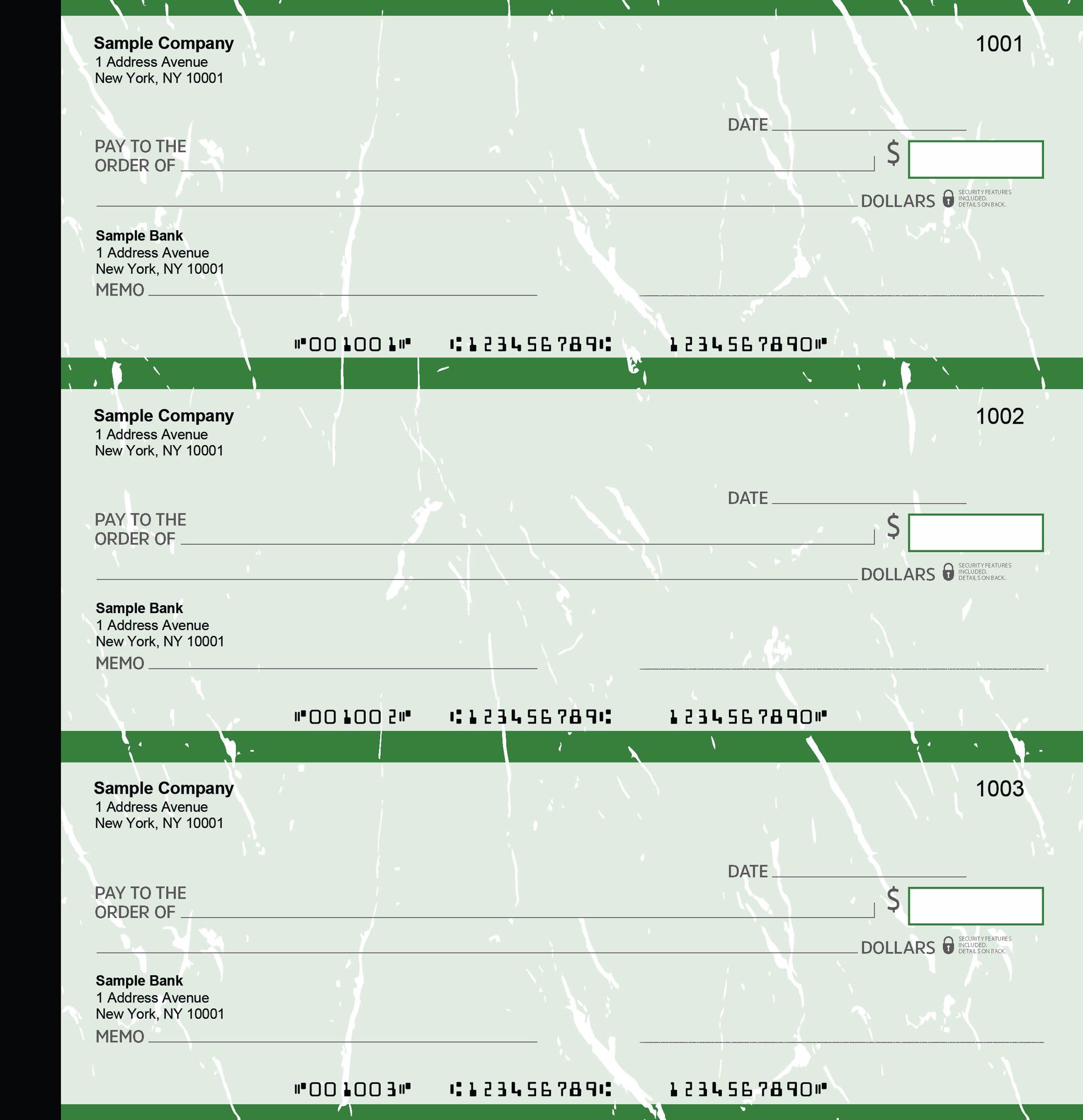
Where payments are written by hand, the stub is the remittance advice. See compact three per page manual business checks for that format.
What does a simple remittance advice look like?
Like a short table with a total underneath. The layout below is the one most accounts teams can process without a single question, and it fits on a stub when the list is short.
| Line | What goes in it | Common mistake |
|---|---|---|
| Header | Your registered name, date, check number | Using a trading name the payee has never seen |
| Invoice rows | One row per invoice, with the amount applied | Grouping several invoices into one figure |
| Adjustment rows | Credit note or deduction, reason, reference | Netting the deduction into the invoice row |
| Total | The exact amount of the payment | A total that does not tie to the check |
| Footer | Name and contact for queries | Wording that describes the payment as final |
Build it once and reuse it. A template that your software fills from the payment run removes the improvised sentence, which is where the risk in this document sits.
Related reading
- Check register covers the copy you keep of every payment.
- Check signing policy covers who approves a payment before it goes out.
- How long is a business check good for covers stale items and reissue.
- Check washing covers protecting the payment in the mail.
What to do next
Read the last remittance note your business sent and the last one it received. Check both for any sentence describing a payment as full or final settlement, then decide whether your invoices tell the other side where disputed debt communications have to go.
Then make the stub do its job. Business checks are printed with the stub depth you specify, and compact three per page manual business checks suit payments written away from a printer.
About the Author
We print the stubs that most remittance advice actually lives on. The commonest request we get from accounts payable teams is more lines, because a payment that settles eleven invoices on a stub built for four turns into a phone call at the other end.
The accord and satisfaction points here follow the Uniform Commercial Code article on negotiable instruments. Your state's enactment governs, and a live dispute is a question for your counsel rather than an article.