
- - -
- hours mins seconds
to get your checks by
Monday, Oct. 19th

 0
0 You have no items in your shopping cart.
Postdated Check: Can a Bank Cash It Early?
A supplier asks you to pay today, but your customer's money will not arrive until Friday. Writing a check dated for Friday sounds like a neat solution. Then the supplier deposits it on Tuesday, and the bank pays it.
This guide explains how a postdated check works for a business. You will see what the law says, how a bank treats a future date, how to give your bank notice, how long that notice lasts, and what to do instead when you need a payment to wait.
Quick Summary
A postdated check is a check dated in the future. Postdating is recognized by the Uniform Commercial Code, but it does not stop your bank from paying the check early unless you have given the bank formal notice. A date on the check is a request to the payee, not a control over the bank.
- The bank may pay early. Banks are permitted to pay a check before its date, so the funds must be there from the day the check leaves your hands.
- Notice is the only real control. To protect yourself, tell your bank about the postdating in time and in a way that identifies the check.
- Notice has a clock. It lasts as long as a stop payment order: six months in writing, or 14 calendar days if given only by phone.
- A bank that ignores valid notice can be liable. It may owe damages, including losses from other items that bounce as a result.
- The check can still go stale. The six month window runs from the date on the check.
- Better options exist. Holding the check until the date, or using scheduled payments, avoids the risk completely.
| Question | Short answer |
|---|---|
| Can I write one? | Yes. The UCC recognizes postdated instruments. |
| Can the bank pay it early? | Yes, unless you gave proper notice in time. |
| What does proper notice need? | It must identify the check with reasonable certainty and reach the bank in time to act. |
| How long does notice last? | Same as a stop payment order: six months in writing, 14 calendar days if oral. |
| Does the note 'do not deposit until' work? | Not as an instruction to the bank. |
| Is it safer to avoid postdating? | Often yes, for control and for clear records. |
What is a postdated check?
A postdated check carries a date later than the day you wrote and signed it. The idea is that the payee should wait until that date to deposit it. The Uniform Commercial Code recognizes this practice and states that an instrument may be antedated or postdated.
The law treats the date mainly as a payment term. For a check payable on demand, the date matters most when the bank decides whether the check is payable before that date, and that is where businesses run into trouble.
Is it legal to write a postdated check?
Postdating is not illegal in itself, and the UCC provides rules for it. What matters is whether the money is there when the check is paid. Postdating does not give you permission to write a check you cannot cover, and state rules can differ. If a payment is large or disputed, ask your accountant or attorney.
How is a postdated check different from a stale check?
They are opposites. One is dated in the future, while a stale check is older than six months. Our guide to how long a business check is good for explains stale dating, and the guide to writing a business check by hand shows where the date line goes.
Can a bank cash a postdated check early?
Yes. The OCC explains that banks are permitted to pay checks even though payment occurs before the date of the check, and that a check is payable on demand unless you submit a formal post-dating notice to your bank (OCC guidance on postdated checks). Under UCC section 4-401(c), a bank may charge a check to your account before its date if it is otherwise properly payable, unless you gave notice of the postdating (UCC section 4-401).
| Situation | What the bank may do | What it means for you |
|---|---|---|
| You gave no notice | May pay the check before its date. | Funds leave your account early. |
| You gave notice in time that identified the check | Should hold it until the date. | Your cash timing is protected. |
| You gave notice, but the bank paid anyway | May be liable for resulting damages. | Keep records; you may have a claim. |
| You gave notice too late for the bank to act | Notice may not protect you. | Give notice as early as you can. |
| Funds are not in the account at presentment | Returns the check unpaid. | Fees and a damaged payee relationship. |
Can the payee deposit the check before the date?
Physically, yes. Whether the bank pays it depends on the notice you gave. A payee who agreed to wait should hold the check until the date on it, and you should have that agreement in writing if the amount is meaningful.
What happens if a check returned as postdated is deposited again?
Federal funds availability rules treat a check returned as postdated differently when it is redeposited after its date. Redeposited checks are generally exempt from the standard schedules, but a check returned as postdated, whose reason for return says so, and which is no longer postdated when redeposited, is not exempt (Regulation CC exceptions).
In plain terms, that check gets the normal availability schedule when it is redeposited after its date, not an extra hold. For the timeline itself, see our guide on how long it takes for a check to clear.
How do you stop a bank from paying a postdated check early?
Give your bank formal notice. The UCC says the notice must identify the check with reasonable certainty, and it must reach the bank in time, and in a manner, that gives the bank a reasonable chance to act before it takes any action on the check. Banks may require a specific form and may charge a fee.
- Contact your bank before you hand over the check. Ask how it accepts postdating notices.
- Provide the check details. Give the check number, exact amount, payee name and the date written.
- State the earliest payment date. Make clear the check must not be paid before that day.
- Get a reference. Ask for a confirmation number or a copy of the notice.
- Confirm in writing. A phone notice lapses after 14 calendar days unless confirmed in writing.
- Diary the expiry. A written notice lasts six months, so renew it in writing if you need more time.
The duration matches a stop payment order. Our guide to how to stop payment on a check explains the six month and 14 day rules in detail.
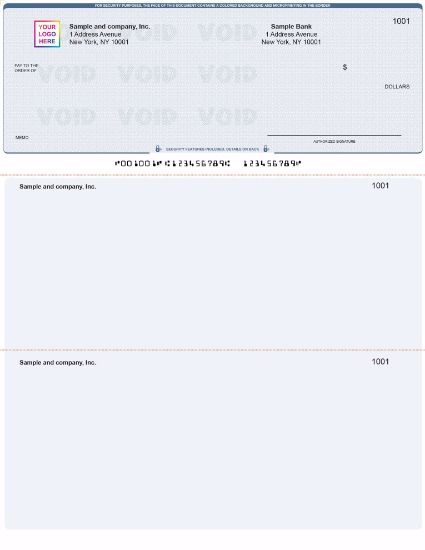
Does a note on the check, like 'do not deposit until', work?
It can help the payee, but it is not an instruction to the bank. The OCC points to a formal post-dating notice to the bank, so use the note only as a courtesy and not as a control.
When does a postdated check go stale?
A bank is generally not required to pay an ordinary check presented more than six months after its date, though it may pay in good faith (UCC section 4-404). For this kind of check the six months run from the date written on the check, so postdating pushes the stale date back by the same amount. Keep that in mind if the check is held for a long time.
Should a business postdate checks?
Sometimes, but rarely. The main risks are early payment, cash flow surprises and confusing records. Use the table below to decide.
| Situation | Risk of postdating | Better option |
|---|---|---|
| A customer payment arrives Friday and a bill is due now | Bank may pay early and overdraw the account. | Wait until funds clear, then write the check. |
| A supplier wants security for a future payment | Supplier may deposit early. | Agree a written payment schedule and release each check on the date. |
| Rent or recurring bills on fixed dates | Many future-dated checks are easy to lose track of. | Use scheduled payments through your bank. |
| Payroll that must land on one day | Employees may deposit early. | Issue checks on the pay date. |
| You want to delay payment until a delivery is confirmed | Bank may pay before the delivery arrives. | Release the check once the delivery is confirmed. |
How should a business track checks dated in the future?
If you do issue one, treat it as a payment due now in your cash planning. The bank may pay it any day after you hand it over, so keep enough in the account to cover it.
| Log column | What to record |
|---|---|
| Check number and amount | As printed and written on the check |
| Payee | Exactly as written |
| Date written and date on check | The signing date and the future date |
| Reason | The agreement or payment term behind the postdating |
| Bank notice given | Date, method and bank reference |
| Notice expires | Six months from a written notice, or 14 days from a phone notice |
| Cleared date | The day the bank posts the payment |
| Approved by | The authorized signer who approved it |
Put the rule in your check signing policy, and decide who signs a business check so no one person issues them alone. Record each one in your check register as a payment due now, and read our guide to the voided check if you need to cancel one before it leaves your hands.
Can you postdate a payroll check?
You can, but it is a weak control. The bank may pay it early and employees may deposit it early. See our guides to making payroll checks and whether payroll checks can bounce.
What are better options than a postdated check?
- Hold the check until the date. Write and mail it when the funds are ready.
- Use scheduled payments. Ask your bank about payments set to leave on a chosen date.
- Agree a written schedule. Give each check to the payee on the agreed date.
- Pay in smaller amounts. Split a large bill into installments you can cover now.
- Use a stop payment notice only as a backup. It is a safeguard, not a plan.
What should you do next?
- Check your open payments and find any future-dated checks still outstanding.
- Ask your bank how it takes postdating notices and what it charges.
- Update your signing policy so postdating needs approval.
- Add a log for future-dated checks to your register or accounting routine.
Need new checks with a clear numbering sequence? Contact us and we will help you choose the right format.
Why businesses order checks from Checks Next Day
Printed with your bank details. You enter your routing number, account number, starting check number, and business name and address when you order.
Same-day production on weekday orders. Orders placed before 2:00 PM Eastern, Monday through Friday (excluding holidays), are produced and shipped the same business day for next-day arrival, as long as the details are complete and verified.
Formats that match how you work. Choose computer checks, manual business checks or blank check stock to suit your software and workflow.
Faster reorders. Reorders usually move faster because artwork and specifications are already on file.
About the Author
The Checks Next Day team writes about business checks, check printing and check safety for small businesses.