- - -
- hours mins seconds
to get your checks by
Tomorrow, Nov. 10th

 0
You have no items in your shopping cart.
Positive Pay: How It Works and Who It Protects
Last updated: November 9, 2026
Most businesses first hear about positive pay from a bank relationship manager, decide it sounds like something larger companies need, and move on. The decision usually gets revisited on the morning somebody opens a statement and finds a payment nobody in the building can explain.
Quick Summary
Positive pay compares every check presented for payment against a file of the checks you say you issued. Anything that does not match is held as an exception until you decide. The reason it matters beyond convenience is that your account agreement sits inside the definition of what the bank may charge to your account.
- You send an issue file, listing check number, amount, date and account.
- The bank matches presented items and holds the ones that do not agree.
- Payee matching adds the name check, which the standard version does not do.
- Unanswered exceptions follow a default rule written into your service agreement.
- Properly payable is defined by your agreement, not only by your signature.
- Ordinary care cannot be disclaimed, whatever else an agreement says.
The three services sold under this heading do different jobs, and the names are easy to mix up.
| Service | What it compares | What still gets through |
|---|---|---|
| Positive pay | Check number, amount, account, date | An altered payee on an otherwise matching item |
| Payee matching version | The above plus the payee name | A forged signature on a matching item |
| Reverse version | Nothing. You review a daily list yourself | Anything you miss in the review window |
| No service | Nothing before payment | Everything until the statement arrives |
Everything below is general information about banking services. Nothing here is legal or banking advice. What binds you is your own account agreement together with the commercial code as your state enacted it, so ask your bank and your attorney before relying on any of it.
The service works from your issued list, so the stock has to be numbered in a sequence you control. Business checks are printed to continue your existing numbering.
What this guide covers
- What is positive pay and how does it work?
- Why does it matter legally?
- What does payee matching add?
- What goes in the issue file?
- What happens when an exception appears?
- What does the service not cover?
What is positive pay and how does it work?
Positive pay is a bank service that checks every item presented against a list of the checks you say you wrote. The list is called the issue file. Matching items clear in the ordinary way. Anything that does not agree is parked as an exception and sent back to you with a deadline.
The useful part is the order of events. A control that reviews payments after they clear tells you about a loss. This one asks a question before the money moves, which is a different thing entirely for the person who has to recover it.
What does the daily rhythm look like?
- You run payments and upload the issue file the same day.
- Items arrive at the bank and are matched against that file.
- Exceptions appear in a queue, usually first thing in the morning.
- Someone reviews and decides pay or return, before the stated cut off.
- Unanswered items follow the default written into your agreement.
Why does it matter legally?
Because the agreement you sign changes what the bank is entitled to charge you for. The Uniform Commercial Code says a bank may charge against the account of a customer an item that is properly payable from that account, and it defines an item as properly payable if it is authorized by the customer and is in accordance with any agreement between the customer and bank.
Read that second limb again. The agreement is part of the test, which is why the terms attached to a fraud service are worth more attention than the brochure describing it.
Can an agreement move the loss onto the business?
To a degree, yes. The code says the effect of the provisions of the article may be varied by agreement, which is how a bank can write terms around who carries a loss where a service was offered and declined.
There are limits, and they matter. The same section says the parties cannot disclaim a bank's responsibility for its lack of good faith or failure to exercise ordinary care, nor limit the damages for those failures. Standards for measuring responsibility can be set by agreement only where they are not manifestly unreasonable.
One more line is worth knowing. Conduct that complies with Federal Reserve regulations and operating circulars, or with clearing house rules and general banking usage not disapproved by the article, is treated as prima facie the exercise of ordinary care. That is the standard a bank will point to.
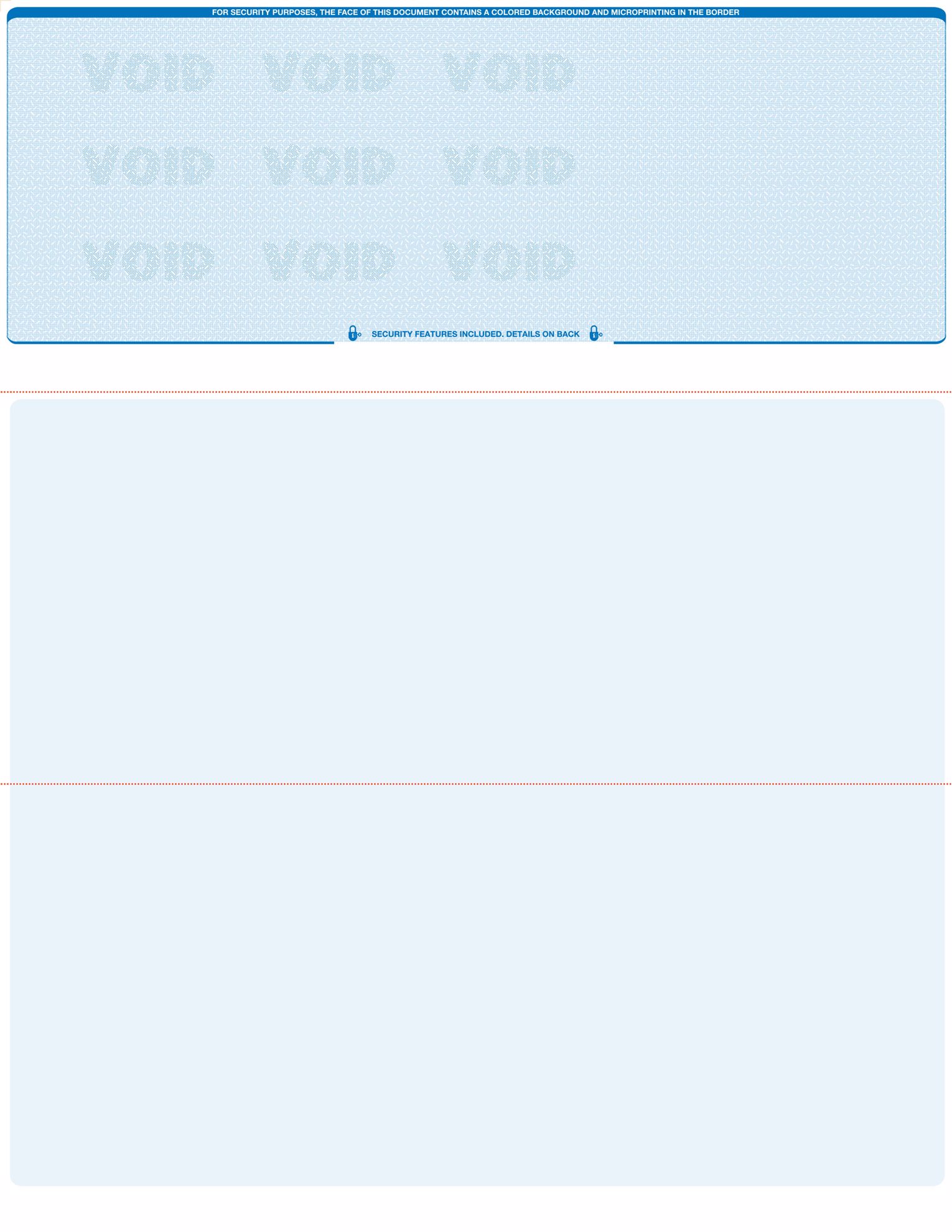
A controlled number sequence is what makes an issue file possible. See blank checks on the top for that stock.
What does payee matching add?
It compares the payee name on the face of the item, not just the number and the amount. That single addition closes the gap that catches most businesses by surprise.
Picture a check stolen from the mail, washed, and made payable to someone else for the same amount under the same number. The standard version sees a match on every field it looks at, and pays it. Name matching is what stops that item.
- Ask which version you are being quoted, because both are sold under the same name.
- Expect name matching to be approximate, so short and consistent payee names help.
- Use the registered entity name in your vendor master and on the file.
- Expect more exceptions at first, mostly from your own naming inconsistencies.
Our guide to check washing covers the physical attack this feature answers.
What goes in the issue file?
Account, check number, amount, issue date, and the payee name where you are using payee matching. The format comes from the bank, and most accounting systems export it directly.
The file is not the hard part. Keeping it complete is, because the items that cause real trouble are the ones created outside the payment run.
- Upload after every run, not on a weekly schedule.
- Add manual checks immediately, including anything written at a counter or on site.
- Report voids and stops into the same file so they are flagged if presented.
- Reconcile the file against your register weekly rather than monthly.
- Name a second person who can upload when the first is away.
A manual check is the usual failure. Someone writes one from a book in a drawer, nobody tells the bank, and the item lands as an exception that a tired reviewer approves because it looks familiar.
Our guide to the check register covers the record that keeps the file honest.
What happens when an exception appears?
You get a short window, usually the same morning, to look at the image and decide pay or return. The decision window and the cut off time are in your service agreement, and so is the rule that applies when nobody answers.
Which default applies to your account?
That depends on your bank and your agreement. Some default to paying the item, some to returning it. Neither default is wrong in itself, and both cause problems when the business assumes the other one.
- Pay by default risks letting a fraudulent item through on a quiet day.
- Return by default risks bouncing a genuine payment to a supplier.
- Either way, write the answer on the same page as your holiday cover plan.
- Name two reviewers, because one person on leave should not change the outcome.
Does this replace reviewing your statements?
No. Your own duty to look at statements survives it. The code expects reasonable promptness in that review and prompt notice to the bank once something is apparent. Two outer limits sit behind that: a window of no more than thirty days for further items by the same wrongdoer, and a one year cut off counted from when the statement or items reached you.
What does the service not cover?
Three things, and each one needs a different control. Knowing the edges of it is what stops a business treating it as the whole answer.
- A forged signature on an item whose number and amount match your file.
- Electronic debits, unless you add an ACH debit filter or block.
- Anything issued outside the process, which never reached the file at all.
- Blank stock that walks out of the building, which is a storage question.
Our guides to check signing policy and high security business checks cover the first and the last of those.
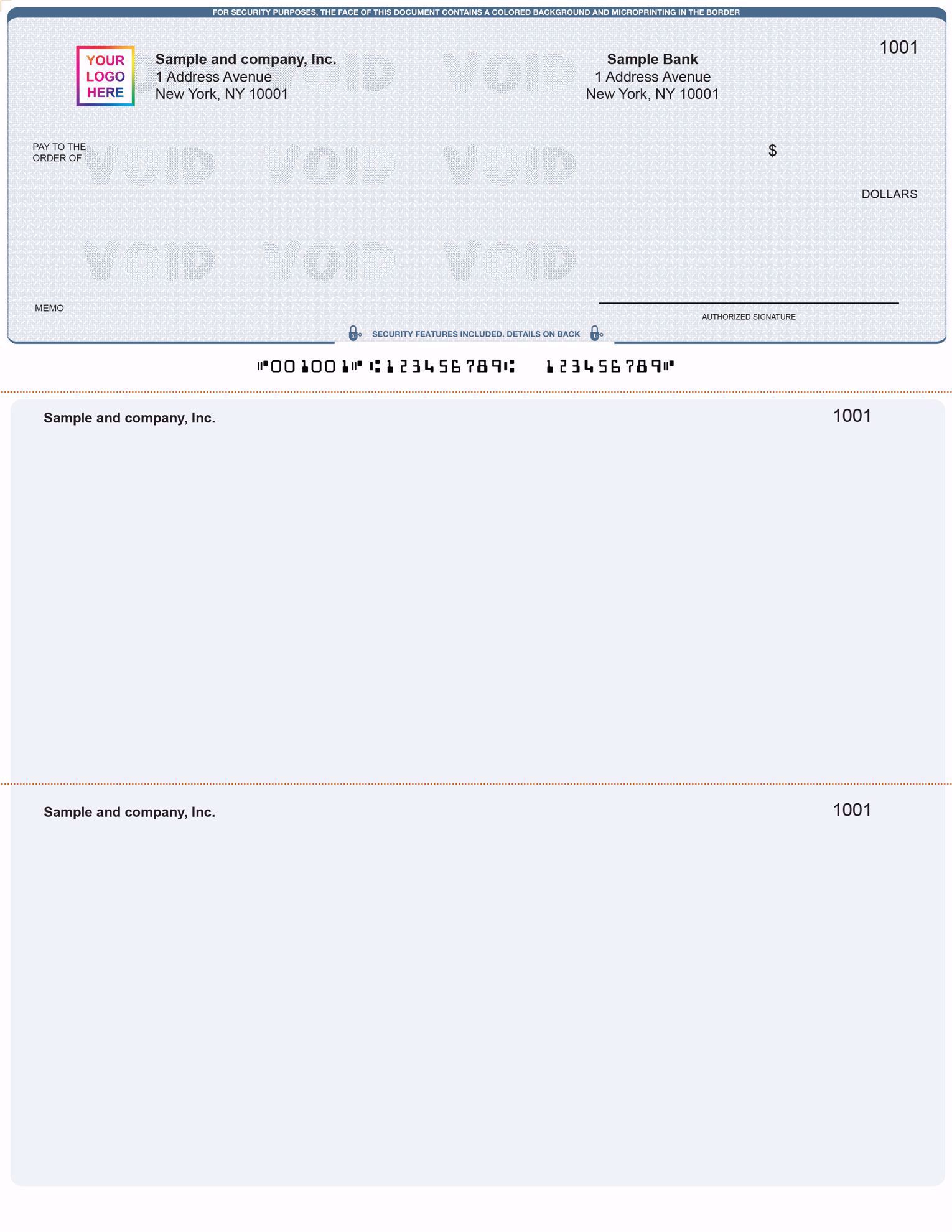
Most issue files come straight out of accounting software. See check on top accounting software checks for that format.
Related reading
- Check washing covers the attack payee matching answers.
- Check register covers the record your issue file depends on.
- Blank check security features covers what the printed features do.
- Check signing policy covers who may approve a payment or an exception.
What to do next
Ask your bank two questions this week: whether the service you have is payee matching or number and amount only, and what happens to an exception nobody answers. Those two answers tell you more about your exposure than any product sheet.
Then make sure the stock supports it. Business checks are printed in the number sequence your issue file expects, and high security business checks add tamper resistance for the items most worth protecting.
About the Author
Our presses run every working day for businesses across the United States. The call that starts a conversation about this service is nearly always the same one. Someone has found a payment they cannot explain, and they ring us first because the item is the only part of it they can hold.
Everything stated above about properly payable items, agreements and ordinary care comes from the commercial code provisions on bank deposits and collections. How your state enacted them, and what your bank asked you to sign, decide where you actually stand.