
- - -
- hours mins seconds
to get your checks by
Monday, Nov. 9th

 0
You have no items in your shopping cart.
Petty Cash Fund or a Check: Paying for Small Items
Last updated: November 5, 2026
Small payments cause trouble out of all proportion to their size. The amount is never the problem. The problem is that the fastest way to pay leaves the thinnest record, and nobody notices until someone asks for the file.
Quick Summary
A petty cash fund is a small float used for minor purchases and topped back up to the same figure. It works where the records keep pace with it. Federal guidance expects supporting documents that identify the payee and amount, show proof of payment, and record the date and a description, and a till receipt alone often does not do all of that.
- Five elements make a record: payee, amount, proof of payment, date, description.
- One document is often not enough. Guidance says a combination may be needed.
- Keep the float small, a week or two of genuine small spending.
- Name one custodian who does not approve or post the entries.
- Reconcile on a schedule, cash plus vouchers equals the float.
- Write a check instead once a payment is repeating, larger, or to a business.
The table below shows where each method is the easier one to defend later.
| Situation | Easier method | Why |
|---|---|---|
| Stamps, milk, a bus fare | Petty cash | A check costs more effort than the purchase |
| A one off trade purchase | Check | Names the payee and proves payment by itself |
| A monthly repeating cost | Check | Belongs in the ledger, not in a tin |
| Reimbursing an employee | Either, with a voucher | The voucher carries the description and approval |
This page is general information about expense records. It is not tax or accounting advice, and what your business must keep depends on your filings, so treat your accountant as the authority.
Where the answer is a check, business checks can be printed with a stub that records what the payment was for, which is the description element you need anyway.
What this guide covers
- What is a petty cash fund?
- What records does a small payment need?
- How large should the float be?
- Who should hold the cash?
- How do you reconcile it?
- When is a check the simpler answer?
- What should a petty cash voucher capture?
What is a petty cash fund?
A petty cash fund is a fixed float of cash kept on site for minor purchases, replenished back to the same figure each time it is topped up. That fixed figure is the point. At any moment, the cash in the box plus the vouchers in the box should equal the float, so the balance checks itself.
The arrangement is often called an imprest system, and the name is worth knowing because it describes the discipline rather than the box. The float is fixed, the top up equals what was spent, and the total never moves.
Everything that goes wrong with petty cash is a departure from that one rule. A float that drifts, a voucher that was never written, a note borrowed and replaced on Monday, and the self checking property is gone.
What belongs in it and what does not?
- Belongs: small incidental purchases made in person, where no account exists.
- Belongs: small reimbursements to staff, with an approved voucher.
- Does not belong: anything repeating monthly, which should be a supplier account.
- Does not belong: wages, advances or loans of any kind.
- Does not belong: payments to a business that will issue an invoice.
What records does a small payment need?
The same elements a large one needs. Federal guidance on business records says supporting documents should identify the payee and the amount paid and show proof of payment, and should include the date incurred and a description showing the item or service was a business cost.
One line in that guidance is the one most small businesses miss: a combination of supporting documents may be needed to substantiate all elements of a purchase. A single scrap of paper is often not the record, it is one part of it.
What counts as a supporting document?
The guidance lists canceled checks or other documents reflecting proof of payment, cash register tape receipts, credit card receipts and statements, and invoices. For expenses it adds account statements to that list.
Notice where the cash purchase is weakest. A till receipt proves what was bought and what it cost, and says nothing about who paid. A check supplies the payee and proof of payment in one document.
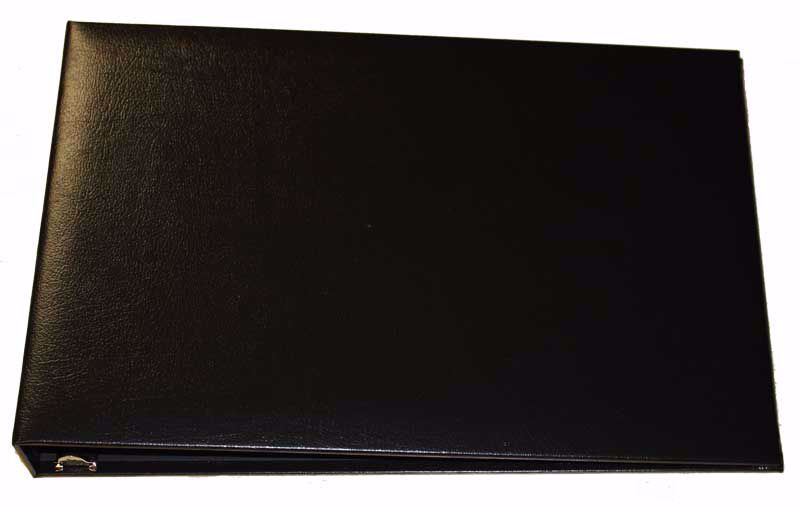
Keeping the written items and their stubs in one place is half the discipline. See check book binders for that format.
How large should the float be?
Enough for a normal week or two of genuine small purchases, and not a penny more. The right size is a question about frequency rather than about value, so count how often the box is opened before deciding what to put in it.
- List a month of real small purchases from your records, not from memory.
- Remove anything that should be on account, which is usually most of it.
- Set the float at what remains for a week or two.
- Set a maximum per payment, above which a check is required.
- Review the float twice a year, because habits drift.
A large float hides problems for longer. That is the real argument for keeping it small, rather than any worry about the money itself.
Who should hold the cash?
One named person, who does not also approve reimbursements or post the entries. The separation matters more in a small business than a large one, because in a small business the same person often does all three without anyone deciding that they should.
- Name the custodian in writing, and name a deputy for holidays.
- Keep the box locked and the key with that person, not in the drawer.
- Require an approved voucher before cash leaves the box.
- Have someone else count it at each replenishment.
Our guide to check signing policy covers the same separation on the payments side, and the thinking behind both is identical.
How do you reconcile it?
Count the cash, total the vouchers, and confirm the two together equal the float. Anything else is a difference, and a difference is investigated while people still remember the week rather than at year end.
- Count the cash in front of a second person.
- Total the vouchers and attached receipts for the period.
- Add the two figures and compare with the float.
- Record the result either way, including a nil difference.
- Replenish by check back to the float, which puts the top up in your register.
Keep the reconciliation sheet itself. It is a short page, it takes two minutes, and it is the document that shows a reviewer the fund was being watched rather than simply refilled whenever it ran low.
That last step is worth doing even in a business that otherwise pays electronically. A check written to replenish the fund gives the top up a number, a date and a stub, and a check register then carries the history.
When is a check the simpler answer?
Sooner than most businesses think. The moment a payment has a named business payee, an invoice, or a habit of repeating, cash stops being the quick option and starts being the one that needs extra paperwork to explain.
- The payee is a business rather than a counter.
- The purchase repeats weekly or monthly.
- The amount is beyond your per payment cash limit.
- You need the payee name on the record, not just the shop name.
- Someone else will need to understand it months later.

See blank checks on the bottom for stock that leaves room above the check for the description.
What should a petty cash voucher capture?
The elements the receipt leaves out. A voucher is a small internal form, and its job is to turn a loose till receipt into a record that identifies the payer, the purpose and the approval.
| Field | Why it is needed |
|---|---|
| Sequential voucher number | Makes a missing voucher visible as a gap |
| Date incurred | One of the elements guidance expects |
| Payee or supplier | Identifies who received the money |
| Business purpose | Shows the item or service was a business cost |
| Amount and who was repaid | Links the cash out to a person |
| Approval signature | Separates spending from authorizing |
Staple the receipt to the voucher immediately. A receipt that travels separately for even a day usually arrives without anyone remembering what it was for, and that memory is the description element.
What about a purchase with no receipt at all?
Write the voucher anyway, record what was bought and why, and have it approved by someone other than the person who spent the money. A documented exception is a far better position than a silent one, and if the exceptions become routine the answer is to move that spending onto an account.
Related reading
- Check register covers the running record of every payment.
- Check signing policy covers approval limits and separation of duties.
- How to write a business check by hand covers filling one in correctly.
- Blank check security features covers what the printed features do.
What to do next
Open the box this week, count it, and total the vouchers. If the two do not equal the float, you have found the thing worth fixing, and if they do, you have a baseline to replenish from.
Then move the repeating items off cash. Business checks are printed with a stub that records what each payment was for, and check book binders keep the written record in one place.
About the Author
Plenty of our customers order a small book of checks purely to stop using cash for things that should never have been cash. The usual trigger is an accountant asking who a payment went to, and nobody in the building being able to say.
The record requirements here follow federal guidance on the records a small business should keep. Retention periods and what your filings require are questions for your accountant.