- - -
- hours mins seconds
to get your checks by
Tomorrow, Oct. 28th

 0
You have no items in your shopping cart.
Joint Check in Construction: How It Works
Last updated: October 27, 2026
Construction articles explain what a joint check is for. Almost none of them say how to word the payee line, the memo and the stub, which is exactly what decides whether the protection you are paying for actually exists.
Quick Summary
A joint check is one check made payable to two or more co-payees, so a subcontractor and its supplier on a project are paid together. Its legal effect depends on the state, on the word between the names, and on whether the check carries an allocation.
- And is the operative word. Payees joined by and can negotiate the item only together, which is the whole point of issuing it.
- Endorsement can be treated as receipt. Where the rule applies and no allocation is shown, endorsing presumes the payee got all money due to it.
- It can also be read as a lien waiver. A small group of states treats endorsement that way, others require more, and some reject it outright.
- It is far from universal. Published guidance notes over half of jurisdictions are silent on the rule or reject it.
- Federal work is different. Under the Miller Act, endorsement alone does not release a supplier's rights.
- An allocation changes the picture. Where the split is written on the check, some jurisdictions look to it rather than presuming full payment.
The grouping below is how published construction guidance describes the position across states. Treat it as a map of where to ask, not as advice for your project.
| How the state treats endorsement | What that means in practice |
|---|---|
| Effective lien waiver in a few states | Signing the back can end the lien claim, so a supplier should be paid before it signs |
| Waiver only with more circumstances | A larger group of states looks for an agreement or conduct beyond the signature |
| No waiver recognized | Endorsement does not touch lien rights, so the contractor gains less than it thinks |
| Waiver void or unenforceable | The attempt fails by statute, so joint checks are a payment tool only |
| Federal projects | Endorsement alone does not release the supplier, whatever the state rule says |
This page is general information about check handling on construction projects. It is not legal advice, lien and payment law differs by state and changes, and the effect of any specific check depends on your contract and your facts, so take the detail to construction counsel before you rely on it.
On the mechanical side, business checks can be printed with two signature lines and a stub wide enough to carry an allocation, which is where most of this gets decided.
What this guide covers
- What is a joint check?
- How does the rule work in each state?
- Do both parties have to sign a joint check?
- Can one payee cash it alone?
- What should a joint check agreement include?
- How should the check itself be written?
- What are the risks for each party?
- What records should the payer keep?
What is a joint check?
A joint check is a single check made payable to two or more co-payees. On a construction project it usually names a subcontractor together with that subcontractor's own supplier or lower tier subcontractor, so one payment has to reach both of them.
The reason is simple. A general contractor can pay a subcontractor in full and still face a lien from the supplier the subcontractor never paid. Naming both on the same item puts the supplier in the room when the money arrives.
How is that different from a two party check?
They describe the same thing from different angles. A two party check is any item with two payees, while joint check is the construction term for using that structure deliberately to protect against a lien or a bond claim. The mechanics of the payee line are identical.
How does the joint check rule work?
Under the joint check rule, issuing one can discharge the contractor, and in some states its surety, from liability to the lower tier party that endorsed it. The reasoning is that the lower tier party had the money in its hands and could have insisted on its share before signing.
Two limits matter more than the rule itself. Published construction guidance says the rule is not applied uniformly, and that more than half of jurisdictions are either silent on it or reject it. So the protection a contractor assumes it bought may not exist where the project sits.
What exactly does endorsement presume?
Where the rule applies and the check shows no allocation, endorsement presumes the payee received all money due to it, even where it actually received part of the amount or none of it. That is the sharp edge for a supplier: the signature, not the bank transfer, is what gets treated as payment.
The practical response from the supplier side is to hold the endorsement until the money is settled, by taking its share first or by routing the proceeds through an escrow.
Does it reach the surety as well?
It depends on the state. Guidance groups jurisdictions into those where the rule discharges both the contractor and the surety, those that are unclear or silent on the surety, and those where it does not extend to the surety at all. On a bonded job that distinction decides who the supplier can still pursue.
What about federal projects?
Federal work sits outside it. Under the Miller Act, endorsing a joint check does not by itself release a supplier's rights, which has been held repeatedly in the federal courts. On a federal job the item is a payment mechanism, not a release.
Do both parties have to sign a joint check?
That is decided by the word between the names. Payees joined by and hold the item together, and only all of them acting together can negotiate it. Payees joined by or are alternative, so any one of them can take the whole amount and walk away.
A slash is the worst option. Where the wording is ambiguous, the commercial code treats the payees as alternative, which is the opposite of what a joint check is meant to do.
- Write and, in words. Not a slash, not an ampersand squeezed into a short field.
- Use each payee's registered name. A shortened supplier name is a refusal at the counter.
- Keep the payee field long enough. Two full company names do not fit on stock designed for one.
- Check it on the proof. Field width is set when the stock is printed, not when the check is written.
Can you cash a joint check with one signature?
Not where the names are joined by and. Both endorsements are required. Banking guidance is clear that a bank facing two named payees may insist on seeing both signatures before it will take the item at all.
That protection is only as good as the handling. An item that reaches the bank with one real endorsement and one that was supplied by the other payee creates an exposure for the payer as well as a dispute between the payees.
Published guidance suggests a straightforward control: have the first payee endorse the check at the contractor's office, then deliver the item to the second payee rather than mailing it onward. The wording each payee should put on the back is covered in how to endorse a check.
What should a joint check agreement include?
A joint check agreement is a tri-party document among the contractor, the subcontractor and the lower tier party, setting out how these payments will be issued and treated. Published guidance lists the provisions that keep it from doing more than intended.
- Name all three parties, so there is no argument later about who agreed to what.
- Identify the project and limit the agreement to it. A general arrangement follows you onto jobs you never meant to cover.
- State a maximum amount paid or to be paid under the arrangement.
- Exchange lien waivers for payment, so the release is documented rather than inferred from a signature.
- Say there is no continuing duty to issue joint checks unless the agreement expressly creates one.
- Record that it is a convenience and creates no contractual rights for the lower tier party.
The reason that last point gets its own line is the risk it manages. A loosely drafted agreement can create an independent payment obligation the contractor never intended, or waive a protection it had by statute.
How should the check itself be written?
This is the part the legal articles leave out, and it is where the arrangement either works or does not. Five decisions are made on the document rather than in the contract.
| On the check | What to put there | Why it matters |
|---|---|---|
| Payee line | Both registered names with and between them | Decides whether both endorsements are needed |
| Memo line | Project name and the pay application number | Ties the item to one job out of several |
| Voucher stub | The invoice numbers and the split between payees | An allocation can change what endorsement is presumed to mean |
| Signature lines | Two where your own policy requires two | Large progress payments usually warrant a second review |
| Duplicate or copy | A retained copy of the stub as issued | Your proof of what the allocation said at the time |
The stub is the detail worth paying for. Where the item carries a clear allocation, some jurisdictions look to that allocation instead of presuming the full amount reached the endorser. A memo line two inches wide cannot carry three invoice numbers and a split, and a stub can.
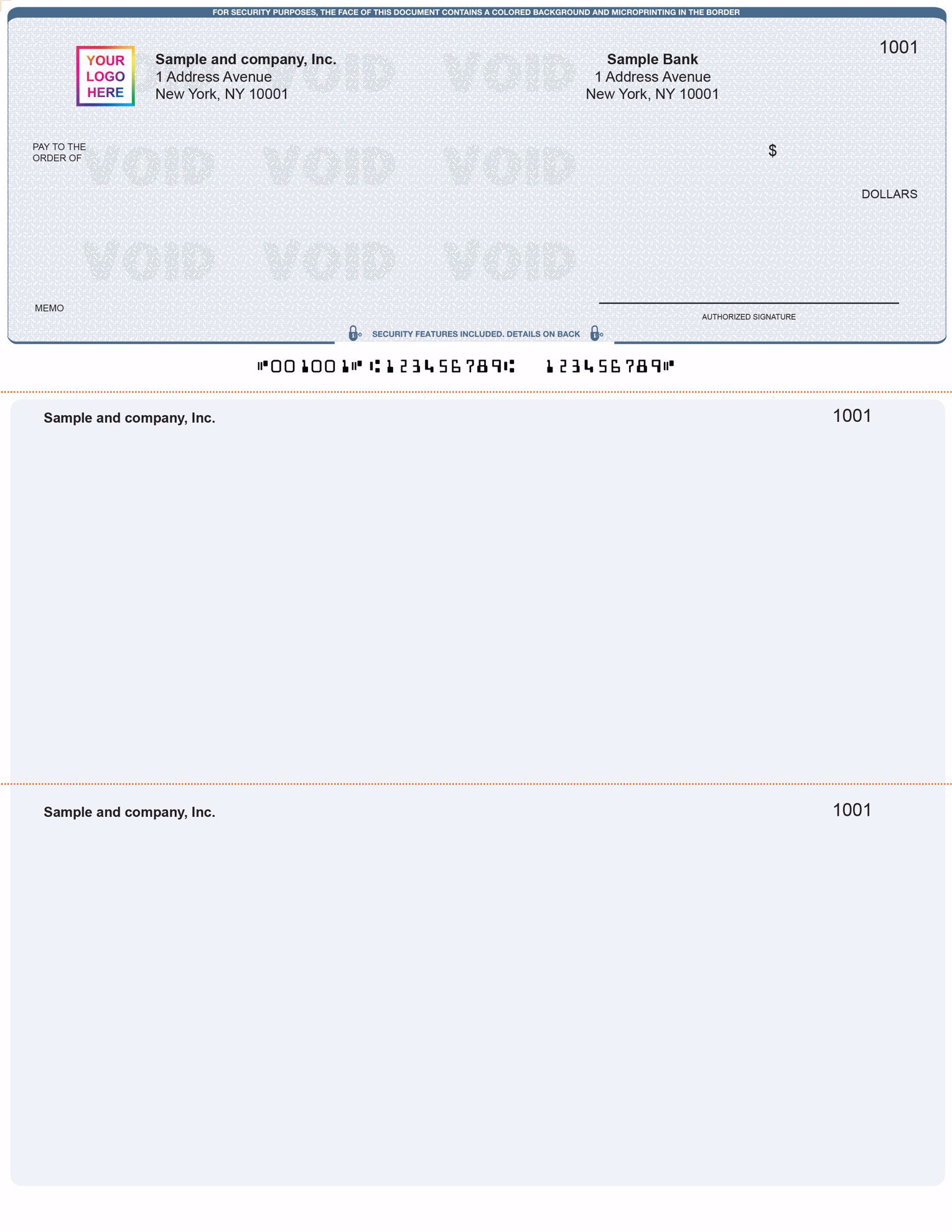
Voucher layouts are listed under computer checks, and business checks on top is the position most accounting software prints to.
What are the risks for each party?
The arrangement moves risk around rather than removing it. Each party is exposed differently, and knowing which seat you are in tells you what to insist on.
- General contractor. Issuing one without authority in the subcontract can be a breach, and an item deposited without proper endorsements can leave the contractor and its surety still liable.
- Subcontractor. A first tier subcontractor that receives the payment may still hold back money meant for the lower tier party, which simply moves the dispute downstream.
- Supplier or lower tier subcontractor. Endorsing may be treated as receipt of everything due, and in some states as a release of lien rights, so the signature should come after the split is settled.
- Everyone, on a mandatory clause. Where the subcontract makes joint checks compulsory, a supplier may have a direct claim against the contractor if they are not issued.
Deciding who may sign these payments inside your own business is a separate question worth writing down. Our guide to a check signing policy covers that, and who signs a business check covers how the bank records it.
What records should the payer keep?
Keep enough to reconstruct the payment two years later without relying on memory. A payment that becomes contested is argued over the paperwork that existed when it was issued, not what anyone intended.
- The stub as issued, showing the invoice numbers and the split.
- The lien waiver exchanged for the payment, filed with that check number.
- The written agreement, if one exists, with the project it covers named on it.
- The register entry, showing the number, the date, both payees and the amount.
- The delivery note, recording who endorsed where and when the item was handed over.
A check register covers the fourth item, and a book with a carbon copy covers the first without anyone transcribing it.
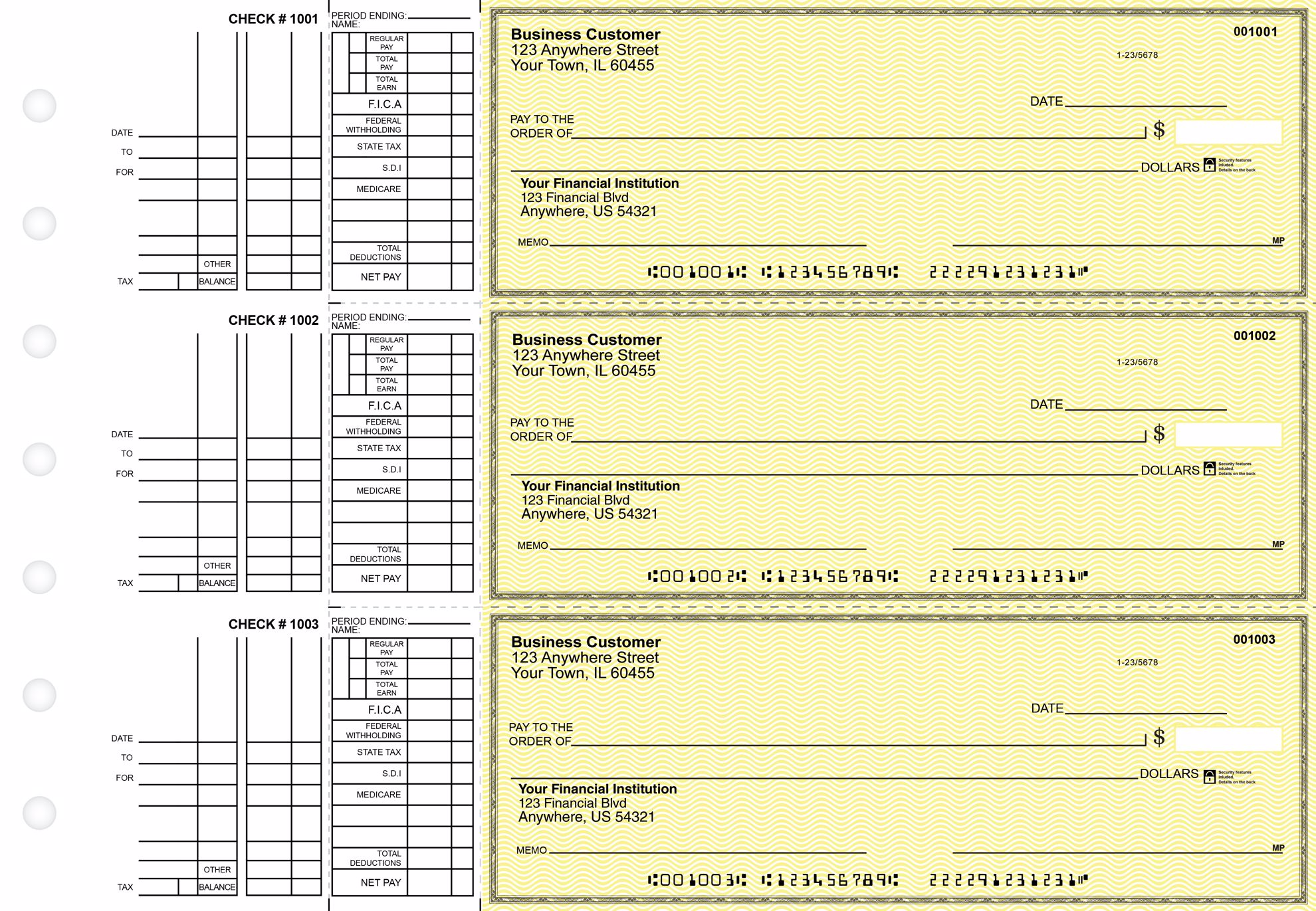
Jobs where checks get written in a site office usually want that format. See manual business checks for the bound books, or multi purpose business checks where some are hand written and the rest printed.
Related reading
- Types of business checks runs through each layout a contractor can order.
- How to write a business check by hand covers filling in a payee line correctly.
- High security business checks covers the stock used for large progress payments.
- Check register covers logging each payment against its number.
What to do next
Before the next pay cycle, check two things: that your subcontract actually permits joint checks, and that your check stock has a payee field wide enough for two registered company names plus the word and. The second one is the one that gets discovered at the worst moment.
If the stock needs changing, business checks are printed to the field widths, signature lines and stub layout you specify. Orders approved before the cutoff go into production that day and ship for next day delivery.
About the Author
Checks Next Day prints check stock for U.S. contractors, among many other trades, and ships it the next business day. Construction customers ask about two things more than anything else at proof stage: how much room the payee line has, and whether the stub can carry invoice detail for a split payment.
The legal background here was taken from published construction industry guidance on joint checks and from the commercial code provisions on multiple payees. Lien and payment rules are state specific and change, so treat construction counsel as the authority for your project.