- - -
- hours mins seconds
to get your checks by
Tomorrow, Nov. 19th

 0
You have no items in your shopping cart.
Insurance Claim Checks With Two Names: Endorsing, Releasing and Getting Paid
Last updated: November 18, 2026
The claim is settled, the envelope arrives, and there are two names on the check. Sometimes three. Whatever happens next depends almost entirely on one small word printed between those names.
Quick Summary
A property claim check usually names the homeowner and the lender together, because the lender is a loss payee on the policy. Whether one payee can act alone turns on how the names are joined. The commercial code treats names joined in the alternative as payable to any one of them, and names not joined in the alternative as payable only to all of them together.
- The lender is named because the mortgage requires it.
- Or means any one payee may negotiate the item.
- And means every payee must act together.
- An ambiguous mark counts as alternative, which surprises most people.
- Servicers release in stages on larger losses, after inspection.
- Some states put a clock on the servicer, with interest or penalties attached.
The three wordings do three different things, and the difference is not cosmetic.
| How the names are joined | Who may negotiate it | What that means in practice |
|---|---|---|
| Payee A or Payee B | Any one of them | One signature is normally enough |
| Payee A and Payee B | Only all of them together | Both endorsements are needed |
| Ambiguous, such as a slash | Treated as alternative | Any one payee may act, though banks vary |
Take the following as background rather than legal or insurance advice. Claim handling is governed by your policy, your mortgage and your own state's law, so your insurer, your servicer and your attorney are the people to confirm anything here.
If you are the contractor being paid out of one of these, business checks with a wide stub are what make the job and the draw traceable afterwards.
What this guide covers
- Why is the lender on the check?
- What does and versus or mean?
- How do you endorse a two name check?
- How long can the servicer hold the money?
- How does the contractor get paid?
- What if a bank pays without one endorsement?
- What about the unusual cases?
Why is the lender on the check?
Because the mortgage says so. The standard uniform security instrument used across the country requires the borrower's hazard policy to name the lender as mortgagee and as an additional loss payee. Once that is on the policy, the insurer issues the settlement to both names.
The same clause explains the delay that follows. The lender has the right to hold such insurance proceeds until it has had an opportunity to inspect the property, and the proceeds are to be applied to restoration or repair.
A state insurance regulator puts the reasoning in plainer language, noting that the mortgage holder appears because they have a secured interest in the property. Another describes the staged release as a protection, since releasing funds in increments protects the homeowner from contractors who leave before finishing.
It is not the insurer being awkward. The insurer is following the policy, the servicer is following the mortgage, and nobody in the chain has discretion to leave a loss payee off.
What does and versus or mean?
It decides whether one payee can act alone. The commercial code states that where an instrument is payable to two or more persons alternatively, it is payable to any of them. Where it is not alternative, it is payable to all of them and may be negotiated, discharged, or enforced only by all.
The federal banking regulator describes the same rule from the counter. Where a check is issued to two people jointly, the bank generally can require that the check be signed by both payees, and where the check names one payee or the other, generally only one payee needs to sign the check.
What if the names are joined by a slash or by and or?
The code has a tiebreaker, and it goes the way most people do not expect. Where it is ambiguous whether a check is payable alternatively, the instrument is payable to the persons alternatively. In other words, the doubt is resolved in favor of any one payee being able to act.
Banks do not always behave that way. The regulator's own advice where a payee line is unclear is that you should ask your bank what the guidelines are, which is a fair summary of the real world position.
Do not rely on the tiebreaker. Ask the bank that will take the deposit before anyone signs anything, because a rejected deposit on a repair payment costs weeks.

A contractor paying subcontractors out of a draw needs room to note the job. See blank checks on the bottom for that layout.
How do you endorse a two name check?
In the order the parties ask for, which is usually homeowner first and servicer last. A state insurance department describes the normal sequence: the item is made out to both you and the mortgage lender, and they will have to endorse the claims payment check before you can cash it.
- Photograph or copy both sides before the item leaves your hands.
- Endorse exactly as your name is printed, not a shortened version.
- Follow the servicer's instructions on where to send it and what to enclose.
- Send it trackably, and keep the receipt with the claim file.
- Record the date you sent it, because any deadline runs from around then.
Our guide to how to endorse a check covers the wording and placement for the endorsement itself.
Should you sign before or after you send it?
Ask the servicer, and do what the letter says. Some require the item endorsed before it arrives, some want it unendorsed. Guessing wrong gets the whole package returned, and on a repair timetable that is the expensive mistake.
How long can the servicer hold the money?
Longer than homeowners expect, and the pattern is a staged release tied to inspections. Small losses often go out in one payment, larger ones in installments as the work progresses, with a final release once the repair is signed off.
A few states put a clock on it. Texas requires a lender holding insurance proceeds to act not later than the 10th day after the date the lender receives a borrower's release request, and a lender that fails to do so owes interest at the rate of 10 percent a year on the proceeds held.
Louisiana gives a mortgagee or servicer fifteen business days after receiving such a request to provide endorsements and return excess funds, and allows the state to assess penalties of up to five hundred dollars per day for noncompliance.
California added an interest rule in 2025. A financial institution holding hazard insurance proceeds must pay interest on those funds at a rate of at least 2 percent simple interest per annum.
Make the request in writing. Most of these clocks start from a written request from the borrower, so a phone call does not start anything running.
What about a vehicle or contents claim?
Different rule, often a shorter one. Texas requires a lienholder whose endorsement is needed on a claim payment to endorse it or give written reasons for refusing not later than the 14th business day after the date the lienholder receives it.
How does the contractor get paid?
Out of the released funds, on a schedule everyone agreed in advance. Contractors get into trouble on these jobs for one reason above all others: they start work on the strength of a check they are named on but have never physically held.
- Get the payment schedule in writing before the first day on site.
- Match your draws to the servicer's release stages, not to your own cash needs.
- Ask who is holding the item and when the next inspection is booked.
- Read any waiver carefully before signing it, and know whether it is conditional.
- Keep your own copy of every endorsed item that passes through the job.
Being named is not the same as being paid. That distinction is the whole risk, and the next section explains why it is a legal distinction and not just a practical one.
What should you do before the work starts?
Agree in writing who holds the item, who endorses it and in what order. Then agree when each release is expected.
Three short documents prevent almost every dispute on these jobs: the scope of work, the draw schedule tied to the servicer's inspection stages, and a note of who to contact at the servicer. Keep all three with the claim file rather than in somebody's inbox.
What if a bank pays without one endorsement?
Then the item has been converted, and there is a claim. The commercial code provides that an instrument is converted where a bank obtains or makes payment for a person not entitled to enforce the instrument or receive payment.
There is a limit that catches contractors in particular. The same section provides that a payee or indorsee who did not receive delivery of the instrument cannot bring an action for conversion. So a contractor named on a check that was never handed to them has a problem the code does not solve.
- Report it to both banks in writing, immediately and with copies.
- Tell the insurer and the servicer the same day.
- Keep every scrap of correspondence, including the envelope.
- Take advice early, because the routes differ by who held the item.
- Do not sign a release while the position is unresolved.
Our guide to check washing covers the related problem of an item altered or stolen in transit.
What about the unusual cases?
Three come up repeatedly, and none of them is covered well anywhere.
| Situation | What to do first |
|---|---|
| The check names your old servicer | Ask the insurer to reissue naming the current one, in writing |
| A second lender is also named | Ask both servicers for the endorsement order before sending it anywhere |
| The loan was paid off | Send the payoff confirmation and ask for a reissued item |
In all three cases, do not endorse and post it hopefully. An item sent to the wrong institution can sit for weeks before anyone notices, and the repair waits with it.
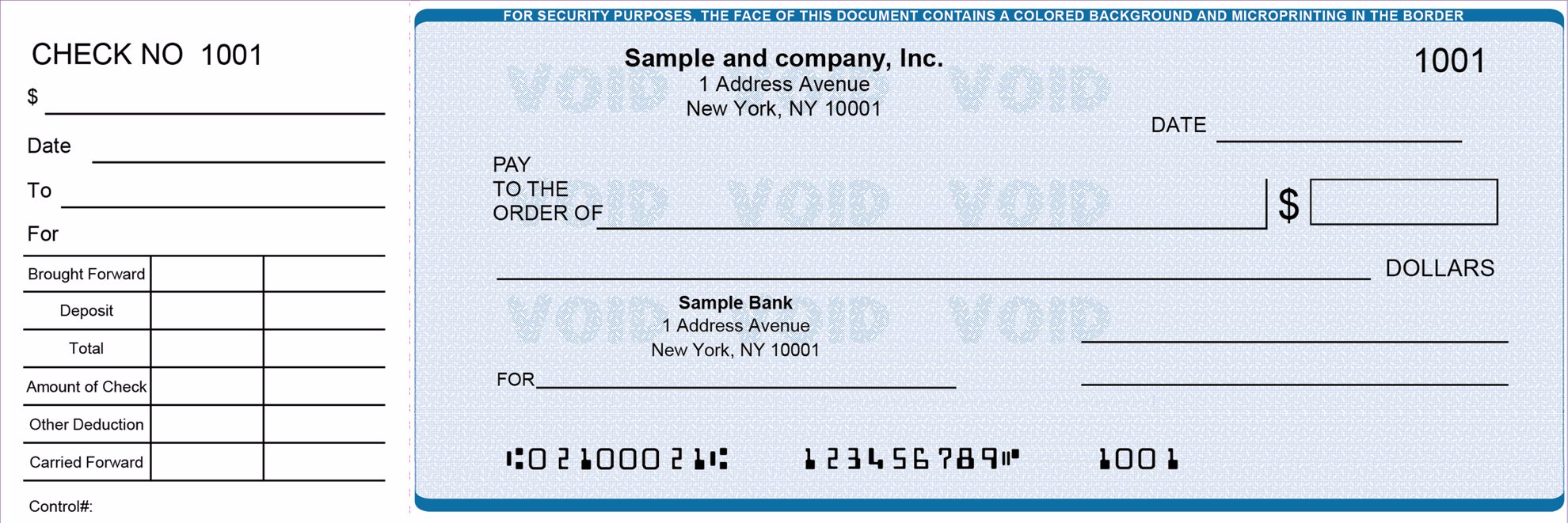
The homeowner's own share of a repair usually goes out on ordinary stock. See personal checks for that format.
Can the servicer apply the money to the loan instead?
Sometimes, and the mortgage decides. The security instrument contemplates proceeds going to restoration or repair, but it also allows other treatment in defined circumstances, and a delinquent loan changes the picture.
If that is being discussed, get the reasoning in writing and read your own mortgage clause alongside it. This is the point at which most homeowners need their own advice rather than another phone call.
Related reading
- How to endorse a check covers wording and placement.
- Check washing covers an item altered or stolen in the post.
- Deposit stamp for checks covers restricting an item before it is deposited.
- Check register covers recording a draw against a job.
What to do next
Look at the check in front of you and read the word between the names. That one word tells you whether you can deposit it tomorrow or whether it has to travel first, and it is the only detail on the item that changes the answer.
If you are the contractor on the job, set your paperwork up for staged draws. Business checks carry the stub space a job reference needs, and high security business checks suit the larger payments that follow a release.
About the Author
Roofing and restoration firms are among our steadiest customers, and they order in the weeks after a storm. The question they ask is never about the paper. It is whether the stub has room for the claim number, because that is the number everybody on the job will be chasing for months.
The rules above on alternative payees, conversion and delivery come from the commercial code, the loss payee requirement from the standard uniform security instrument, and the release deadlines from Texas, Louisiana and California law. Those states are examples. Your policy, your mortgage and your own state decide the rest.