- - -
- hours mins seconds
to get your checks by
Tomorrow, Nov. 26th

 0
You have no items in your shopping cart.
How to Mail a Check Safely: A Step by Step Guide
Last updated: November 25, 2026
Mailing a check used to be the boring part of paying a bill. Today it is the step where most check fraud starts, because a check sitting in a mailbox or collection box can be stolen, washed and rewritten for a much larger amount before anyone notices.
This guide covers how to mail a check from start to finish: how to fill it out and fold it, which envelope and USPS service to use, where to drop it off, how long it takes, and exactly what to do if it goes missing.
Quick Summary
To mail a check, fill in every field in permanent ink, record the check number, fold the check inside a letter or remittance slip, seal it in an opaque or security tinted envelope, add postage, and hand it in at the Post Office or drop it in a blue collection box before the last pickup. Add Certified Mail when you need proof it was delivered.
- Mail theft drives check fraud. FinCEN reported check fraud reports nearly doubled from 2021 to 2022, with stolen mail a major source.
- Timing matters as much as place. Postal Inspectors advise using a blue box before the last pickup or mailing inside the Post Office, never leaving checks in your mailbox overnight.
- Hide the check. A security tinted envelope or a folded letter keeps the payee and amount out of sight.
- First-Class Mail takes 1 to 5 days. It has no tracking for letters unless you add a service such as Certified Mail.
- Keep a record of every mailed check. Check number, payee, amount and mailing date are what you need if it disappears.
- Act within days if it goes missing. Stop payment, report the theft and review your statement promptly.
Here is how the main USPS options compare for a mailed check. Features only, since services and postage rates change.
| USPS option | Proof you mailed it | Proof of delivery | Signature at delivery | Best for |
|---|---|---|---|---|
| First-Class Mail | No | No | No | Routine payments to known payees |
| First-Class with Certificate of Mailing | Yes, official record of the mailing date | No | No | Proving a payment left on time |
| Certified Mail | Yes, mailing receipt | Yes, delivery or attempt | With Return Receipt | Larger or deadline payments |
| Registered Mail | Yes | Yes | Yes | High value items needing maximum security |
| Priority Mail | Receipt at the counter | Tracking included on most shipments | Optional add on | Faster delivery with tracking |
This page is general information about mailing payments. It is not legal or banking advice, and USPS services change, so confirm current options at the Post Office counter.
If you mail vendor payments every week, business checks on top fold straight into a double window envelope so the payee address shows through and nothing is handwritten on the outside.
What this guide covers
- Is it safe to mail a check?
- How do you mail a check step by step?
- Which envelope should you use for a check?
- Which USPS service should you use for a check?
- Where should you drop off a mailed check?
- How long does it take a mailed check to arrive?
- How should a business mail vendor checks?
- What should you do if a mailed check never arrives?
- Related reading
- What to do next
Is it safe to mail a check?
Mailing a check is still common and usually works, but it is less safe than it was, and the risk is concentrated in how and where the envelope waits before it reaches the postal system. Treat it as a layered risk you can reduce, not a reason to panic.
The numbers explain why the advice changed. FinCEN, the Treasury bureau that tracks financial crime, issued an alert on mail theft related check fraud in February 2023. It reported that suspicious activity reports about check fraud rose from more than 350,000 in 2021 to over 680,000 in 2022, and that the Postal Inspection Service received 299,020 mail theft complaints between March 2020 and February 2021, a 161 percent increase.
How do thieves steal checks from the mail?
The FinCEN alert describes the main methods: breaking into blue collection boxes, raiding unsecured residential and cluster mailboxes, "fishing" envelopes out of collection boxes with sticky devices, and using stolen or counterfeit postal keys. Once they have a check, they wash off the ink and rewrite the payee and often the amount, or use the account details to print counterfeits.
That is why the steps below focus on three things: making the check hard to alter, making it hard to see, and keeping the time it sits unattended as short as possible. The full mechanics of alteration are in our guide to check washing.
How do you mail a check step by step?
Mailing a check safely takes a few extra minutes and follows the same order every time:
- Fill in every field. Date, payee, amount in figures and in words, and your signature, in permanent ink as banks recommend. Never mail a check with the payee left blank.
- Close the gaps. Start the amount right against the dollar sign and draw a line through unused space after the written amount and the payee name.
- Use the memo line. Add an invoice or account number so the payee can apply the payment, but never your full Social Security number.
- Record it. Note the check number, payee, amount and mailing date in your register before the envelope leaves your hands.
- Fold it inside paper. Wrap the check in a letter, invoice stub or remittance slip so it cannot be seen through the envelope.
- Use the right envelope. An opaque or security tinted envelope, sized so the check does not slide around.
- Address it clearly. Use the payee's remittance address from the invoice, plus your return address.
- Seal and add postage. A self seal envelope gives a firmer closure than a lick seal.
- Mail it in person or before the last pickup. Details are in the drop off section below.
- Confirm it cleared. Watch your account and look at the image of the cleared check, not just the amount.
The habits in step one and two are covered in more depth in how to write a business check by hand.
Can you fold a check to mail it?
Yes. Folding a check is fine as long as the fold does not run through the MICR line along the bottom edge, which banks read by machine. Folding in thirds to fit a standard business envelope is normal, and many business checks are designed to be folded that way.
Should you send a check with a note?
A short note or the payee's remittance slip is worth including. It hides the check inside the envelope and tells the payee which invoice or account to credit, which stops a payment from sitting unapplied. Businesses usually send a printed check register entry or voucher stub with the details.
Which envelope should you use for a check?
Use an envelope that hides the contents. A plain white envelope held up to the light can show the payee and amount on a check, which tells a thief exactly what is worth stealing. Three options cover most needs:
- Security tinted envelopes. A printed pattern inside the envelope blocks the view of the check.
- Double window envelopes. Built for check on top business checks, they show the payee address and your return address through two windows, so nothing needs handwriting.
- Self seal envelopes. A peel and seal strip closes more firmly and quickly than a moistened flap.
For office mail, double window envelopes with security tint pair with voucher style checks, and double window self seal envelopes add the peel and seal closure. Sizes and fit are covered in our business check envelope size guide.
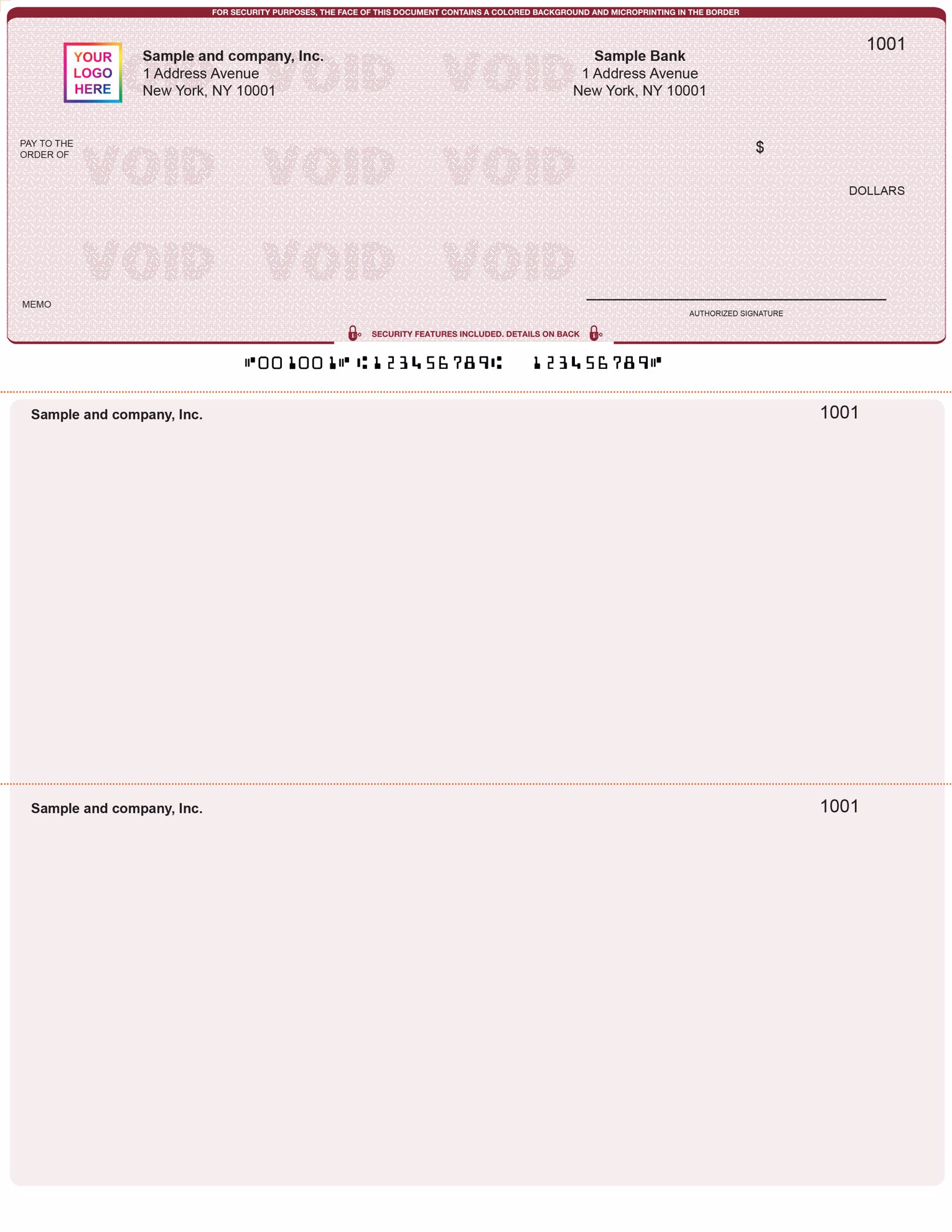
A check on top layout with two voucher stubs. Folded in thirds, the payee name and address line up with the envelope window, so the check goes out without a handwritten address.
Which USPS service should you use for a check?
For most checks, First-Class Mail is enough. Add an extra service when you need proof, either that you sent the payment on time or that it was delivered. USPS describes each option this way:
- Certificate of Mailing. An official record of the date you mailed the item, available only at the Post Office counter. USPS does not keep a copy, so store yours.
- Certified Mail. Proof you sent it and a record of delivery or attempted delivery. Add Return Receipt to get the recipient's signature.
- Registered Mail. USPS calls it its most secure option. It must be handed to a postal employee and is tracked through the system.
- Restricted Delivery. Limits who can sign for the item.
- Priority Mail. Faster delivery, typically in 2 to 3 days though not guaranteed, with tracking included on most shipments.
USPS notes that tracking is available on First-Class letters only when you add a trackable service such as Certified or Registered Mail. For a tax payment, a legal settlement or anything with a deadline, Certified Mail with Return Receipt gives you both proof points.
Where should you drop off a mailed check?
The safest place to mail a check is inside a Post Office, handed to the counter clerk or dropped through the lobby slot. If you use a blue collection box, the Postal Inspection Service advises depositing mail before the last pickup of the day so it does not sit in the box overnight.
- Do not leave checks in your home mailbox with the flag up, especially overnight, which postal guidance specifically warns against.
- Avoid boxes after the last pickup time printed on the front.
- Ask for hand cancellation at the retail counter if you want the envelope postmarked in front of you.
- Hold your mail when you are away so incoming checks do not pile up.
Mailing inside the Post Office is not foolproof, since theft can also happen further along the route. That is why the steps above layer several protections rather than relying on one.
How long does it take a mailed check to arrive?
USPS says First-Class Mail is delivered in 1 to 5 days, and Priority Mail typically takes 2 to 3 days. Build in extra time for holidays, weekends and the payee's own processing, which can add days before the check is deposited.
| Stage | What to expect | What you can do |
|---|---|---|
| In the mail | 1 to 5 days for First-Class Mail | Mail early in the week and before the last pickup |
| Payee processing | Depends on the payee's mailroom | Include the remittance slip so it is applied correctly |
| Bank clearing | Varies by bank and deposit method | Watch your account for the cleared item |
| Statement review | Your next statement or online image | Confirm the payee and amount on the image |
Clearing times are covered in how long it takes for a check to clear. For deadline payments, mail at least a week early or use a tracked service.
How should a business mail vendor checks?
A business mailing checks every week needs a routine, not just good intentions. The controls below take little time once they are habit, and each one closes a gap thieves use.
- Print, do not handwrite, the payee. A printed payee name is consistent from check to check, which makes a rewritten one easier to spot on the cleared image.
- Use voucher checks and window envelopes. No handwritten addresses, and the remittance detail travels with the payment.
- Separate duties. The person who prepares checks should not be the only person who signs and mails them, as set out in a check signing policy.
- Keep a mail log. Check number, payee, amount, date and who took the batch to the Post Office.
- Mail the same day you sign. Signed checks should not sit in an out tray overnight.
- Ask your bank about check fraud screening. Many banks offer services that match presented checks against the ones you issued.
- Review cleared check images weekly. A statement line showing only "check" and an amount will not reveal a changed payee.
Check stock matters too. High security business checks add features that make alteration visible, which is your last line of defense if an envelope is stolen.
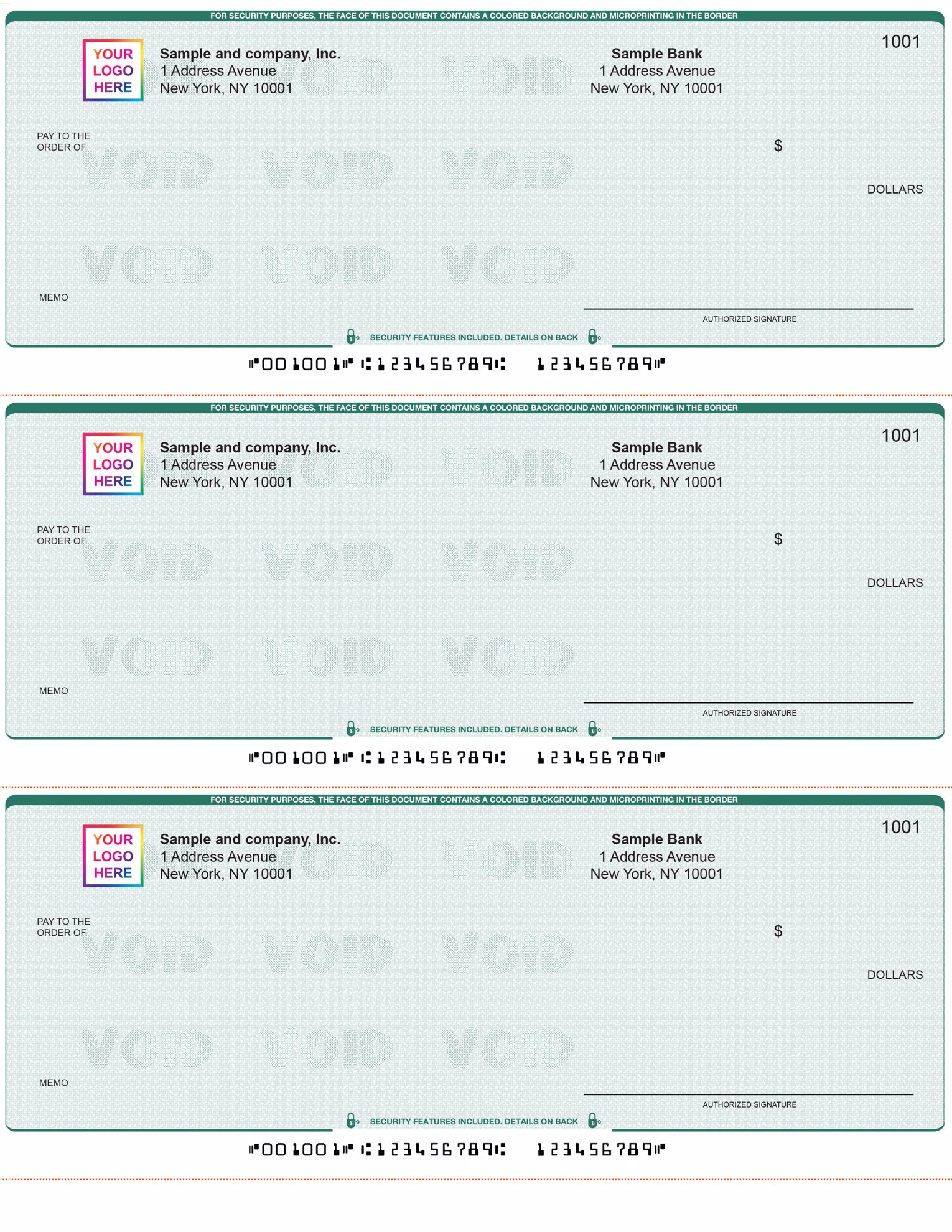
Three per page business checks. Offices that print a weekly batch of vendor payments often use this format, then log each check before the batch goes to the Post Office.
What should you do if a mailed check never arrives?
Move quickly. The Consumer Financial Protection Bureau advises contacting your bank right away when a check is stolen, and your account agreement may limit how long you have to report a problem after your statement is available. Work through these steps in the first day or two:
- Confirm with the payee that it has not arrived, and ask them to check their mailroom.
- Look up the check in your account. If it has cleared, open the image and check the payee and amount.
- Stop payment if it has not cleared, then issue a replacement with a new check number. Our stop payment on a check guide covers the process.
- Report it to your bank in writing if it cleared to someone else or for a different amount.
- Report the mail theft to the Postal Inspection Service online at its reporting page or by phone at 1-877-876-2455.
- Review recent statements for other checks that may have been copied using your account details.
The CFPB notes that state law generally does not hold you responsible when a thief forges the payee's signature, but those protections generally do not cover a signed check left blank. One more reason never to mail a check without the payee filled in.
Related reading
- Check washing explains how stolen checks are altered and how to spot it.
- Personal check safety covers day to day habits for personal accounts.
- Business check envelope size matches envelopes to each check layout.
- Stop payment on a check walks through stopping and replacing a lost check.
What to do next
For your next mailed payment, pick the envelope first, then hand it in at the counter or drop it before the last pickup, and log the check number before it leaves. Those three habits remove most of the risk.
If you mail checks regularly, set up your stationery so the safe way is the easy way. Check on top computer checks pair with double window envelopes for a mailing routine with no handwritten payee or address. Orders placed before the daily cutoff are produced the same day.
About the Author
Checks Next Day prints business and personal checks and check envelopes for U.S. account holders and ships them the next business day. Many reorders reach us after a customer's mailed checks were stolen, so mailing safety comes up in our conversations every week.
The guidance here was checked against FinCEN's mail theft alert, U.S. Postal Inspection Service prevention advice, USPS service descriptions, and Consumer Financial Protection Bureau guidance on stolen checks. Services and bank policies change, so confirm details with USPS and your bank.