- - -
- hours mins seconds
to get your checks by
Tomorrow, Oct. 27th

 0
You have no items in your shopping cart.
How to Cash a Business Check
Last updated: October 26, 2026
Most advice on this question skips the part that decides the outcome: who the check names as payee. Get that straight and every other rule about endorsing, depositing and cashing falls into place.
Quick Summary
To cash a business check you normally have to deposit it into an account in the business name, because the business is the payee. Counter cashing is a bank policy decision rather than a right, and the endorsement on the back controls who can negotiate the item next.
- The name on the front rules. A check naming a business is payable to that business, so an individual is not the payee.
- No bank has to cash it for a stranger. Banking guidance states there is no federal requirement to cash a check for a non-customer.
- A fee is allowed. A bank that does cash an item for a non-customer may charge for it.
- And means everyone signs. Payees joined by and must all sign, while payees joined by or can act alone.
- Endorse narrowly. A signature alone turns the item into bearer paper, so add For Deposit Only unless you have a reason not to.
- Third-party items are optional for the bank. It can reject one and can ask the original payee to appear.
Here is what usually happens at each place people take a business check.
| Where you take it | What usually happens |
|---|---|
| The business account's own bank | Deposited to the business account, cash back subject to the bank's rules for signers |
| The bank named on the check | Its own policy decides, and a fee may apply because you are not its customer |
| A personal account at any bank | Usually refused, because the payee is the business and not the person |
| A check cashing outlet | Varies by operator and state, with its own identification and fee rules |
| A mobile app or ATM | Deposit only, into the matching account, with the endorsement wording the app asks for |
This page is general information about how checks are handled. It is not legal or banking advice, and your own account agreement and state law govern, so check with your bank on anything that affects a specific item.
If you are the one writing the checks, business checks printed with your exact registered name are what keep your payees out of this problem.
What this guide covers
- Can you cash a check made out to a business?
- How do you endorse a business check?
- Where can you cash a business check?
- What does the bank ask for at the counter?
- What if the check is payable to two names?
- Why was the business check refused?
- When are the funds available after deposit?
- How do you stop your own checks causing this?
Can you cash a check made out to a business?
Rarely at a counter, and never as a matter of right. A check that names a business is payable to that business, so the person holding it is not the payee even when they own the company. The ordinary route is a deposit into an account in the business name.
The commercial code backs this up. A payee can be pinned down several ways, by name, by a number, by an office or by an account, and where the named group is not a legal entity in its own right the item runs to whoever represents its members. Either way the identity on the front, not the person at the window, decides who can deal with it.
What if the business is a sole proprietorship or a DBA?
It is easier, but only if the bank already knows the name. A sole proprietor and the business are the same legal person, so a bank that has the trading name registered on the account will usually accept a check payable to that name. Without that registration on file, the name on the check and the name on the account do not match, and matching is what the teller is checking.
Can you deposit a business check into a personal account?
Expect a refusal. The deposit would put the funds somewhere other than the named payee, and banks set their own policy on items like that. Some will take one for a long standing customer with the business registered to them, and plenty will not.
If the company is new and has no account yet, that is the thing to fix first. Our guide to ordering business checks for the first time covers what the account needs before stock can be printed.
How do you endorse a business check?
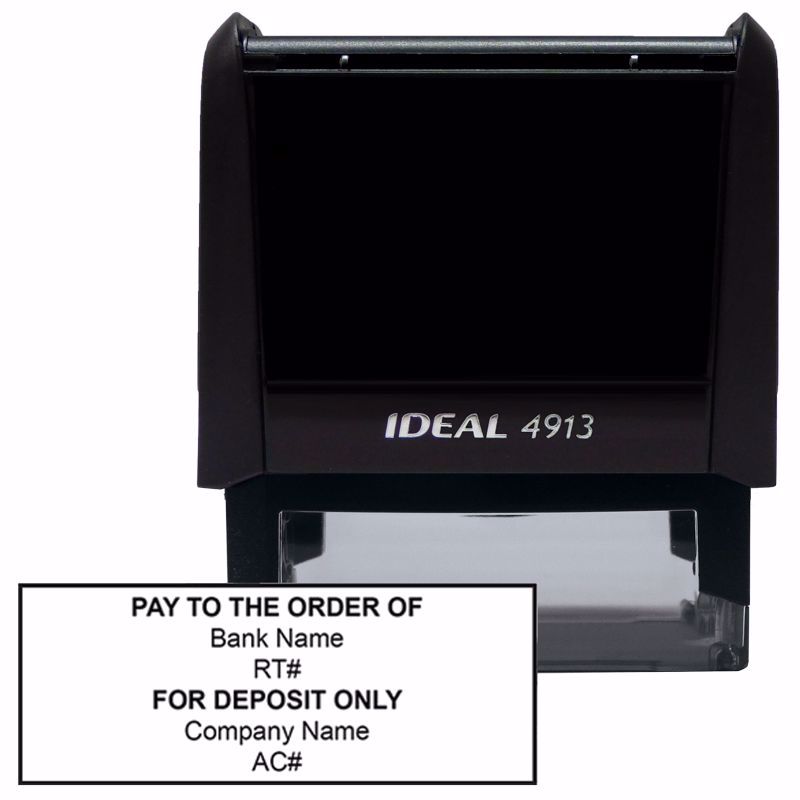
Sign the back as an authorized signer and make the business name match the front. A complete business endorsement has four parts: the business name as printed on the check, the signature of someone authorized on the account, that person's title, and the account number the item is going into.
What you add underneath matters more than most people expect. A signature on its own is a blank indorsement, which makes the item payable to bearer and transferable by handing it over. Writing For Deposit Only under the signature keeps it from being used that way if the envelope goes astray.
- Copy the payee name exactly as it appears on the front, including LLC or Inc.
- Sign as a person with authority, not just anyone in the office.
- Add the title, such as Owner, Treasurer or Office Manager.
- Write the account number so the item cannot be routed elsewhere.
- Finish with For Deposit Only unless the bank asks for different wording.
A stamp does this the same way every time, which is why most offices that handle more than a few checks a week use one. The stamp options sit under endorsement stamp, and how to endorse a check goes line by line through the wording.
Can you endorse a business check to someone else?
The code allows it and the bank still decides. Writing a name above the signature turns it into a special indorsement, and from that point only the person named there can pass the item on. That is the mechanism behind signing a check over.
In practice it often stops there. Banking guidance is explicit that a bank sets its own policy on third-party checks and is not legally required to accept them, and that it may require the payee to be present so the signature can be verified.
How do you endorse a business check for mobile deposit?
Use the wording the app puts on screen. Most apps want the business name, an authorized signature, the title, the account number and a line such as For Mobile Deposit Only, and they reject images where the endorsement does not match the prompt. Read the prompt before anyone signs, because a rejected image usually means the item has to be re-endorsed by hand.
Where can you cash a business check?
There are four realistic places, and only one of them is reliable. The bank holding the business account will take the item every time. Everywhere else, acceptance is a policy decision made by whoever is standing in front of you.
- The business account's own bank. The item goes in as a deposit, and cash back depends on the bank's rules for that account and that signer.
- The bank printed on the check. It holds the funds, so it can pay the item, but it is under no federal obligation to cash it for a non-customer and may charge a fee.
- A check cashing outlet. Rules, identification requirements and fees vary by operator and by state.
- An app or an ATM. Deposit only, into an account whose name matches the payee.
One point is worth repeating. Counter cashing at the paying bank is the option people assume is guaranteed, and it is the one most often refused, because the policy that matters belongs to a bank you have no relationship with.
What does the bank ask for at the counter?
Expect to prove three things: who you are, that the business is who the check says, and that you may act for it. The exact list is set by each bank, but these are the items that come up.
- Photo identification for the person presenting the item.
- The account relationship, meaning an account in the business name at that bank.
- Authority to sign, which the bank reads off its own signature records rather than the check.
- A complete endorsement on the back, matching the payee name on the front.
- Verification of funds in some cases, which means a call or an internal check before cash is handed over.
What if the check is payable to two names?
The joining word decides everything. Where payees are joined by or, the item is payable to any of them and can be negotiated by any one of them. Where the names are joined by and, every one of them has to take part before the item can move. Where the wording is unclear, the code treats the payees as alternative.
Banking guidance adds the practical half: with two payees, the bank generally can require the check to be signed by both before it will cash or deposit it. So an ambiguous slash between two names is not something to rely on at the window.
| How the payees are written | Who can negotiate it | What to expect at the bank |
|---|---|---|
| Name A or Name B | Either one, acting alone | One endorsement is enough |
| Name A and Name B | Only both together | Both endorsements, and often both people present |
| Name A / Name B | Treated as alternative where unclear | The bank may still ask for both signatures |
| Business name only | The business, through an authorized signer | Deposit into the matching business account |
Why was the business check refused?
Almost every refusal traces back to a mismatch, a missing signature or an absent relationship. Working through this list in order usually finds it within a minute.
- The payee name does not match the account name. An abbreviation on the check against a full legal name on the account is enough.
- No endorsement, or the wrong one. Missing title, missing account number, or wording the app would not accept.
- A second payee has not signed. This is the usual reason a joint item stalls.
- You are not a customer of that bank. Cashing for non-customers is policy, not obligation.
- It is a third-party item. The bank can decline and can ask the original payee to attend.
- The date is a problem. A stale item, or one dated ahead, both create questions at the window.
- A stop payment is on file, or the account does not hold enough to cover it.
On dating, note that a check is payable on demand unless a formal post-dating notice has been given to the bank, which may carry a fee. Writing a future date on the face is not a control by itself. At the other end of the calendar, how long a business check is good for sets out when an item goes stale.
When are the funds available after deposit?
Later than the receipt suggests, and the timing depends on the item and the account. Federal availability rules set the outside limits, while your own bank's funds availability policy sets what actually happens on a given deposit. New accounts and unusually large deposits are the two situations where a longer hold is routine.
Two habits save the awkward conversations. Ask for the availability policy in writing when the account is opened, and treat the deposit receipt as a record of presentation rather than a promise of spendable funds.
For the mechanics behind a hold, read how long it takes for a check to clear.
How do you stop your own checks causing this?
If your payees are getting turned away, the fix is on your stock and your process rather than at their bank. Four things cause most of it, and all four are decided when you order and when you write.
- Print your registered name, in full. The name on your checks should match the name on the account and on your registration documents.
- Write the payee exactly as they are registered. A shortened company name is the single most common cause of a deposit being refused.
- Use and or or deliberately when there are two payees, because the word changes who is allowed to act.
- Do not date ahead as a way to control timing. It does not bind the bank and it creates a refusal at the counter.
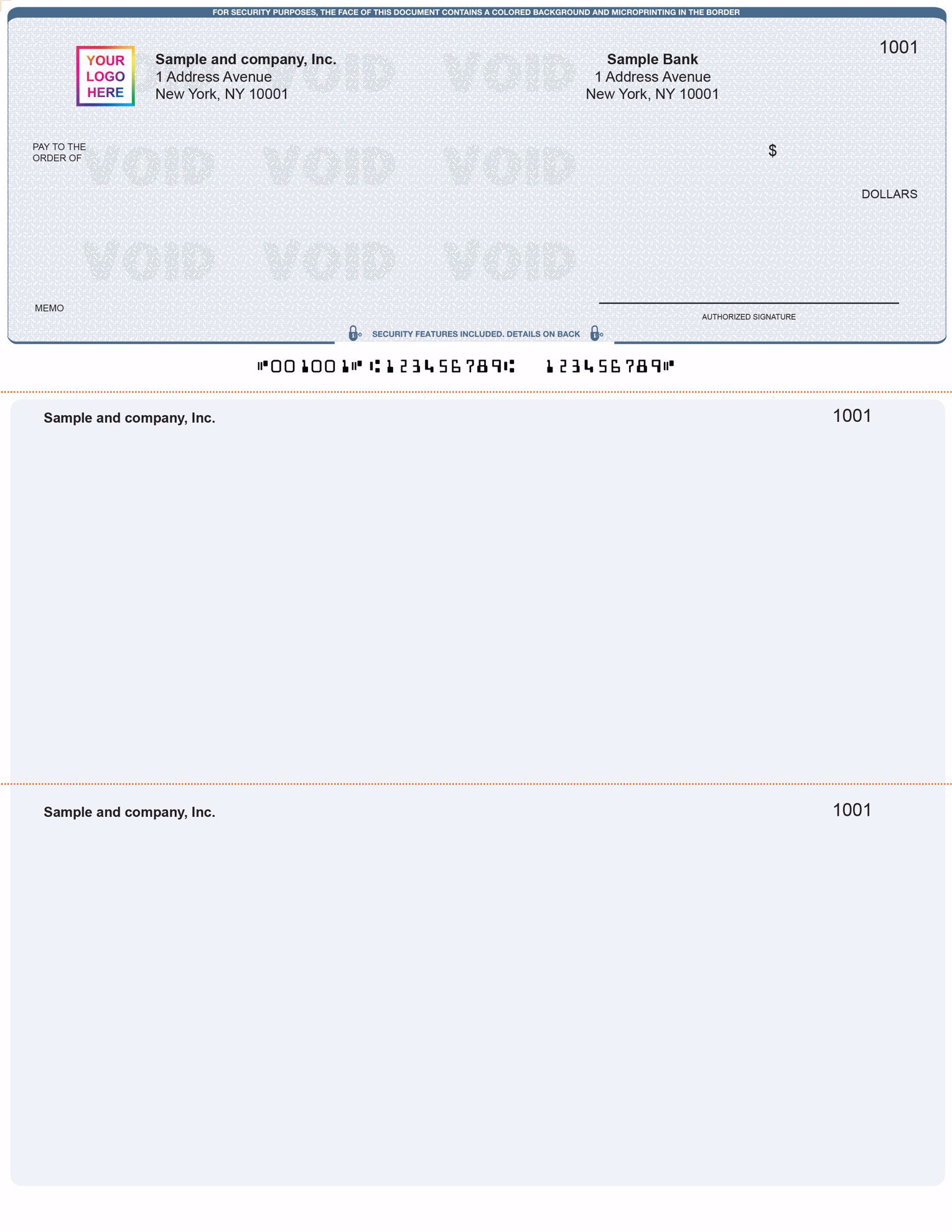
A voucher format records the payee and the purpose as the check prints, which is how you find out later which payee name you actually used. Printed layouts are listed under computer checks, and manual business checks covers the hand written books.
Keeping the issued detail somewhere you can search matters just as much. A check register is where that lives.
Related reading
- How to endorse a check goes through each endorsement type and the wording to use.
- Business checks vs personal checks explains why the payee name on business stock is treated so strictly.
- Who signs a business check explains how a bank records who may draw on an account.
- Deposit stamp for checks covers stamping deposits consistently.
What to do next
Holding a check you cannot cash? Open or use an account in the exact name on the check, endorse it fully, and deposit rather than trying to cash it. That route works at one bank and is refused at none.
Writing the checks yourself? Get the printed name right and the rest follows. Business checks carry the registered name you supply, and the same imprint goes on high security business checks when you want tamper resistant stock. Orders placed before the cutoff are produced that day.
About the Author
Checks Next Day prints business check stock for U.S. companies and ships it the next business day. A large share of the proofing questions that reach us are about the payee and account name lines, usually after a customer's own check was turned away somewhere.
The handling rules described here were checked against published federal banking guidance and the commercial code sections on payees and indorsements. Bank policies differ and your account agreement governs, so confirm anything that affects a specific item with your own bank.