
- - -
- hours mins seconds
to get your checks by
Friday, Oct. 16th

 0
0 You have no items in your shopping cart.
How Long Does It Take for a Check to Clear? Business Guide
You deposited a customer check on Monday and need to pay a supplier on Wednesday. The balance looks right, but the bank says the check has not cleared. What you can spend, and when, depends on rules most owners never read.
This guide explains how long it takes for a check to clear for a business account. You will see the federal timeline, why some deposits are held, whether a check can still bounce after the money shows up, and how to plan your cash flow around the delay.
Quick Summary
Most checks must be available by the second business day after you deposit them, but a check is not truly final just because the money is available. Cash, electronic payments, cashier's checks and the first $275 of check deposits are due the next business day, while new accounts, large deposits and doubtful checks can be held longer.
- Business days decide the clock. Saturdays, Sundays and federal holidays do not count, and a deposit made after the bank's cutoff counts as made the next business day.
- Most checks take up to two business days. That is the federal limit for funds availability, and many banks release funds sooner.
- Some deposits are held longer. New accounts, daily check deposits over $6,725, repeated overdrafts and doubtful checks can all trigger a longer hold.
- Available is not the same as final. A check can still be returned unpaid after you can spend the money, and the bank can take it back.
- Checks you write clear on the payee's schedule. The date your account is debited depends on when the payee deposits the check, not on when you mailed it.
- Planning beats waiting. Track deposits and outstanding checks, keep a buffer, and ask your bank for its funds availability policy in writing.
| Question | Short answer |
|---|---|
| How long does a normal check take? | Funds are due by the second business day, and often sooner. |
| What is available the next business day? | Cash deposited in person, electronic payments, the first $275 of checks, and cashier's, certified and teller's checks deposited in person. |
| Do weekends and holidays count? | No. They are not business days. |
| Why might a check be held longer? | A new account, a large deposit, repeated overdrafts, a doubtful check, a redeposit, or an emergency. |
| Can a check bounce after funds are available? | Yes. The bank can recover the money if the check is returned unpaid. |
| When does a check I wrote clear? | When the payee deposits it and the check reaches your bank, which can take days or weeks. |
What does it mean when a check clears?
A check clears when the bank that holds the account it was written on, called the paying bank, has paid it and the money has moved to the bank where it was deposited. Clearing is the behind-the-scenes process that turns a paper or electronic check into real money.
People use the word loosely, so it helps to separate three moments that often get mixed up:
| Milestone | What it means | What you can do |
|---|---|---|
| Deposited | The bank has received the check and shows it in your account, often as pending. | Usually nothing yet. The money may not be spendable. |
| Funds available | The bank has released the money for you to spend or withdraw. | You can use the funds, but the check can still be returned. |
| Paid and final | The paying bank has finally paid the check and the time to return it has passed. | The money is safe. This is the true meaning of cleared. |
Federal rules control only the second milestone, how long a bank can wait before you can use deposited funds. They do not promise that the third milestone has happened. That gap is where most business surprises come from.
Is a cleared check the same as a canceled check?
No. A canceled check is a check that has been paid and is kept as proof of payment, either as the returned paper check or as an image on your statement. Clearing is the process that happens before that. Our guide to the voided check explains how a voided check differs from both.
How long does it take for a check to clear?
Under federal funds availability rules, most checks must be available by the second business day after the deposit. Several types of deposits must be available the next business day, and a few take longer. These are legal limits, so your bank may release funds sooner but cannot normally make you wait longer without a reason.
| Type of deposit | Funds due by | Notes |
|---|---|---|
| Cash deposited in person | Next business day | Cash not deposited in person is due by the second business day. |
| Electronic payments such as ACH and wires | Next business day | Counted once the bank has the funds and the account details. |
| First $275 of check deposits | Next business day | Applies to total checks deposited on one banking day. |
| Cashier's, certified and teller's checks | Next business day | Deposited in person, and the bank may ask for a special deposit slip. |
| Check drawn on the same bank | Next business day | Deposited at a branch in the same state or check processing region. |
| Most other checks | Second business day | This covers many business and personal checks. |
| Deposits at another bank's ATM | Fifth business day | Applies to ATMs not owned by your bank. |
These categories come from Regulation CC, the federal rule that sets deposit availability. You can read the current text of the next-day availability rule on the government's regulations site. The dollar amounts were raised on July 1, 2025, and older articles still quote $225 and $5,525.
Do checks clear on weekends and holidays?
Banks count business days, and Saturdays, Sundays and federal holidays are not business days. A check deposited on Saturday is generally treated as deposited on the next business day, so the clock starts on Monday.
What is the deposit cutoff time, and why does it matter?
A cutoff time is the hour after which a bank counts your deposit as made the next business day. Federal rules do not let a bank set it earlier than 2:00 p.m. at a branch or noon at an ATM or other off-site location, and your bank may set it later. If you deposit at 4:00 p.m., the check may be counted as received tomorrow.
| You deposit | Bank counts it as | Funds due by (second business day) |
|---|---|---|
| Monday before the cutoff | Monday | Wednesday |
| Monday after the cutoff | Tuesday | Thursday |
| Thursday before the cutoff | Thursday | Monday |
| Friday before the cutoff | Friday | Tuesday |
| Friday after the cutoff, Saturday or Sunday | Monday | Wednesday |
Add one business day for every federal holiday that falls in the window. Use this table as a planning tool, and ask your bank for its own cutoff times and funds availability disclosure.
How long does a mobile check deposit take?
The Consumer Financial Protection Bureau notes that a check deposited by photo through mobile banking may follow a different timetable, so ask your bank, and ask about its cutoff time for app deposits. If you take payments by check often, our guides to how to endorse a check and how to fill out a business deposit slip cover the details that cause deposits to be rejected or delayed.
How does a check clear step by step?
Clearing follows the same basic path whether the check is paper or an image. The details differ between banks, but the sequence is consistent:
- The payee deposits the check. The depositing bank records it and usually shows a pending item.
- The check is sent for payment. Banks exchange checks as electronic images today, and some paper still moves through the system.
- The paying bank checks it. It looks at the signature, the account status, the balance and any stop payment order.
- The paying bank pays or returns it. If it pays, the money moves to the depositing bank. If not, the check is returned unpaid.
- The deposit becomes final. Once the paying bank has paid and the return window has closed, the check has fully cleared.
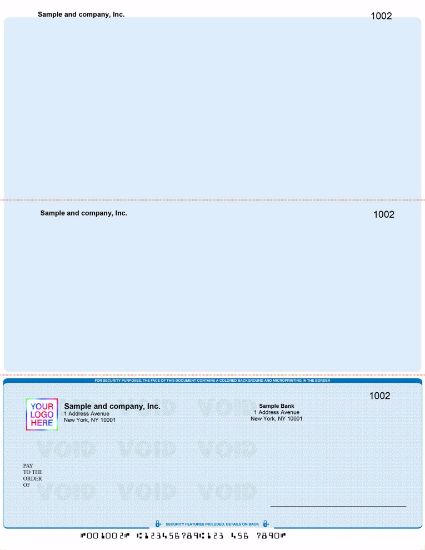
The routing and account numbers printed in the MICR line at the bottom of the check tell the system where to send it. Our guide to the MICR line on a check explains each number.
What is the midnight deadline for a returned check?
Under the Uniform Commercial Code, a paying bank that has settled for a check can still reverse that settlement if it returns the item or sends notice before it has made final payment and before its midnight deadline. The practical lesson is that a check can come back after the deposit shows as received.
Why is my business check taking longer to clear?
A bank can hold a deposit longer than the standard schedule in specific situations. The most common ones are listed below, based on the exceptions in Regulation CC section 229.13.
| Reason for the hold | What the federal rule says | What it means for a business |
|---|---|---|
| New account | An account is new for its first 30 calendar days. Check deposits above $6,725 per banking day can be held until the ninth business day. | A new business account may wait longer for large customer checks. |
| Large deposit | Check deposits totaling more than $6,725 on one banking day can be delayed. | A big payment from one customer can be held even on an older account. |
| Repeated overdrafts | Six or more negative days in six months, or two days negative by $6,725 or more, can trigger it for six months. | Overdrafts today can slow every deposit for months. |
| Doubt the check will be paid | The bank needs facts that would convince a reasonable person, and must state the reason in the notice. | Ask the bank what the reason is and request it in writing. |
| Redeposited check | Checks returned unpaid and deposited again are exempt from the standard schedules. | A returned customer check can take longer the second time. |
| Emergency conditions | Interrupted communications, equipment failure or other emergencies can delay availability. | Rare, but it can affect a deposit during outages or disasters. |
For most checks, a hold of up to five business days beyond the normal schedule is presumed reasonable, which puts the longest ordinary hold around the seventh business day. A longer hold is possible, but the bank has to justify it. The rules and thresholds are in the exceptions section of Regulation CC.
Does the bank have to tell me about a hold?
Yes. When a bank holds a deposit longer than usual, it must give you a notice with the reason and the date the funds will be available. If the bank delays a check because it doubts it will be paid and does not give written notice at the time of deposit, it generally cannot charge overdraft or returned-item fees caused by the delay.
Can a check bounce even after the money is in my account?
Yes. Federal rules set when you can use deposited funds, not whether the check will be paid. If a check comes back unpaid, the bank where you deposited it can generally reverse the credit or recover money you already withdrew, as the revocable settlement rules in UCC section 4-301 describe, and your account agreement will say the same.
Treat funds availability as permission to use the money, not as a guarantee. For more on the risks of timing games with deposits, read our article on check kiting fraud.
How long does it take for a check you write to clear your account?
The date a check you wrote clears depends mostly on the payee. Your bank cannot pay a check it has not received, so the clock starts when the payee deposits it, not when you write or mail it.
| Factor | How it affects timing | What you can do |
|---|---|---|
| Mail time | A mailed check can take several days to arrive. | Mail early and track important payments. |
| When the payee deposits | Some payees deposit the same day, others wait weeks. | Do not assume a check has cleared because time has passed. |
| How the payee deposits | In person, mobile and ATM deposits follow different cutoffs. | Expect more variation for payments to small vendors. |
| Your bank's posting | The check reaches your bank, which pays it against your available balance. | Keep enough funds in the account until it posts. |
| The six month window | An ordinary check is generally stale after six months, but a bank may still pay it. | Follow up on very old outstanding checks. |
Because the timing is out of your hands, a good record is the best control. Mark each check as outstanding in your check register until it appears on a bank statement, and read our guide on how long a business check is good for for stale dating.
What if a check you wrote never clears?
Contact the payee first, because the most common reason is that the check was never deposited. If it was lost, follow the steps in our guide to how to stop payment on a check, then issue a replacement under a new check number so the two never get confused.
How long does a payroll check take to clear?
Payroll checks clear on the same schedule as any other check, so the money leaves your account when each employee deposits or cashes theirs. Keep the full payroll in the account for several days after the pay date. Our guides to making payroll checks and whether payroll checks can bounce cover the risks.
How should a business plan cash flow around check clearing times?
Plan around the later of two dates: when funds are available and when the check is truly final. For routine, familiar customers, the first date is usually enough. For large or unfamiliar payments, the second matters too.
- Know your bank's disclosure. Ask for the funds availability policy and the cutoff times in writing.
- Deposit early in the day and early in the week. That puts the clock ahead of weekends and holidays.
- Track deposits as uncollected. Record them in your register but do not treat them as spendable until available.
- Watch the available balance, not the ledger balance. The available balance is what you can use today.
- Keep a buffer for outstanding checks. Checks you wrote can post at any time.
- Handle large payments differently. Ask customers to pay large invoices by an electronic method or with a cashier's check.
Are there faster ways to receive a business payment than a check?
Yes. Under the federal schedule, electronic payments and cashier's, certified and teller's checks deposited in person must be available the next business day, while most ordinary checks take up to two. If speed matters, ask the payer which method they can use and compare it with your bank's own policy.
What should you do when a deposit is held?
- Ask the bank for the hold notice, the reason, and the exact date the funds will be available.
- Check which rule applies: a new account, a large deposit, overdraft history or doubt about the check.
- Contact the payer if the bank doubts the check, and confirm that it is good.
- Move other payments if needed so you do not overdraw while you wait.
- Record the date and the bank's answer in your files for future reference.
What helps your checks clear without problems?
You cannot control the payee's bank, but you can remove avoidable causes of delay on your own checks. Three habits matter most:
- Accurate bank details on the check. The routing and account numbers in the MICR line must match the account. Our guide to the MICR line shows where each number sits.
- Clear, consistent numbering. Sequential check numbers make it easy to match items to your bank statement. Our guide to ordering business checks for the first time explains how to set the starting number.
- Good records. Mark each item outstanding until it clears, and reconcile every month.
When you need a new supply, choose computer checks for printing from software or manual business checks for writing by hand. Orders placed before 2:00 PM Eastern on a business day are produced the same day for next-day arrival when the details are complete, as explained on our same-day production page.
What should you do next?
- Find your bank's funds availability disclosure and note the cutoff times.
- Use the timeline table above to plan your next large deposit.
- Add an outstanding column to your register for checks you have written.
- Review how you take large payments, and consider an electronic or official-check option.
If you need help choosing a check format, contact us and we will point you to the right one.
Why businesses order checks from Checks Next Day
Printed with your bank details. You enter your routing number, account number, starting check number, and business name and address when you order.
Same-day production on weekday orders. Orders placed before 2:00 PM Eastern, Monday through Friday (excluding holidays), are produced and shipped the same business day for next-day arrival, as long as the details are complete and verified.
Formats that match how you work. Choose computer checks, manual business checks or blank check stock to suit your software and workflow.
Faster reorders. Reorders usually move faster because artwork and specifications are already on file.
About the Author
The Checks Next Day team writes about business checks, check printing and check safety for small businesses.