
- - -
- hours mins seconds
to get your checks by
Tomorrow, Nov. 12th

 0
You have no items in your shopping cart.
Household Employee Payroll Checks: Thresholds, Records and Year End
Last updated: November 11, 2026
Nobody hires a nanny because they want to run a payroll. The arrangement usually starts informally, with a weekly amount agreed over a kitchen table, and the paperwork question arrives much later, often in the week someone mentions a tax return.
Quick Summary
Two federal thresholds decide whether a family has household employment taxes to pay, and they are measured in different ways. One looks at what you paid a single person across the year, the other looks at what you paid everyone in a single quarter. Both are measured against your records, which is why the weekly payment record matters more than anything else here.
- 3,000 dollars or more for 2026 to one household employee brings social security and Medicare into play.
- More than 1,000 dollars in any calendar quarter brings federal unemployment tax into play.
- Unemployment tax applies to the first 7,000 dollars paid to each employee.
- Schedule H is the usual filing route, and it can be filed by itself.
- The thresholds are annual, so the figures are checked each year rather than assumed.
- State rules sit on top, and several states require a written pay statement.
The two thresholds answer different questions, which is where most confusion starts.
| Threshold | How it is measured | What it triggers |
|---|---|---|
| 3,000 dollars for 2026 | Cash wages to any one employee across the year | Social security and Medicare withholding |
| More than 1,000 dollars | All household employees, in any calendar quarter, this year or last | Federal unemployment tax |
| First 7,000 dollars | Per employee, once unemployment tax applies | The wage base the tax is charged on |
| Any amount | Where you agreed to withhold income tax | A Schedule H filing obligation |
Take this as background on keeping records, not as tax or legal advice. Household employment rules are revised every year and differ by state, so current federal guidance and your own accountant are the authorities here.
The record most household employers are missing is the weekly one, and business checks can carry hours, rate and deductions on the stub itself.
What this guide covers
- Who counts as a household employee?
- What do the thresholds actually mean?
- How should you pay them?
- What should the pay record show?
- What happens at year end?
- What if you have been paying cash?
- What goes wrong most often?
Who counts as a household employee?
Someone who works in or around your home where you control what is done and how it is done. The test is about direction rather than about hours or job title, which is why a part time nanny can be an employee while a weekly window cleaner usually is not.
- Usually an employee: a nanny, a carer, a housekeeper, a regular driver.
- Usually in business for themselves: a plumber, a one off decorator, a landscaping firm.
- The deciding factors: who sets the hours, the methods and the standards.
- Not decided by: whether the work is part time or paid weekly.
Agencies change the picture. Where a worker is placed, paid and directed by an agency, the agency is usually the employer, and the family is buying a service rather than running a payroll.
What do the thresholds actually mean?
They are two separate tests, and a family can cross one without crossing the other. Federal guidance states that if you pay cash wages of 3,000 dollars or more for 2026 to any one household employee, you generally must withhold and pay social security and Medicare taxes.
The unemployment test looks at a shorter window and a wider group. Where you paid cash wages to household employees totaling more than 1,000 dollars in any calendar quarter during the current or prior year, federal unemployment tax generally applies, and it applies to the first 7,000 dollars paid to each employee.
Watch the quarter test with summer help. A family that pays a summer carer heavily for three months can pass the quarterly threshold while staying under the annual one for that person.
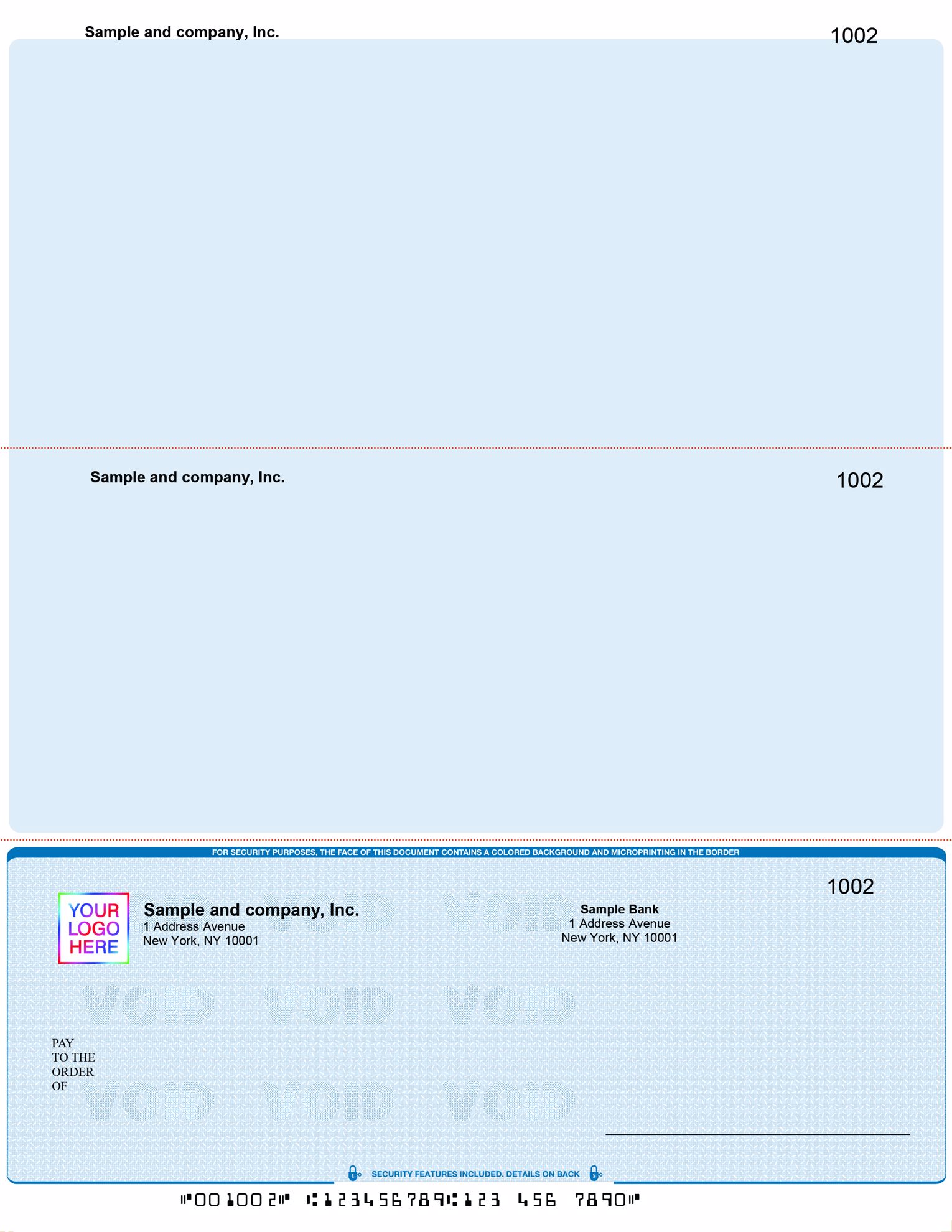
A stub above the check is where the weekly detail goes. See business checks on the bottom for that layout.
How should you pay them?
In a way that leaves a dated record without anyone having to remember. That is the whole requirement, and it is the reason so many household employers end up writing a check even when they started out handing over notes.
- Agree the gross figure, not the take home, so withholding does not become an argument.
- Pay on a fixed day and keep the same day all year.
- Write the pay period on the payment, not just the date.
- Give a stub every time, even in weeks where nothing changed.
- Keep your copy in one place, because the year end figures come from it.
Our guide to how to write a business check by hand covers filling one in where the payment is written rather than printed.
What should the pay record show?
Enough that the employee can see how the number was reached, and enough that you can add the year up without reconstructing anything. Six fields do it.
- The pay period, with start and end dates.
- Hours worked, separating any overtime your state requires.
- The hourly rate or the agreed weekly salary.
- Gross pay for the period.
- Each withholding on its own line, never bundled as deductions.
- Net paid, matching the payment exactly.
This is also the kindest thing you can do. A household worker who can show a clear pay record has something a landlord or a lender will accept, and that matters more to them than it costs you.
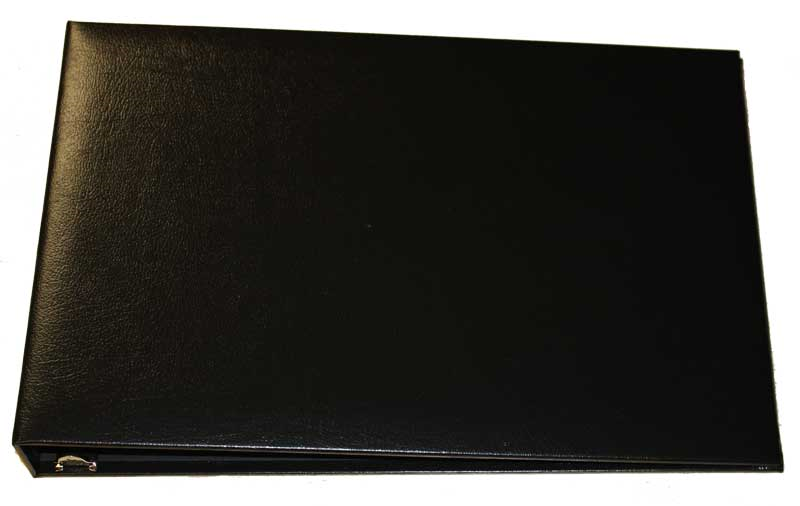
A bound book keeps the copy attached to the payment. See manual three on a page business checks for that format.
What happens at year end?
You add up what you paid, settle the taxes through your own return, and give the employee their wage statement. Federal guidance points to Schedule H where wages were subject to social security and Medicare or federal unemployment tax, or where you withheld federal income tax.
One line is worth remembering if your circumstances are unusual. The guidance states that if you are not required to file a return, you file Schedule H by itself.
Forms W-2 and W-3 follow their own timing and filing rules, which federal guidance covers in its household employer publication rather than on the summary page.
What if you have been paying cash?
Start the record now and reconstruct backwards as best you can. Plenty of families are in this position, usually because the arrangement grew from a few hours a week into something regular without anyone deciding it had.
- List what you remember, then check it against bank withdrawals and calendars.
- Write down the rate and the hours you both understood to apply.
- Agree the figures with the employee before anything is filed.
- Take advice before year end, which is far easier than afterwards.
- Switch to a traceable payment from the next pay day.
The obligation follows what was paid, not what was recorded, so poor records make the position harder to evidence rather than making it go away.
What goes wrong most often?
Four things, and none of them involve anyone trying to avoid anything. They are the ordinary drift of an arrangement that began as a favor and turned into a job.
| What happens | Why it causes trouble | The fix |
|---|---|---|
| A take home figure is agreed | Withholding then feels like a pay cut | Agree gross, and show the deductions |
| Hours drift upward | A threshold is crossed unnoticed | Total the year to date each quarter |
| Extra helpers are paid too | The quarterly test counts everyone | Keep one list for the whole household |
| No stub is given | Neither side can evidence the year | Use stock with an attached record copy |
How do you raise it without making it awkward?
Say it is about getting their paperwork right rather than about tax. A household worker with a proper wage record has something to show a landlord, a lender or a future employer, and most people are relieved rather than offended when a family offers to put the arrangement on a clear footing.
Have the conversation before the change rather than after it, and write down what you agree. The version that goes badly is always the one where a deduction appears on a payment with no warning.
Related reading
- How to write a business check by hand covers a written weekly payment.
- Check register covers the running record the year end totals come from.
- Payroll checks covers the stock used for wage payments.
- Blank check security features covers what the printed features do.
What to do next
Add up what you have paid this year to each person who works in your home, and compare it with the two thresholds. That calculation takes ten minutes and it is the only way to know whether you have a filing to prepare.
Then set up a payment that records itself. Payroll checks carry the stub a weekly wage needs, and manual three on a page business checks suit a household writing one payment a week by hand.
About the Author
Families make up a small but steady part of who we print for, and they order for one reason. Someone has told them they need a proper record of what they pay the person looking after their children. A book with stubs is the simplest version of that record anybody can keep in a kitchen drawer.
The thresholds and filing points here follow current federal guidance on household employment taxes. The figures are reviewed annually and state rules add their own requirements, so confirm both with your accountant before you rely on them.