
- - -
- hours mins seconds
to get your checks by
Tuesday, Nov. 17th

 0
You have no items in your shopping cart.
HOA Checks and Community Association Payments: Accounts, Approvals and Records
Last updated: November 12, 2026
Association money has an unusual quality. Every dollar belongs to the owners collectively, it is handled by volunteers who change every year or two, and the person who signs the payments often learned the job from whoever did it last. That combination is why the handling rules exist.
Quick Summary
HOA checks move money held for other people, so the rules focus on where the funds sit and who may authorize a payment. Taking California as a worked example, a managing agent holding association funds must place them in a trust fund account at an insured in-state institution, must not commingle them, and generally needs prior written board approval before transferring money out.
- Funds sit in escrow, an association account, or an agent's trust account.
- Commingling is prohibited, with the agent's own money or anyone else's.
- Transfers need prior written board approval above the stated thresholds.
- The thresholds depend on the number of separate interests.
- Disbursement follows written instructions from the association.
- Operating and reserve money should be visibly separate at payment time.
The approval thresholds are worth knowing as numbers rather than as a principle.
| Association size | Transfer below this needs no prior written approval | Above it |
|---|---|---|
| 50 or fewer separate interests | The lesser of 5,000 dollars or 5 percent of estimated operating budget income | Prior written board approval |
| 51 or more separate interests | The lesser of 10,000 dollars or 5 percent of that income | Prior written board approval |
This is background, not advice. Association rules differ by state and by the documents your own community adopted, so the governing statute, those documents and your attorney decide what applies to you.
On the payment itself, business checks can be printed with two signature lines and a stub that records the budget line a payment came from.
What this guide covers
- Where must association funds be held?
- What does the commingling rule mean in practice?
- When does a transfer need board approval?
- Who should sign association checks?
- What should the stub record?
- How should refunds to owners be handled?
- What changes for a self managed association?
Where must association funds be held?
In one of three places: an escrow account, an account the association itself controls, or a trust fund account held by the managing agent. Where the third applies, California requires that account to be maintained by the managing agent in a bank, savings association or credit union in the state.
The money then stays put until it is paid out properly. The funds must remain in an insured institution of that kind until they are disbursed in accordance with the association's written instructions.
Notice the phrase written instructions. Verbal authority from a board member in a car park is not what the rule contemplates, however well meant and however small the payment.
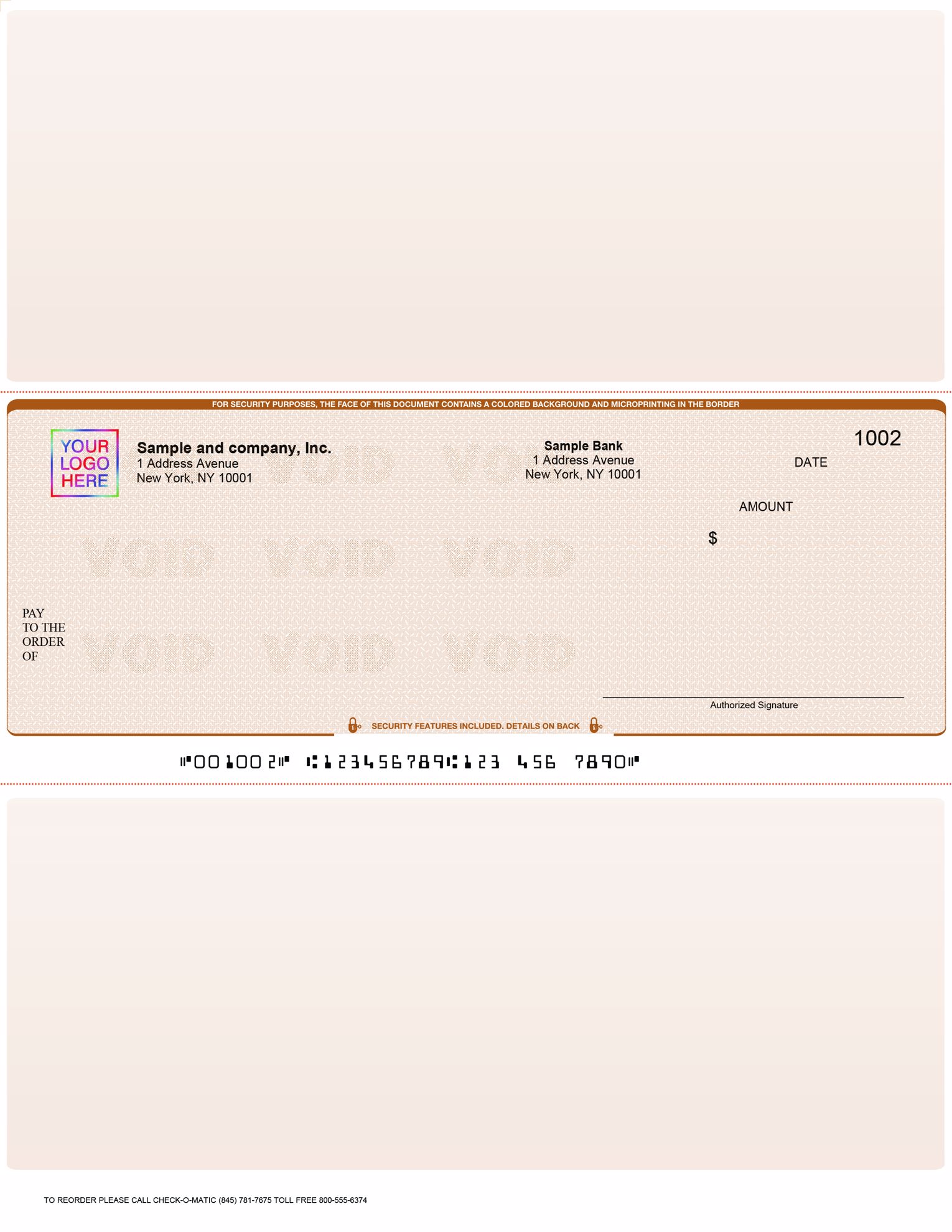
Two stubs give the treasurer and the file a copy each. See business checks in the middle for that layout.
What does the commingling rule mean in practice?
That association money never shares an account with anybody else's. The California rule puts it plainly: the managing agent shall not commingle the funds of the association with the managing agent's own money, or with money belonging to others.
- Management fees come out as a payment, not as a deduction before deposit.
- Two associations do not share one account, even temporarily.
- A short term float is still commingling if it mixes the agent's own money in.
- Statements should be available to the board, not summarized by the agent alone.
Ask to see the account structure once a year. A board that understands where its money physically sits is in a far better position than one relying on a monthly report, and a competent agent will welcome the question.
When does a transfer need board approval?
Above a threshold set by how many separate interests the association has. In California, a transfer out of a reserve or operating account is not authorized without prior written approval from the board unless the amount falls below the figures in the table above.
The thresholds use the lesser of two measures, which matters for a small association with a large budget or a large one with a small budget. Five percent of estimated operating budget income can easily be the binding figure rather than the dollar amount.
How do boards make that workable?
- Calculate both figures once a year when the budget is adopted.
- Write the lower one into the payment policy as the approval line.
- Approve recurring payments in advance in a minuted resolution.
- Record approvals in writing rather than by a show of hands nobody notes.
- Review the threshold after any budget change, since the percentage moves.
Who should sign association checks?
Two officers above a stated amount, and never the same person who prepares the payment and reconciles the account. Associations are volunteer run, so the temptation to let one willing person handle everything is strong and it is the root of most problems.
Be realistic about what a second signature line does on its own. Banks do not generally check it, so the control is your own procedure and the review that follows, not the printed line.
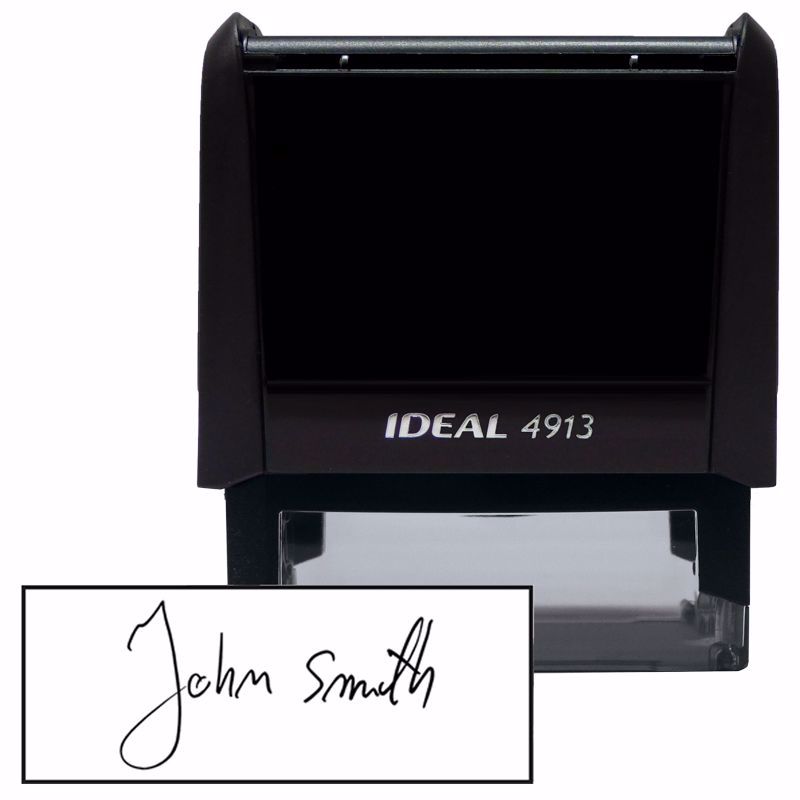
Where an officer cannot always attend, a stamp is sometimes used. Custom signature stamps are made from the signature supplied, and they need the same storage and logging discipline as a key to the money.
Our guide to check signing policy covers writing the limits and the separation into a document the next board inherits.
What should the stub record?
Four fields, and the fourth is the one associations forget. An auditor, a new treasurer and an owner asking a reasonable question are all answered by the same short record.
- The vendor as registered, matching the invoice.
- The invoice number the payment settles.
- The budget line it was charged against.
- Operating or reserve, stated explicitly on every item.
Reserve spending gets questioned years later. A payment that cannot be traced to a reserve component is the one that causes an argument when the roof is next due, so the field costs nothing now and saves a great deal later.
Our guide to the check register covers the running record those stubs feed.
How should refunds to owners be handled?
Carefully, because the money belongs to the owner of record rather than to whoever sent it. Overpayments arrive regularly, usually from a duplicate assessment payment or from a closing where the escrow and the owner both paid.
- Refund the owner of record, not the person whose account the money came from.
- Record it against the unit as well as the name.
- Put the reason on the stub, so the next treasurer understands it.
- Check the closing statement where a sale is involved.
- Keep it on the outstanding list until it is presented.
An uncashed refund stays the payee's money. Keep chasing it, and where it remains unclaimed, follow your state's unclaimed property process rather than writing it back to income.
What changes for a self managed association?
The trust account rules aimed at managing agents fall away, and every other risk gets larger. A self managed board holds the money directly, which removes a layer of separation that a professional agent would otherwise supply.
| Risk | What to put in place |
|---|---|
| One volunteer does everything | Split preparing, signing and reconciling across three people |
| Reserve money used for operating costs | Separate accounts and a recorded board decision for any transfer |
| Records leave with the treasurer | Keep the register and stubs with the association, not at a home |
| Blank stock in a kitchen drawer | A locked store, a named holder and a count at handover |
| No review of the bank statement | A second officer reads it each month and initials it |
How should a handover between treasurers work?
As a counted, written exchange rather than a box handed over at a meeting. Count the unused stock and note the next number, list the outstanding items, print the last reconciliation, and have both people sign the list.
It takes half an hour and it protects the person leaving as much as the one arriving. The outgoing treasurer gets a record that everything was in order on the day they stepped back, which is worth having if a question ever comes up later.
What should the board see every month?
A short pack rather than a long one. The bank statement itself, a list of payments made with the budget line against each, the balance of operating and reserve funds shown separately, and anything outstanding for more than a few months.
Boards that receive only a summary prepared by one person are relying on that person entirely. Boards that see the statement alongside the summary are doing the job the owners elected them to do, and it takes no longer to read.
Related reading
- Check signing policy covers limits, separation and delegation.
- Check register covers the record a board hands to its successor.
- High security business checks covers stock for reserve payments.
- Check washing covers protecting items in the mail.
What to do next
At your next meeting, calculate your approval threshold from the adopted budget and write it into the payment policy. Then ask where the association's money physically sits, and get the answer in writing.
Then set the stock up so the record happens by itself. Business checks are printed with the signature lines and stub fields your policy calls for.
About the Author
Associations reach us most often in the month a new treasurer takes over and finds a check book with no stubs in it. Volunteers inherit these roles without a handover, and a stub with the budget line printed beside the payment is the simplest handover document there is.
The trust account, commingling and transfer approval points here follow the California statute on managing agent handling of association funds, used as a worked example. Your own state and your governing documents decide what applies to your association.