
- - -
- hours mins seconds
to get your checks by
Monday, Nov. 23rd

 0
You have no items in your shopping cart.
Farm Payroll Checks: Exemptions, Written Statements and Records
Last updated: November 20, 2026
Farm payroll is the one area of wage law where the federal rules bend and the paperwork rules do not. A crew can be outside the overtime provisions entirely and still be owed an itemized written statement for every pay period.
Quick Summary
Agricultural employees are exempt from federal overtime, and a small farm can be outside the minimum wage rules too. Neither exemption touches the record keeping. Migrant and seasonal crews must get written pay terms at recruitment and an itemized written statement each pay period, and those records have to be kept for three years.
- Overtime does not apply to employees employed in agriculture as the federal law defines it.
- A 500 man day test decides whether minimum wage applies at all.
- Written pay terms are required for migrant crews at recruitment.
- An itemized statement is required every pay period, with deductions explained.
- Records run for three years, not four.
- Wages must be payable at par, which is what makes a check compliant.
The exemptions and the paperwork pull in opposite directions, which is the whole shape of this subject.
| Obligation | Does the farm exemption help? |
|---|---|
| Federal overtime | Yes, agricultural employment is exempt from it |
| Federal minimum wage | Only on a small farm that passes the man day test |
| Written pay terms at recruitment | No, this is a separate statutory duty |
| Itemized statement each pay period | No, and it is the duty most often missed |
| Three year record retention | No, it applies regardless |
Treat this as background on agricultural payroll rather than legal advice. The federal rules are detailed, states have moved in different directions, and your crew composition changes the answer, so your own counsel is the person to confirm it with.
On the payment itself, payroll checks carry the stub that an itemized statement duty is most easily met with.
What this guide covers
- Are farm workers exempt from overtime?
- Does a small farm have to pay minimum wage?
- Which states have removed the exemption?
- Can you pay farm workers in cash?
- What must a crew get in writing?
- What goes on the itemized statement?
- How long must records be kept?
Are farm workers exempt from overtime?
Under federal law, yes. Federal guidance confirms that employees employed in agriculture as the law defines it are exempt from the overtime pay provisions. The carve out sits in the exemptions section of the federal wage statute, which covers any employee employed in agriculture.
The definition is what decides it, not the location. Work that happens on a farm but is not agricultural work, and work that is secondary to someone else's farming operation, can sit outside the exemption even though it happens in a field.
Do not assume the exemption covers everyone on the payroll. Mechanics, drivers, packers working on another grower's produce and office staff are the usual places the analysis changes.
Does a small farm have to pay minimum wage?
Not necessarily, and there is a specific test. Federal guidance provides that a farm which did not utilize more than 500 man days of agricultural labor in any calendar quarter of the preceding year owes neither minimum wage nor overtime to its agricultural employees in the following year.
The counting unit is simple. A man day is any day during which an employee performs agricultural work for at least one hour. So the test counts days worked by people, not hours and not payroll value.
Where the test is not met, the floor applies. Federal guidance states that agricultural employees must be paid at least the federal minimum wage unless a separate exemption covers them.
- Count man days by calendar quarter, for the preceding year.
- Include every worker who did agricultural work that day.
- Check the immediate family exemption separately, since relatives are treated differently.
- Recount every year, because one busy harvest changes the following year.
- Keep the count, not just the conclusion.
The statute also carries exemptions for a worker who is the parent, spouse, child, or other member of his employer's immediate family, and for a worker employed as a hand harvest laborer on narrow conditions.
Which states have removed the exemption?
Several, and they have done it in different shapes. Washington now requires overtime for agricultural employees for more than 40 hours in any one workweek, at one and one half times the regular rate, after a phase in that finished in 2024.
California phased in daily overtime instead. Its agricultural overtime provision sets a threshold at hours in excess of 12 hours in one day, and extended to employers with 25 or fewer employees commencing January 1, 2025.
Read the carve outs inside the carve outs. Washington's provision states that an agricultural employee does not include a dairy employee, so dairy operations sit on their own track in that state.
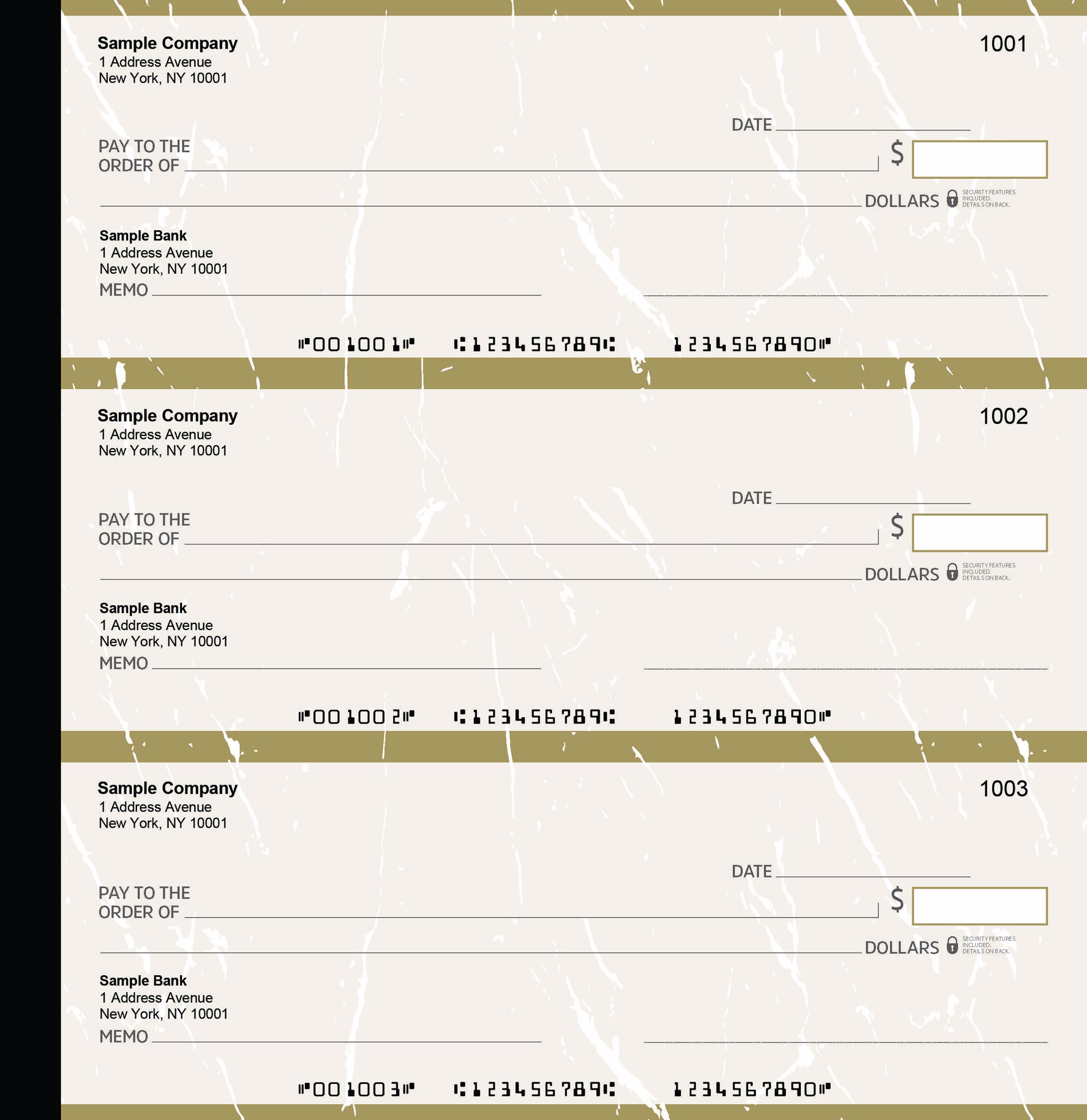
A crew paid at the end of a week is usually paid away from an office. See compact three per page manual business checks for that format.
Can you pay farm workers in cash?
Cash is a lawful form of payment, and it is also the worst possible choice for an agricultural employer. The federal regulation requires wages to be paid in cash or in a negotiable instrument payable at par, which puts a payroll check squarely inside the rule.
The phrase payable at par matters. An instrument the worker has to discount to convert, or one that costs them a fee to cash, does not satisfy the requirement.
There is a timing rule as well for covered crews. The regulation requires an employer to pay the wages owed such worker when due, and no less often than every two weeks or semi monthly.
- Cash leaves no record either side can rely on, which is the real problem.
- A check produces the statement automatically if the stub is used.
- Pay on a fixed interval, at least every two weeks for covered crews.
- Never deduct a fee that makes the payment worth less than par.
Cash payment is where almost every agricultural wage dispute starts. Nobody gets accused of anything when the wages went out on a traceable item with a stub attached.
What must a crew get in writing?
Pay terms, at recruitment, and in a language the workers understand. The federal statute protecting migrant and seasonal agricultural workers attaches the duty at the time of the worker's recruitment and expressly covers the wage rates to be paid.
The regulation lists what has to be disclosed, including the wage rates including piece rates to be paid, and requires the statutory poster to be displayed in a conspicuous place at the place of employment.
Federal guidance summarizes the written duty for recruiters, noting the information must be given in writing when they are being recruited. Seasonal day haul workers and migrant workers are treated slightly differently from other seasonal workers, so check which category your crew falls in.
What about piece rate crews?
Piece rates have to be disclosed in the same way, and the hours still have to be recorded. Federal guidance names failure to record hours worked by employees being paid on a piece rate basis as a typical violation, alongside missing addresses and missing dates of birth for minors.
So a piece rate does not remove the time keeping. It changes how the pay is calculated, not what the records have to show.
What goes on the itemized statement?
Enough for a worker to check the pay themselves, and the duty is explicit. Federal guidance requires employers to give workers itemized, written statements of earnings for each pay period, including any amount deducted and the reasons for the deduction.
The statute sets the same duty, requiring an itemized written statement, and the regulation lists the per worker records that must be made and kept. The statement hands the worker the same information.
| Field | Why it is there |
|---|---|
| The wage basis | Hourly, piece or salary, stated rather than implied |
| Units for piece work | Lets the worker check the calculation |
| Hours worked | Required even where pay is by the piece |
| Earnings for the period | The gross figure before anything is taken |
| Each deduction and its reason | The reason is the part most often left off |
| Net paid | Matches the payment exactly |
A stub meets this duty without extra work. If the stub carries those six fields, the statement obligation is satisfied every pay period by the act of paying somebody.

A check at the foot of the sheet leaves the most room for the itemization. See blank checks on the bottom for that layout.
Who should sign the crew's payments?
Someone named in advance, and not the person who keeps the hours. On a farm that usually means the owner signs and the crew leader records.
Splitting those two jobs matters more in agriculture than almost anywhere else, because the hours are recorded in a field rather than on a clock. A crew leader who both counts the hours and hands out the payments is being asked to carry a burden nobody should carry alone.
Write the arrangement down before the season. Name who signs, name who covers when they are away, and keep the unused stock locked rather than in a truck.
How long must records be kept?
Three years, and you will see four years quoted elsewhere. The agricultural worker regulation requires the per worker payroll records to be kept for a period of three years. The general federal wage regulation requires payroll records to be preserved for three years from the last date of entry.
So three is the figure for both, measured from the last entry rather than from the end of the season.
What would an inspection ask for?
The records and the workers. Federal guidance describes an investigation as including inspectors who review and transcribe payroll records, and interview workers. Those two activities are checked against each other.
- Keep the records in one place, per worker and per season.
- Keep the disclosure you gave alongside the payroll.
- Keep the man day count, with the working shown.
- Keep copies of every statement issued, not just the totals.
- Keep the poster up where the crew can read it.
What about the tax filings?
Agricultural employers have their own annual return and two dollar tests. Federal guidance sets them at cash wages of 150 dollars or more in a year for agricultural labor to any one worker, or 2,500 dollars or more in wages that you pay to all farmworkers.
Either test being met brings the filing and withholding duties into play. The thresholds are checked annually, so confirm the current figures with your accountant before the season starts.
Keep the dollar tests and the man day count on the same sheet. They are the two numbers that decide which rules your farm sits under this year, and they are both worked out from the same payroll records.
Related reading
- Payroll checks covers what a wage payment must include.
- Making payroll checks covers running a crew payroll.
- Check register covers the record a season's payments leave behind.
- How to write a business check by hand covers paying a crew away from an office.
What to do next
Count your man days by quarter for last year and write the figure down. That single number decides whether the federal minimum wage applies to your agricultural employees this year, and almost no farm has it recorded.
Then make the statement duty automatic. Payroll checks carry the stub fields an itemized statement needs, and blank check stock suits an operation printing from farm accounting software.
About the Author
Growers order from us in the weeks before a harvest, and the request is always the same shape. They want the stub to show piece units as well as hours, because that is the figure a crew checks first. A stub built for that answers most of the questions before anybody asks them.
The exemptions, the man day test, the disclosure and statement duties, the payment form rule and the retention period above come from federal wage law, federal regulations and federal agency guidance, with Washington and California as state examples. Your own state and your crew composition decide what applies to you.