
- - -
- hours mins seconds
to get your checks by
Tomorrow, Nov. 17th

 0
You have no items in your shopping cart.
Commission Checks: When It Is Earned and What the Stub Must Show
Last updated: November 16, 2026
Commission disputes almost never start with the percentage. They start with the word earned. One side thinks the money was earned when the order came in, the other thinks it was earned when the customer paid, and nothing in the paperwork settles it.
Quick Summary
Federal law does not require you to pay commission at all. Once you promise it, your state decides when it becomes a wage, how often it must be paid and what the statement has to itemize. The point where most employers get caught is the definition of earned, which belongs in a written agreement rather than in anyone's memory.
- The federal wage law does not mandate commissions, so the promise creates the duty.
- Earned is defined by your agreement, and some states require that agreement in writing.
- Commission counts toward overtime through the regular rate.
- Withholding uses a flat supplemental rate rather than a different tax.
- A separate payment changes the withholding method, not the tax owed.
- The statement must itemize enough that the figure can be checked.
The two things people mix up most are set out below side by side.
| Question | What decides it | Where it goes wrong |
|---|---|---|
| When is it earned? | Your written agreement, read against state law | Nothing is written, so both sides assume |
| How much tax is taken? | Whether it is paid with regular wages or separately | People think commission is taxed at a higher rate |
| Does overtime apply? | Whether the employee is exempt, not how they are paid | Commission is assumed to remove overtime |
| How often must it be paid? | State pay frequency law for commissioned staff | It drifts to whenever the money comes in |
Treat the following as background on paying commission, not as legal or tax advice. Commission law is set state by state and the agreement itself matters enormously, so your own counsel and your accountant are the right people to confirm any of it.
On the payment side, payroll checks can carry a stub wide enough to show the deals a commission settles, which is the part a salesperson checks first.
What this guide covers
- Does federal law require commission at all?
- When is a commission actually earned?
- Does the agreement have to be in writing?
- How often must commission be paid?
- Are commission checks taxed more?
- Separate check or the regular one?
- Do commissioned staff get overtime?
- What must the statement show?
Does federal law require commission at all?
It does not. Federal guidance states that the Fair Labor Standards Act does not require the payment of commissions. What federal law does require is the minimum wage, so a commission arrangement has to clear that floor for every workweek.
There is no federal route for collecting a promised commission either. Federal guidance confirms the Act does not provide wage payment or collection procedures, which is why these disputes end up in state wage claims rather than federal ones.
Commission only pay is lawful in most places provided the earnings clear minimum wage for the hours worked. The arrangement does not remove the floor, it just makes it harder to see.
When is a commission actually earned?
At the point your agreement says, and if the agreement is silent, at whatever point a court or a labor agency decides is fair. That is the entire risk in one sentence. Earned is not a technical term with a fixed meaning, which is exactly why it has to be written down.
Massachusetts shows how a state can turn that into a wage duty. A commission counts as wages where it has been definitely determined and has become due and payable to the employee, and from that point the normal wage rules apply to it.
What should the earned test actually say?
- Name the trigger event, such as a signed order, a shipment or a cleared payment.
- Say what happens on a cancellation or a return, in figures.
- Set the calculation period and the payment date that follows it.
- State whether a draw is recoverable and over what period.
- Deal with the leaver before anybody leaves.
That last point is where goodwill goes to die. A deal that closes three weeks after a salesperson resigns is the most argued-about payment in any sales team, and the agreement is the only thing that settles it quietly.
What happens to commissions after someone leaves?
That depends on the state as well as the contract. Illinois defines final compensation to include wages, salaries, earned commissions and earned bonuses, and requires an employer to pay the final compensation of separated employees in full at the time of separation, and in no case later than the next regularly scheduled payday.
So in a state like that, a commission already earned at separation is not a discretionary payment any more. It is part of the final wages, with the final wage deadline attached to it.
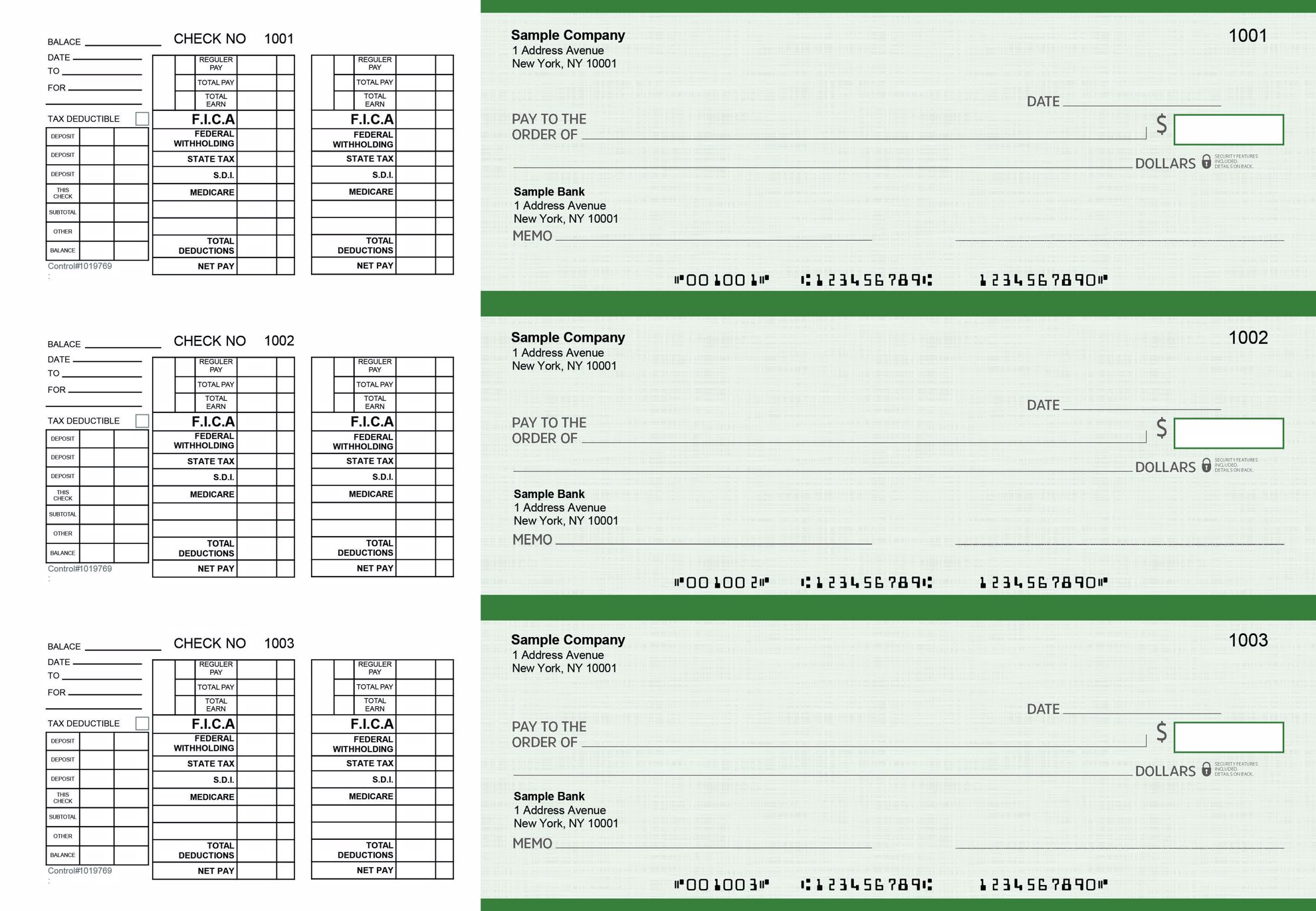
A commission payment needs more stub lines than a salary does. See payroll business checks for that layout.
Does the agreement have to be in writing?
In some states, yes, and it is a statutory duty rather than good practice. California requires that where an employee is paid commission, the contract shall be in writing, and that it set forth the method by which the commissions shall be computed and paid. The employer shall give a signed copy of the contract to every employee.
New York takes a similar line for commission salespeople. The terms of employment shall be reduced to writing, signed by both the employer and the salesperson, and kept on file.
- Put the computation method in the document, not just the percentage.
- Get it signed and hand a copy over.
- Keep the old versions when the plan changes mid year.
- Date every change, because a dispute will turn on which plan applied.
How often must commission be paid?
More often than many plans assume. New York requires that a commission salesperson be paid not less frequently than once in each month, and no later than the last day of the month following the month in which the money was earned.
Quarterly plans need checking against that. A plan that calculates quarterly can still be lawful if it pays monthly against the calculation, but a plan that simply pays quarterly may not be.
Are commission checks taxed more?
No. The tax owed is the same. What changes is how much is withheld at the moment of payment, because commission is treated as a supplemental wage rather than a regular one.
The federal regulation defines supplemental wages as all wages paid by an employer that are not regular wages, and it names commissions alongside bonuses and back pay. Federal employer guidance sets the withholding rate on supplemental wages at 22 percent, rising to 37 percent for supplemental wages above a very high annual threshold.
So a large commission can have a bigger bite taken out of it than a normal paycheck, and the difference comes back out in the wash when the return is filed. Explaining that once, in writing, prevents the same conversation every quarter.
Commission is plainly wages for withholding. Federal guidance includes salaries, vacation allowances, bonuses, commissions and taxable fringe benefits in its definition, so none of this is optional treatment.
Separate check or the regular one?
Both are allowed, and the choice has real consequences. Paid on its own, a commission is a supplemental payment and the flat withholding method is available. Rolled into the regular paycheck, the whole amount can be run through the ordinary withholding tables instead.
| Approach | What it gives you | What to watch |
|---|---|---|
| Separate commission item | A clean record of what was paid for which deals | A second item to record, sign and reconcile |
| Added to the regular payment | One payment, one stub, less admin | The commission detail has to fit on the same stub |
| Either way | The tax owed is unchanged | Withholding differs, so explain it in advance |
A separate item is usually the better record even when it is more work. The deals behind a commission are the thing people query, and a dedicated stub has room to list them.
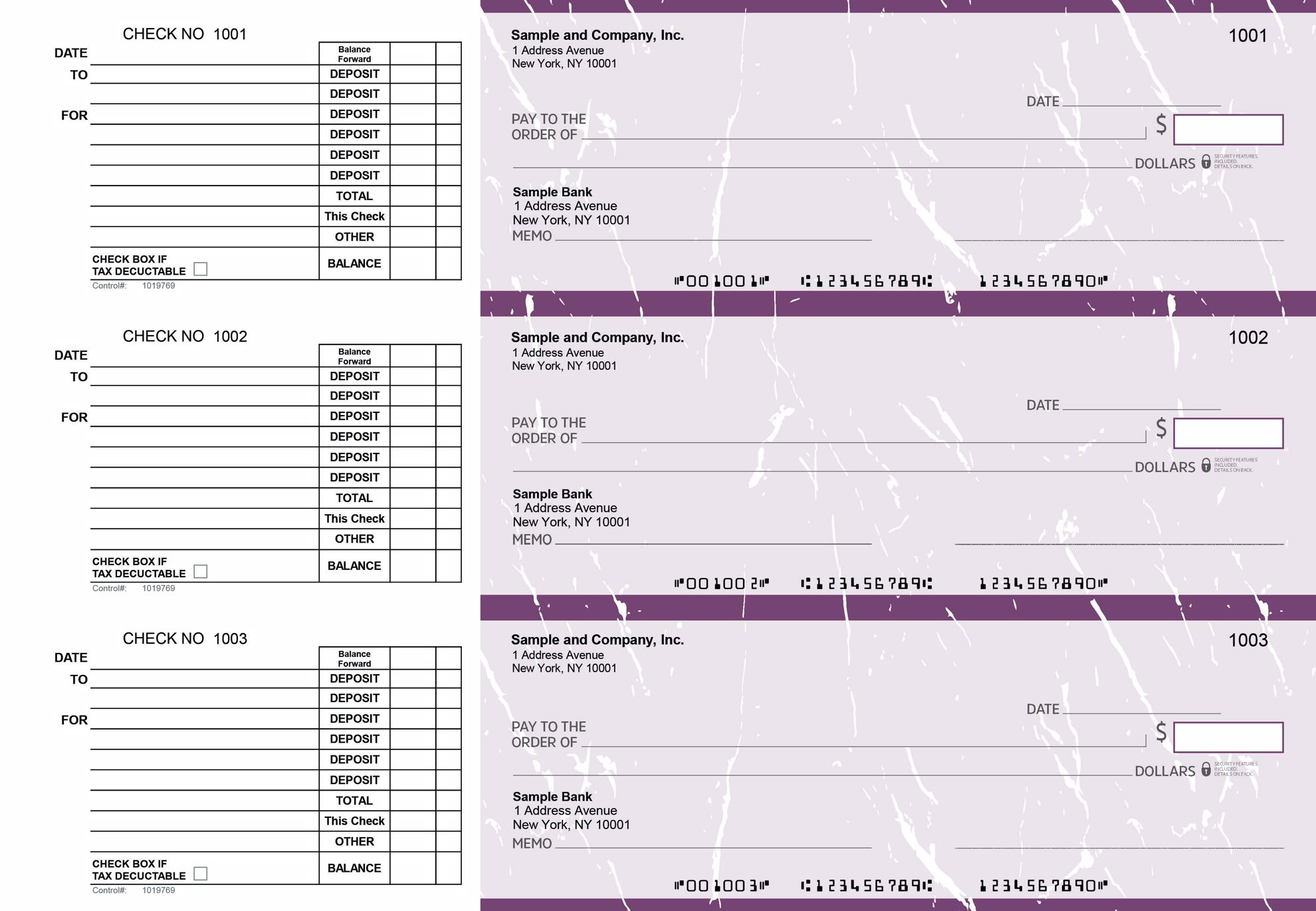
A bound book keeps the commission record attached to the payment. See manual three on a page business checks for that format.
Do commissioned staff get overtime?
Unless they are exempt, yes, and the commission itself has to be built into the calculation. The federal regulation states that commissions are payments for hours worked and must be included in the regular rate, regardless of the method, frequency, or regularity of computing, allocating and paying the commission.
Overtime is also due on time. The regulation requires it to be paid on the regular pay day for the period in which the workweek ends, so a commission that arrives late cannot drag the overtime with it.
How do you handle a commission covering several weeks?
Allocate it. Where a deferred commission cannot be tied to particular workweeks, the regulation offers two methods: allocation of equal amounts to each week, or allocation of equal amounts to each hour worked. Pick one, write it down and apply it consistently.
Can a commissioned employee be exempt from overtime?
Sometimes, in retail and service, and the test is strict. Federal guidance on the retail commission exemption requires the regular rate of pay to exceed one and one half times the applicable minimum wage, with more than half of earnings coming from commissions over a representative period. Unless all three conditions are met, the exemption is not applicable.
What must the statement show?
Enough that the employee can rebuild the figure without asking. States that regulate wage statements are specific about it, and commission is one of the bases they name.
California requires an itemized statement showing gross wages earned, net wages earned and all applicable hourly rates in effect during the pay period. New York requires the statement to say whether pay is by the hour, shift, day, week, salary, piece, commission, or other.
- The period the commission covers, stated as dates.
- The basis, named as commission rather than bundled into other pay.
- The deals or the measure the figure was calculated from.
- Any draw recovered, on its own line.
- Gross, deductions and net, with the net matching the payment.
Massachusetts also requires the paper itself. An employer must furnish a suitable pay slip, check stub or envelope with the payment, which is a reminder that the stub is part of the obligation and not an optional courtesy.
What about clawbacks on canceled sales?
Write the rule before you need it. A clawback applied without a written basis looks like a deduction from wages, and in several states that is a problem on its own. Say in the agreement what happens on a refund, a cancellation or a bad debt, and how long the look back period runs.
Then apply it the same way every time. The fastest route to a wage claim is a clawback that was waived for one person and enforced against another.
Related reading
- Making payroll checks covers running an off cycle payment.
- Payroll checks covers what a wage payment must carry.
- Check register covers tracking an extra item outside the normal run.
- Who signs a business check covers approval on an unusual payment.
What to do next
Read your own commission plan and find the sentence that defines earned. If there is not one, that is the single highest value thing you will fix this quarter, and it costs nothing but an afternoon.
Then decide whether commission goes out on its own item or inside the regular payment, and set the stock up accordingly. Payroll checks carry the stub detail a commission needs, and business checks suit a one off payment from the operating account.
About the Author
Sales driven businesses tend to order from us twice a year, in the week before a quarter closes and in the week after one goes badly. The request is always for more space on the stub. A commission that lists the deals beside it is the one nobody rings up to query.
The points above on the regular rate, supplemental withholding and written commission contracts are drawn from federal wage and tax guidance and from the labor codes of California, New York, Illinois and Massachusetts. Your own state and your own agreement decide what applies to you.