- - -
- hours mins seconds
to get your checks by
Tomorrow, Oct. 14th

 0
0 You have no items in your shopping cart.
Check Washing: How It Works, Who Pays, How to Stop It
Check washing turns a payment you already approved into a withdrawal you never authorized, and you normally find out weeks later on a statement. The difficult part is not understanding the trick. It is knowing who absorbs the loss, how fast you have to act, and which controls are worth paying for.
Quick Summary
Check washing is check fraud. A thief steals a signed check from the mail, uses solvents such as acetone or bleach to lift off the payee and the amount, then rewrites both and deposits it. Your signature is genuine, which is exactly why the altered check clears.
- It is an altered genuine check, not a counterfeit. The account details and the signature are real, so the item passes the front line checks that catch fakes.
- Business accounts are the preferred target. Michigan's Attorney General, citing federal analysis, notes a stolen business check is worth more to a thief because a company account tends to hold a larger balance and gets looked at less frequently.
- Your bank can usually charge only the original amount. Under UCC 4-401, a bank that in good faith pays an altered item may charge the account according to the original terms of that item.
- Deadlines decide the outcome more than the fraud does. UCC 4-406 sets a reasonable period not exceeding 30 days to examine a statement and notify the bank, and a one year outside limit after which you cannot assert the alteration at all.
- Reconciliation catches washing, inspection does not. You never hold the washed check, so the only place it surfaces is your statement or the check image.
- Prevention runs in one order: stop mailing checks from unsecured points, add Positive Pay, then make the stock harder to wash.
The table below is the short version of liability. Each row is explained in full further down.
| Situation | Who normally bears the loss | Rule that decides it | Your first move |
|---|---|---|---|
| You report inside your statement window | The paying bank, which then pursues the bank that took the deposit | UCC 4-401, UCC 4-406 | Written notice to your bank the same day |
| You report after about 30 days from the statement | Loss can shift to you on that item, and on later items by the same wrongdoer | UCC 4-406(d) | Notify now and record the statement date |
| You report more than one year later | You, with no claim against the bank on that item | UCC 4-406(f) | Review every account for other altered items |
| Your own handling helped the alteration | Split between you and the bank by comparative fault | UCC 3-406 | Fix and document the control that failed |
| A check mailed to you was washed | Your customer's account was debited, so your customer holds the claim | UCC 4-401, UCC 4-406 | Ask for a reissue by a non mail method |
The Uniform Commercial Code is adopted state by state with variations, and your deposit agreement can impose a shorter notice period than the code allows. Treat this page as general information, not legal advice, and confirm the specifics with your bank and your own adviser.
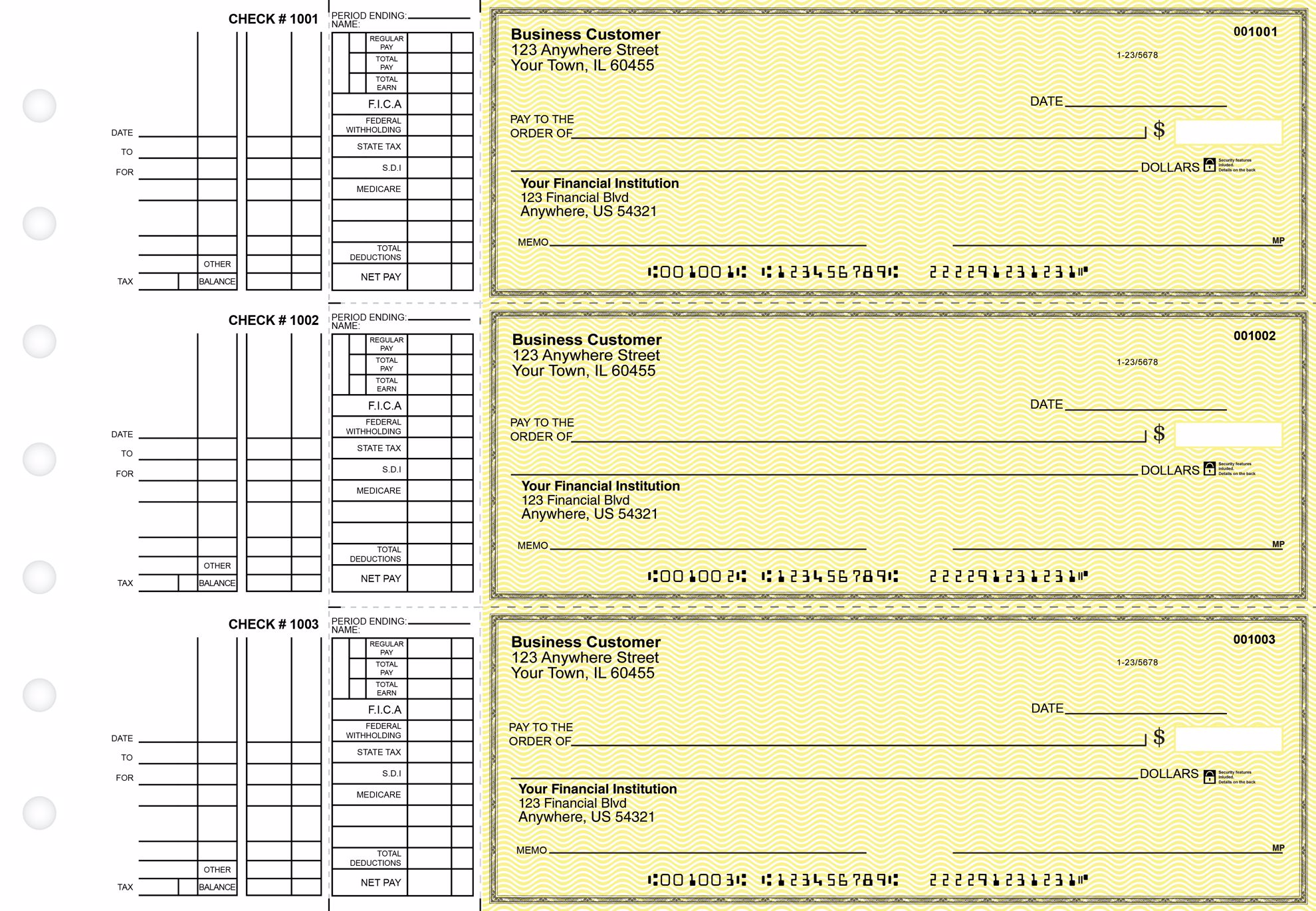
If your current checks are plain stock, moving to high security business checks is the one change you can make today, with same day production and next day delivery.
What this guide covers
- What is check washing?
- How common is check washing right now?
- Who is liable for a washed check?
- What should you do in the first 24 hours?
- What if a check mailed to your business was washed?
- How do you stop check washing before it starts?
- How often should you reconcile to catch it in time?
- Is check washing a federal crime?
What is check washing?
Check washing is a type of check fraud. Someone lifts a check or a money order out of the mail, applies a chemical such as bleach or acetone, and rewrites who gets paid and how much. That is the definition used by the Office of the Comptroller of the Currency on its HelpWithMyBank.gov guidance for national bank customers.
The word washing is literal. The paper goes into a solvent and comes out with the handwriting gone.
How does a check get washed?
The method is low effort and has barely changed in years. The Michigan Attorney General's consumer alert sets out the sequence in plain terms.
- The check is stolen in transit. Mailboxes with the flag up and street collection boxes are the usual sources, a practice often called mailbox fishing.
- The signature is masked. Low adhesive tape goes over the signature line so the one part the thief needs stays intact.
- The paper is soaked. Acetone, paint thinner or bleach dissolves standard ballpoint ink while the printed elements survive.
- It is dried and rewritten. What remains is a signed blank check, which is rewritten or sold on.
- It clears your account. You learn about it when the item appears on your statement, which can be weeks later.
Read that list again as a control problem rather than a crime story. Four of the five steps happen after the check leaves your hands and before your bank tells you anything. Only step one and step five sit anywhere near your reach.
What does a washed check look like?
Usually you never see it. The evidence you get is a cleared item on a statement, or an image in online banking, so that image is where the inspection happens.
- A payee you do not recognize, or your payee's name spelled slightly differently
- An amount larger than your records say, often a round number
- Handwriting that does not match the person who writes your checks
- Faint ghosting where the original writing was lifted but not fully removed
- Mottled or discolored paper, or a background pattern that looks washed out in one area
- A check number out of sequence with your register
That last one is the most useful and the most often skipped. A number that does not match your check register tells you something is wrong before you have to judge handwriting on a low resolution image.
Is a washed check the same as a counterfeit check?
No, and the difference changes which rule applies to your claim.
| Type | What the thief did | Why it matters to you |
|---|---|---|
| Washed or altered check | Changed a real check you signed | Your signature is authentic, so it clears easily. Claims turn on alteration rules and timing |
| Counterfeit check | Printed a fake item using your account details | Often caught on security features or stock quality, and treated as an unauthorized item |
| Forged endorsement | Left your check unchanged and signed the back | Nothing on the front looks wrong, so the payee is the one who reports the payment missing |
Community threads from business owners show all three happening and being described as washing. When you report it, say precisely what changed, because your bank files them differently.
How common is check washing right now?
Mail theft related check fraud is measured in hundreds of millions of dollars over a six month window. FinCEN's Financial Trend Analysis on mail theft related check fraud counted 15,417 Bank Secrecy Act reports filed between 27 February and 31 August 2023, tied to more than $688 million in transactions. Banks filed 13,618 of those reports, which is 88 percent of the total, and 635 separate banks filed at least one.
Scale that against how little of it any one business sees. A single washed check rarely makes the news, so the risk reads as rare until you look at the filings.
The wider picture is in a Federal Reserve Bank of Philadelphia Consumer Compliance Outlook article, which reports that checks remain the payment method most often subjected to payments fraud, with 63 percent of survey respondents reporting attempted or actual check fraud in 2024. The same article records 38,500 USPS mail theft incidents involving mail receptacles between October 2021 and October 2022, more than 25,000 in the first half of fiscal 2023, and check fraud suspicious activity reports nearly doubling between 2021 and 2023.
Why are business checks worth more to a thief than personal checks?
Three reasons, and all three are about the account rather than the paper.
- The balance is bigger. A business account can absorb a four figure item without bouncing it, so a larger rewrite succeeds.
- Nobody is watching daily. Michigan's alert, citing federal analysis, makes the same point: a company account gets reviewed less frequently than a household one.
- Volume hides the item. A business that issues sixty checks a month will not notice one unfamiliar payee the way a household would.
Who is liable for a washed check?
The starting position is better than most business owners expect. Under UCC 4-401, a bank that in good faith pays an altered item may charge the account according to the original terms of the altered item. In practice that means the bank can hold you to the check you actually wrote, and the inflated difference is not properly chargeable to you.
Then timing and your own conduct can take that protection away.
How long do you have to report a washed check?
Report it the day you find it. UCC 4-406 requires a bank to make statement information available in enough detail to identify the items paid, and then puts a duty on you to examine it.
- A reasonable period, not exceeding 30 days. Section 4-406(d) refers to the customer having been afforded a reasonable period, not exceeding 30 days, to examine the item or statement and notify the bank. Miss it and the bank can assert the loss against you on that item, and on further items by the same wrongdoer paid before you gave notice.
- One year, and then nothing. Section 4-406(f) is blunt. Without regard to the care of either side, a customer who does not report an alteration within one year after the statement or items were made available is precluded from asserting it.
- Your agreement may be tighter. Deposit agreements commonly shorten the notice period. The code is the ceiling, not the promise.
The practical consequence is a cadence problem, not a legal one. If you reconcile quarterly, you can be inside the one year limit and still outside the window that matters.
What happens if your own handling helped the alteration?
Then the loss gets shared. UCC 3-406 says a person whose failure to exercise ordinary care substantially contributes to an alteration is precluded from asserting it against someone who paid in good faith. If the bank also failed to exercise ordinary care, the loss is allocated between both sides according to how much each failure contributed.
Comparative fault is why the boring controls earn their keep. Signed blank checks left in a drawer, no reconciliation, an unlocked box of stock: each one is an argument the other side gets to make.
A written check signing policy is the cheapest evidence that ordinary care existed, and it matters more once a claim is contested than it ever does on a normal day.
Does the bank refund the whole amount or just the difference?
Normally the difference, because the original check was one you authorized, and UCC 4-401 lets the bank charge you on the original terms. If you wrote $400 and the washed item cleared at $4,000, the $400 payment was genuine and the $3,600 was not.
Two situations change that. If the payee was altered as well, your intended supplier never got paid, so you still owe that invoice and will need the full amount restored or the payment reissued. If the signature itself was forged rather than preserved, the item was never authorized at all and the claim covers the whole sum.
What should you do in the first 24 hours after finding a washed check?
Work in this order. The first two steps protect the deadline, and everything after that builds the evidence.
- Give your bank written notice today. A phone call starts it, an email or the bank's dispute form proves it. Keep the timestamp.
- Record the date the statement became available to you. That date, not the date you noticed, is what the 30 day and one year tests run from.
- Ask for an affidavit of forgery or altered item. Banks will not process a claim without it, and the wording is specific to alteration rather than forgery.
- File a police report. Business owners who recovered funds consistently report being asked for the report number before the claim progressed.
- Report the mail theft. Checks taken from the mail are a postal crime, reportable to the U.S. Postal Inspection Service.
- Stop payment on anything still outstanding. If one check from a batch was taken, assume the rest of that envelope is compromised.
- Decide about the account number. A thief who washed one check holds your routing and account numbers. Ask your bank whether a new account number is warranted.
- Tell the intended payee. Their invoice is still unpaid, and they need to know before late fees start.
How do you prove a check was altered?
Your records do the proving, not the paper, because the paper is gone. Build the pack before the bank asks.
| Evidence | What it establishes | Where it comes from |
|---|---|---|
| Check register or accounting entry | The payee and amount you issued | Your books, ideally dated before the clearing date |
| The invoice being paid | Why that amount went to that payee | Supplier invoice or approval record |
| Front and back check images | The alteration and the endorsement used | Online banking, downloaded immediately |
| Payee confirmation of non receipt | The real payee was never paid | A short email from your supplier |
| Mailing details | The check was in the mail stream | Date posted and the drop point used |
| Check number sequence | Which stock is unaccounted for | Your stock log and register |
Download the images the day you find the problem. Access windows for check images are limited and vary by bank, and a claim is much weaker once the image has aged out.
What do you do if your bank denies the claim?
Denials happen, and business owners describe them often. There is a route beyond the first answer.
- Get the denial in writing, with the reason and the rule the bank is relying on.
- Escalate internally past the branch, to the fraud or claims team, and reference the specific code sections rather than the general unfairness.
- Ask about the bank of first deposit. The bank that accepted the altered item carries warranty exposure, and your bank normally pursues it rather than you.
- File a regulator complaint. Complaints can be submitted to the Consumer Financial Protection Bureau, and national bank customers can also contact the OCC's customer assistance group.
- Keep every date. If the dispute turns on whether you gave timely notice, your timeline is the case.
What if a check mailed to your business was washed?
This is the version business owners report most often and the one no general guide covers. A customer mails you a payment, it never arrives, and it clears their account made out to someone else.
Your position is different here, and the difference is worth understanding before you chase anyone.
- Your customer holds the claim. Their account was debited, so their bank is the one with the duty and the deadlines.
- Your invoice is still unpaid. A washed check does not discharge the debt, so keep the receivable open.
- Your job is speed. The sooner the customer reports it, the better their odds, and your payment depends on their claim.
- Ask for a different method. A reissued paper check traveling the same route has the same exposure.
- Watch for the pattern. Repeated interception of payments to the same address points at a route or a receptacle, which makes it a postal report, not a banking one.
If a meaningful share of your incoming payments arrive by mail, the practical fix is a lockbox or an electronic option for your largest accounts, and keeping paper for the rest.
How do you stop check washing before it starts?
Rank the controls by what they actually stop. Most advice lists them flat, which is why businesses buy a pen and skip the control that would have worked.
| Control | What it stops | What it does not stop | Effort |
|---|---|---|---|
| Never mail from an unsecured point | The theft itself, which is the whole supply | Theft inside the postal network | Low |
| Positive Pay | Payment of a mismatched amount or check number | Payee changes, unless payee verification is included | Medium, bank set up |
| Daily or weekly reconciliation | Missing the notice deadline | The fraud occurring | Low, habit |
| Chemically reactive check stock | Clean solvent removal, leaving visible staining | Copying, or forged endorsement | Low, a stock choice |
| Pigment based gel ink | Easy lifting of standard ballpoint ink | Determined solvents, copying, endorsement fraud | Low |
| Separate disbursement account | Exposure of your main balance | The alteration itself | Medium |
| Locked stock and a number log | Internal theft and silent gaps in sequence | Theft after mailing | Low |
Does a gel pen stop check washing?
It raises the effort, it does not remove the risk. Pigment based gel ink bonds into the paper fibers and resists common household solvents better than standard ballpoint ink does.
It is still the weakest control on the list, for one simple reason: it only addresses the washing step. A thief holding your check can photograph it, copy it, or simply endorse the back and deposit it, and none of that cares what pen you used.
Pen choice and the rest of the field by field habits are covered in how to write a business check by hand, so this page does not repeat them.
How does Positive Pay help?
Positive Pay moves detection to before payment instead of after. You send your bank a file of the checks you issued, with number, amount and date, and the bank flags presented items that do not match for you to approve or reject.
Ask one question when you set it up: is payee name verification included? Standard Positive Pay matches the check number and the amount. A washed check very often keeps the amount and changes the payee, which a number and amount match will pass. Payee verification is usually a separate service.
What should you change about how you mail checks?
This is the cheapest meaningful change available, because it attacks the supply rather than the method.
- Hand outgoing checks to a retail clerk rather than leaving them in a receptacle or an unattended tray.
- Never post late in the day, when mail sits in a collection box overnight.
- Keep the envelope anonymous. An envelope that reveals a check inside advertises itself.
- Use a double window self seal envelope sized so the check cannot shift to show the amount through the window.
- Batch less. Twelve checks in one envelope is one theft with twelve losses.
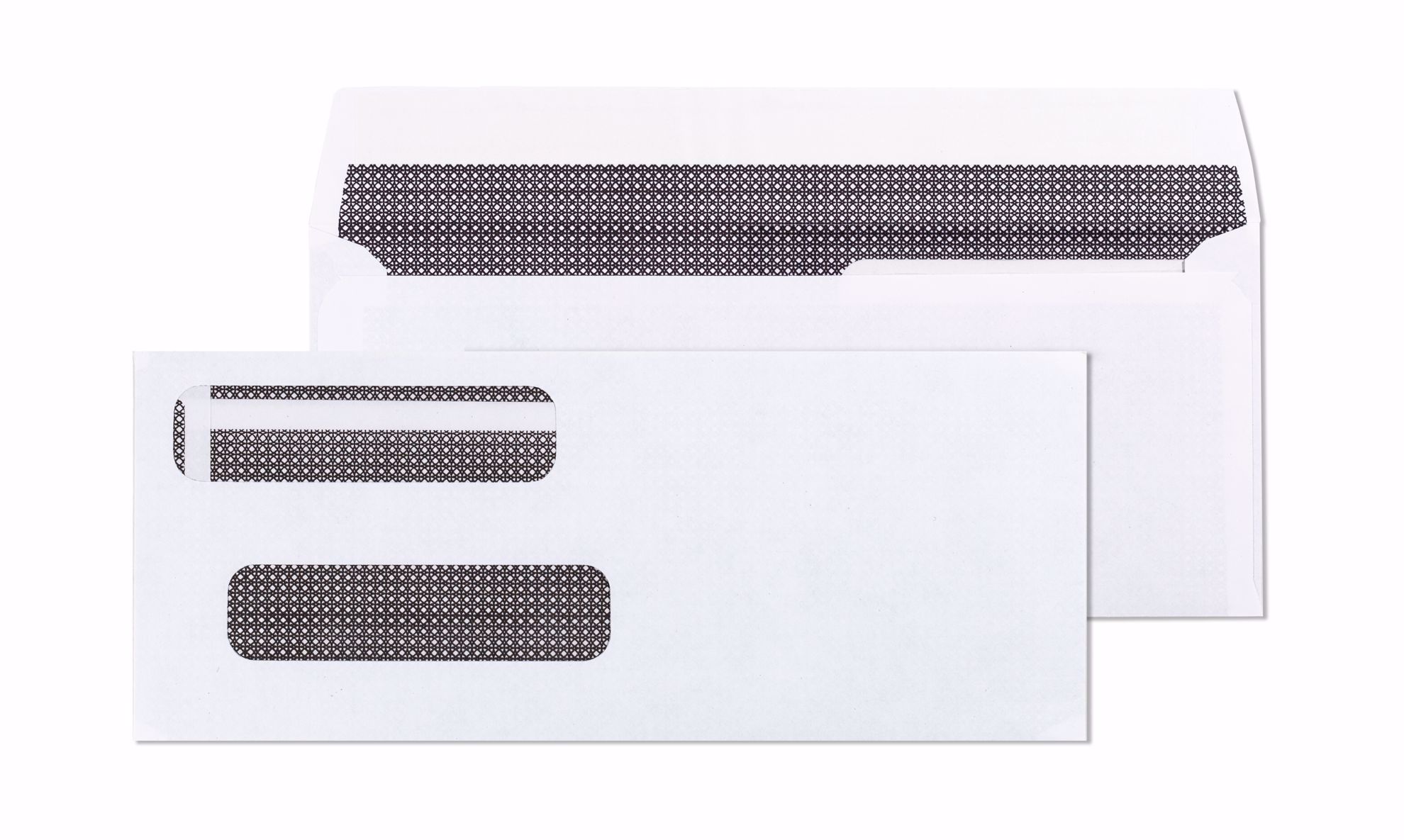
Our business check and envelope size guide has the dimensions if you are matching envelopes to a format.
Where does your check stock come in?
Stock will not stop the theft, and it will not pass a check that your bank's Positive Pay file rejects. What it does is make the washing step fail visibly, so an altered item has a much better chance of being spotted at deposit or on the image.
Chemically reactive paper stains or spots when solvents touch it. Paired with a void pantograph that shows VOID on a copy, and microprinting that blurs when reproduced, the paper itself starts carrying evidence of tampering.
The full feature list lives on one page rather than being repeated here. Blank check security features explains each one and what it defeats, and high security business checks covers which formats carry them. If you print your own, the same features are available on blank check stock, which matters because stock bought as plain paper has none of them.
Check paper in the United States is covered by a published standard, ANSI X9.100-10, Paper Specifications for Checks. It is maintained by the Accredited Standards Committee X9, the body that writes financial services standards for the US. Stock specification is a documented control, not a matter of taste.
How often should you reconcile to catch a washed check in time?
Match the cadence to the notice window, not to your accountant's schedule. The 30 day clock in UCC 4-406 runs from when the statement was made available, so a monthly close that happens three weeks late eats most of the window before anyone opens the file.
| Checks issued per month | Review cadence | What to review |
|---|---|---|
| Under 20 | Weekly | Cleared items against the register, payee and amount |
| 20 to 100 | Twice weekly | Cleared items plus any gap in the check number sequence |
| Over 100 | Daily, through Positive Pay | Exception queue the same day, plus a weekly sequence check |
One habit does more than the cadence itself: have someone who does not write the checks open the statement. Separating preparation from review is the control that catches both outside fraud and the internal kind, and it costs nothing to arrange. Our guide to who signs a business check covers how that separation is usually set up.
Is check washing a federal crime?
Taking checks from the mail is a federal offense, and it is investigated by the U.S. Postal Inspection Service rather than only by local police. Depositing an altered check can bring bank fraud charges as well, and state forgery and theft laws apply too.
None of that changes anything about your own deadlines. Prosecution is slow and is not a recovery route, so file the report and run your bank claim as a separate track.
Related reading on check fraud
Check washing is one method among several, and the defenses overlap.
- Check kiting fraud covers the scheme that targets you when you accept checks rather than write them.
- Personal check safety covers the habits side for checks drawn on a personal account.
- How to write a business check by hand covers closing the gaps that make a rewrite easy.
- What is a voided check covers handling and retaining voids so they cannot be reused.
What to do next
Pick the two controls you do not have yet. For most businesses that is a reconciliation cadence inside the notice window and a conversation with the bank about Positive Pay with payee verification.
Then make the paper work for you. If you are reordering anyway, high security business checks add chemical reactivity, a void pantograph and microprinting at the stock level, and business checks of every format are produced the same day and delivered the next.
About the Author
The Checks Next Day team prints and ships business and personal checks for U.S. customers every business day, with same day production and next day delivery. Questions about security features, washed checks and what to tell a bank come up constantly at order time, and the guidance here reflects those conversations alongside the published banking guidance and code sections named above. Bank policies, deposit agreements and state adoption of the Uniform Commercial Code vary and can change, so confirm specifics with your own bank and adviser.