
- - -
- hours mins seconds
to get your checks by
Tuesday, Nov. 17th

 0
You have no items in your shopping cart.
Check Stock Storage and Destruction: What to Lock Up and What to Shred
Last updated: November 13, 2026
Blank check stock gets treated like stationery because that is what it looks like. It is actually a payment instrument that has not been filled in yet, carrying your real routing and account numbers, and most offices store it where anybody could reach it.
Quick Summary
Check stock storage comes down to three habits: lock it away from the signing device, count it on a schedule and at handover, and destroy superseded stock rather than keeping it. Where the paper also carries consumer information, the federal disposal standard asks for reasonable measures to protect against unauthorized access in connection with disposal.
- Lock the stock, and keep it apart from any signature stamp.
- Name the custodian, who should not prepare or reconcile payments.
- Count quantity and the next number, not just whether the box is there.
- Destroy old stock after a bank or address change rather than storing it.
- Burning, pulverizing or shredding are the examples the disposal rule gives.
- Do due diligence on a destruction firm and monitor the contract.
Here is what belongs in each category, because not everything needs the same treatment.
| Item | How to hold it | How it ends |
|---|---|---|
| Blank stock in use | Locked, named custodian, counted | Printed and recorded in the register |
| Superseded stock | Separated the day it is superseded | Destroyed, with a note of quantity and numbers |
| Voided items | Marked and filed, not discarded | Destroyed with the records at the end of retention |
| Signature stamp | Separate lock, different holder | Destroyed when the signer changes |
Background on handling documents, not legal advice. What a business must keep and what it may destroy depends on the records themselves, the industry and the state, so your accountant and your attorney are the right authorities.
Ordering only what you need is part of this. Business checks can be supplied in quantities that match your usage rather than filling a cupboard.
What this guide covers
- Why does blank stock matter so much?
- How should it be stored?
- How often should it be counted?
- What does the disposal standard ask for?
- How do you choose a destruction company?
- What about stock after a bank change?
- How long should the records be kept?
Why does blank stock matter so much?
Because it already carries the two numbers that matter. A sheet of unused stock shows your routing and account details, and in many layouts your business name and address as well. Everything else on it can be supplied by whoever takes it.
There is a second reason, and it only appears after a loss. Allocation of loss for alterations and forged signatures turns on whether a party failed to exercise ordinary care in a way that substantially contributed to the loss, and how you stored your stock is the kind of fact that gets examined in that argument.
Treat it as cash with a delay. That single reframing settles most arguments about whether a locked cupboard is worth the inconvenience.
How should it be stored?
Locked, in one place, with one named holder, and never alongside the thing that makes it look signed. The last point is the one most offices miss, because the stamp and the stock end up in the same drawer for convenience.
- One storage point, not a box in each department.
- A named custodian and a named deputy, both written down.
- Keep the custodian out of payment preparation and out of reconciliation.
- Store any signature stamp separately, under a different lock and holder.
- Issue stock in recorded batches, noting the numbers taken and the date.
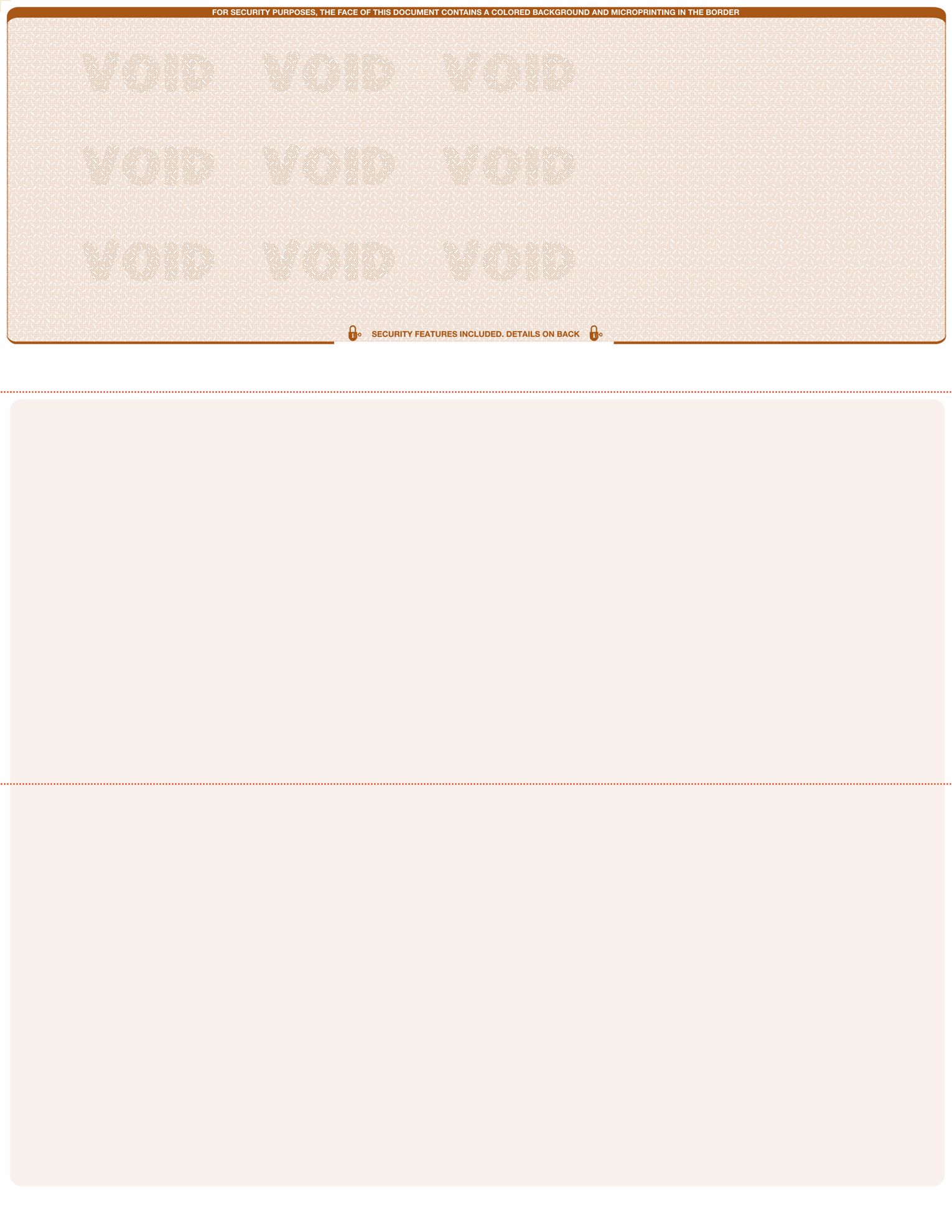
Sheet stock is easy to count and easy to issue in batches. See blank checks on the top for that format.
How often should it be counted?
On a regular schedule, and always when the custodian changes or the office is closed for a period. A count means two figures: how many sheets remain, and what the next unused number is.
Checking the box is still there proves nothing. Stock is taken from the middle of a pack precisely because the gap is invisible until that number is presented, which may be months later.
What should the count record show?
- The date and who counted, ideally two people.
- Quantity remaining for each account and format.
- The next unused number in each series.
- Anything issued since the last count, with the numbers.
Our guide to the check register covers tying those numbers back to what was actually printed.
What does the disposal standard ask for?
Reasonable measures, judged by outcome rather than by method. The federal disposal rule requires any person who maintains or otherwise possesses consumer information for a business purpose to dispose of it by taking reasonable measures to protect against unauthorized access to or use of the information in connection with its disposal.
The rule then gives examples, and says they are illustrative only. They include policies that require the burning, pulverizing or shredding of papers containing consumer information so that the information cannot practicably be read or reconstructed, and policies requiring the destruction or erasure of electronic media containing consumer information.
Note the test inside the example. The standard is that the information cannot practicably be read or reconstructed, which is a higher bar than a strip cut office shredder clears comfortably.
How do you choose a destruction company?
By doing the homework the rule describes, and then keeping an eye on the contract. One of the listed examples is, after due diligence, entering into and monitoring compliance with a contract with a record destruction business.
The rule also sketches what due diligence can look like. It may include reviewing an independent audit, obtaining references, requiring certification by a recognized trade association, and evaluating the company's information security policies.
- Ask for the audit or certification rather than the sales brochure.
- Take references from a business of similar size to yours.
- Get a certificate of destruction for each collection.
- Record quantities and number ranges before anything leaves your building.
- Review the arrangement annually, which is the monitoring part.
What about stock after a bank change?
Destroy it the same week. Superseded stock is the most commonly kept and least defensible item in the cupboard, because the account it names may still exist for months and the paper has no remaining use.
- Separate it the day the change takes effect, so it cannot be picked up in error.
- Record the quantity and number range before destruction.
- Tell the bank what was destroyed, and keep the confirmation.
- Do the same for an address or name change, where the stock becomes wrong.
- Never keep a few sheets in case they come in handy.
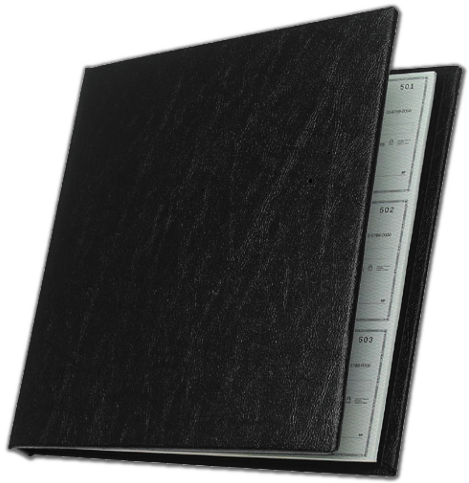
A bound book is easier to control than loose sheets. See compact three per page manual business checks for that format.
How long should the records be kept?
Longer than the stock, and the two decisions are separate. Blank stock becomes a liability the moment it is superseded, while the register, the stubs and the statements only become safe to destroy once nothing can be asked about them.
| What | Why it is kept | When it goes |
|---|---|---|
| The register | Proves what was issued and to whom | At the end of your retention period, with the year |
| Stubs and vouchers | Explains what each payment was for | With the register, not before it |
| Voided items | Accounts for a number that was never used | With the records for that year |
| Superseded blank stock | Nothing, once the account has changed | Immediately, with the quantity recorded |
Set the retention period with your accountant rather than guessing, because it depends on your filings and your industry. Then apply it by year, so destruction happens on a schedule instead of whenever a cupboard runs out of space.
What about digital copies and check images?
Treat them the same way. The disposal rule's examples include policies requiring the destruction or erasure of electronic media containing consumer information, which covers the scanned stubs and downloaded images most businesses now keep alongside the paper.
Remember the old laptop and the backup drive in the drawer. Those hold the same information as the filing cabinet and almost nobody includes them in a destruction schedule.
Who should be told when stock is destroyed?
Your bank, and whoever keeps the register. Telling the bank the number range that was destroyed means an item from that range arriving later is a question rather than a payment, and that is a far cheaper conversation than a reconciliation months afterwards.
Record it in the register the same way you record a void. A gap in the numbers that is explained in writing is ordinary housekeeping, and the same gap with no entry beside it is the thing an auditor stops on.
Related reading
- Check register covers tying stock issued to items printed.
- Check signing policy covers custody and separation of duties.
- High security business checks covers tamper resistant stock.
- Blank check security features covers what each printed feature does.
What to do next
Go and look at where your blank stock actually lives, and check whether the signature stamp is in the same drawer. Then count what is there and write down the next unused number, because you now have a baseline you did not have this morning.
Then order to match your usage rather than your cupboard. Business checks come in quantities that suit the run you actually print, and high security business checks add tamper resistance where it is worth having.
About the Author
Because we print and ship this stock every working day, we get a clear view of where it ends up. The orders that give us pause are the very large ones from small businesses. A three year supply in an unlocked cupboard is a risk sitting quietly in a back office.
The disposal points here follow the federal disposal rule on consumer information, and the loss allocation point follows the ordinary care standard in the Uniform Commercial Code. What applies to your own records depends on your industry and your state.