
- - -
- hours mins seconds
to get your checks by
Friday, Nov. 6th
Get it tomorrow
AFTER HOUR ALERT
Ooops! You missed todays deadline.
Your order will ship the next business day.
Need checks sooner?
Select the Rush +$25.00 at checkout to receive them tomorrow.
* Submit your order before 5pm EST to enjoy this offer.

 0
You have no items in your shopping cart.
Check Protector Machine: What It Stops and What It Does Not
Last updated: November 4, 2026
Somewhere in most long established offices there is a heavy metal device that crushes the amount into a check. It looks obsolete. The legal reason it was bought has not changed at all.
Quick Summary
A check protector machine makes the amount field hard to change. That matters because the Uniform Commercial Code precludes a drawer whose failure to exercise ordinary care substantially contributed to an alteration from asserting it against a good faith payor. The device answers one small part of that duty, and leaves the rest of the document untouched.
- It locks the amount only, by pressing ink into shredded paper fibers.
- Ordinary care is the legal test, and failing it can preclude your claim entirely.
- Loss can be split where the other party was careless too.
- An altered item is still enforceable according to its original terms.
- Later items by the same wrongdoer carry a period not exceeding thirty days to report.
- One year is the outer limit, after which the customer is precluded regardless of care.
Here is what the device covers against the parts of a check that fraud actually targets.
| Part of the check | Protector helps | What else is needed |
|---|---|---|
| Amount in figures and words | Yes, this is its whole job | Nothing, if used on every item |
| Payee name | No | Full registered name, tamper resistant stock |
| Signature | No | Signing policy and limits, secure storage |
| The item in transit | No | Sealed envelopes, prompt statement review |
This page is general information about payment documents and record keeping. It is not legal or banking advice, and your account agreement and your state's enactment of the commercial code govern your position, so treat your bank and your counsel as the authority.
Where checks are handwritten, the stock does part of the work. Blank checks three per page suit a manual run, and blank check security features explains what each printed feature is for.
What this guide covers
- What does a check protector machine do?
- Why does locking the amount matter legally?
- What is an altered check worth?
- How quickly do you have to report?
- How do you write a check so the amount cannot be changed?
- What does a protector not protect?
- Do you still need one?
What does a check protector machine do?
A check protector machine prints the amount into the paper rather than onto its surface. It presses inked characters hard enough to shred the fibers and drive pigment into them, so the figures cannot be lifted with solvent or overwritten without obvious damage.
That is the entire function. It is not a signing device, it does not certify anything, and a check it has processed is not more valid than one written with a pen. The device only makes one field hard to change.
Where is it still genuinely useful?
- Checks written away from the office, on site or at a counter.
- Occasional manual items in a business that otherwise prints from software.
- Larger one off payments where the amount is the attractive target.
- Handwritten books kept by a supervisor or a site manager.
Why does locking the amount matter legally?
Because carelessness can cost you the right to complain. The Uniform Commercial Code says a person whose failure to exercise ordinary care substantially contributes to an alteration is precluded from asserting that alteration against a person who, in good faith, pays the instrument.
Read that slowly, because it is the opposite of how most businesses assume the risk sits. The question is not only whether someone altered your check. It is also whether your own practices helped them.
Is the loss all or nothing?
No, and that is the part worth knowing. Where the party asserting the preclusion also failed to exercise ordinary care, and that failure substantially contributed to the loss, the code allocates the loss between the two according to the extent each failure contributed.
Proof follows the same shape. The party asserting preclusion has to prove the other side's failure to exercise ordinary care, and the person precluded has to prove the asserting party's failure where comparative fault is raised.
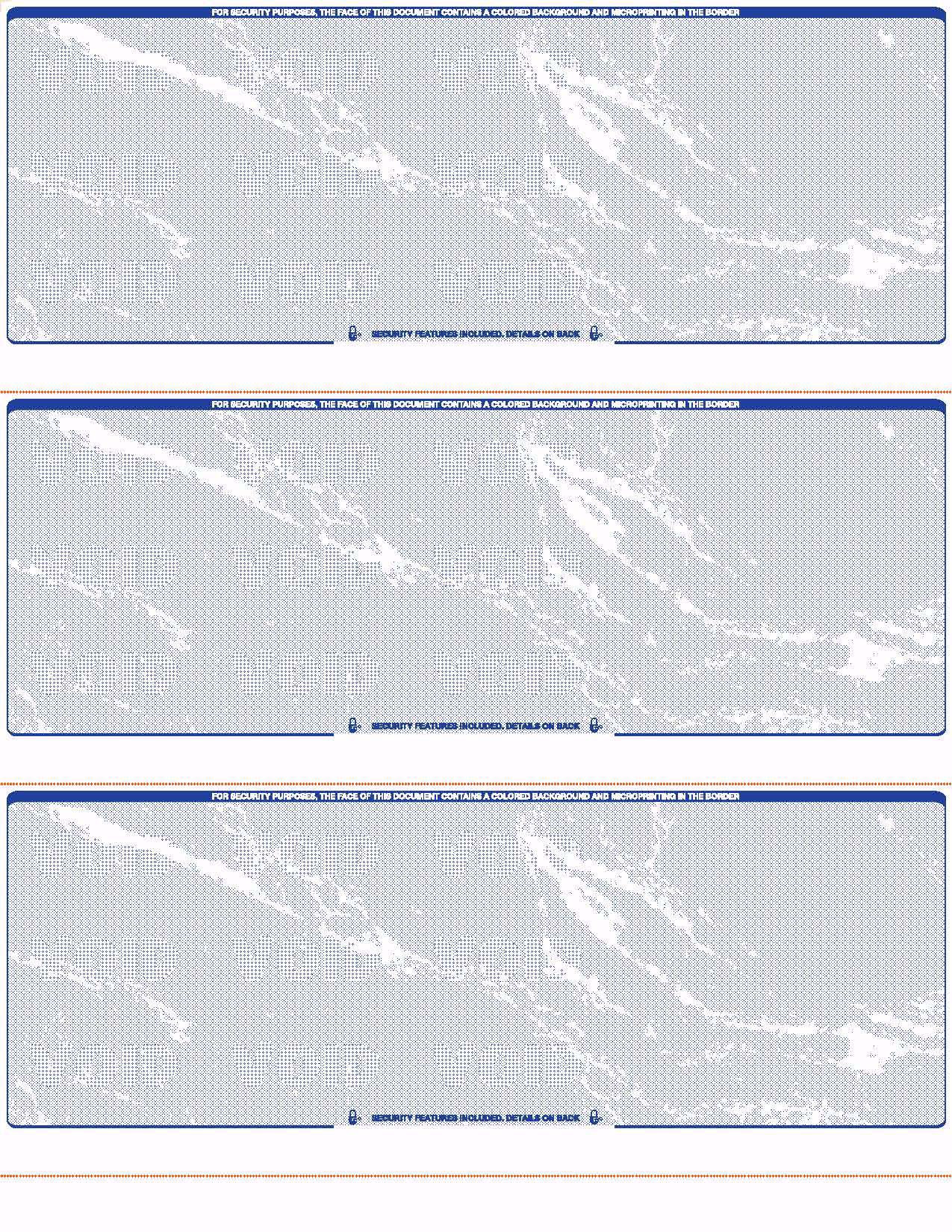
Manual writing is where ordinary care is most visible. See blank checks three per page for the format most hand written runs use.
What is an altered check worth?
Its original terms. The code defines alteration as an unauthorized change that purports to modify in any respect the obligation of a party, or an unauthorized addition of words or numbers to an incomplete instrument relating to that obligation.
What follows is the useful part. A payor bank or drawee that pays a fraudulently altered instrument, or a person who takes it for value in good faith and without notice of the alteration, may enforce it according to its original terms. Where an incomplete instrument was altered by unauthorized completion, it may be enforced according to its terms as completed.
That second limb is the argument for never signing a blank check. An incomplete item filled in without authority can be enforced as completed, which is a far worse position than the original terms.
How quickly do you have to report?
Promptly, and there are two deadlines behind that word. The code requires a customer to exercise reasonable promptness in examining the statement or the items, and to promptly notify the bank of the relevant facts once an unauthorized payment is apparent.
- Review statements on a schedule, not when something feels wrong.
- Report the first altered item immediately, in writing as well as by phone.
- Review the whole period at once, because later items by the same wrongdoer carry a period not exceeding thirty days to examine and notify.
- Treat one year as the hard stop. A customer who misses it is precluded regardless of care, counted from when the statement or items were made available.
- Keep the dates you reviewed, since reasonable promptness is a question of evidence.
Our guide to the check register covers the record that makes a review provable, which is exactly what these deadlines turn on.
How do you write a check so the amount cannot be changed?
By leaving no room for a change and no doubt about what was written. These habits cost nothing and they are the practical content of ordinary care on a handwritten item.
- Start both amount fields hard left, so nothing can be added in front of the figures.
- Draw a line through the space that remains after the written words.
- Write the cents clearly, as a fraction over one hundred rather than a casual dash.
- Use permanent dark ink, never pencil and never a pen that erases.
- Keep the stub in the same hand at the same moment, not later from memory.
- Never sign an item before the amount is filled in, because an incomplete instrument can be enforced as completed.
A bank verification service covers the other half of the problem. Where your bank offers one, you send the issued check numbers and amounts, and items that do not match are flagged before they are paid rather than argued about afterwards.
That pairing is the modern version of the device. One control makes the amount hard to change, the other makes a changed amount hard to pay.
What does a protector not protect?
Everything except the amount. A locked figure is no help at all against the three attacks that are more common than amount raising.
- A wrong or altered payee, which needs the full registered name and secure stock.
- A forged or stamped signature, which needs a signing policy and locked storage.
- An item stolen in the mail, which needs sealed envelopes and prompt review.
- A payment sent to a changed address, which needs a verification call.
Our guides to check washing and check signing policy cover the first three, and high security business checks covers stock built to resist alteration across the whole document.
Do you still need one?
If you write checks by hand, the device still earns its place. If your payments are printed from accounting software onto tamper resistant stock and verified by your bank, the amount field is already protected and a protector adds little.
The test is not whether the machine is modern. It is whether you can describe, in one sentence, how the amount on a handwritten check from your office cannot be changed. If you cannot, something has to fill that gap.
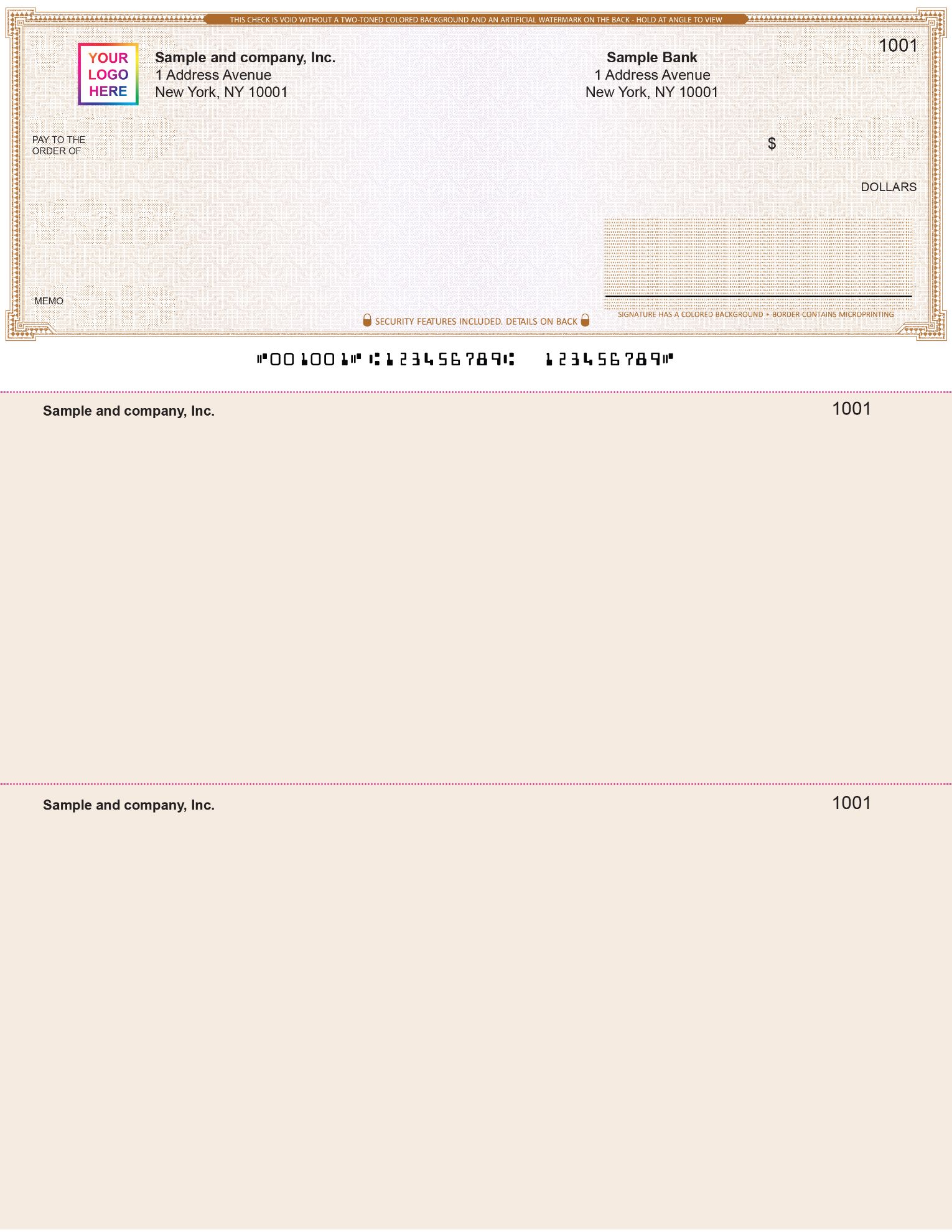
Printing the amount removes the handwritten field entirely. See business checks on the top for the layout most software expects.
Related reading
- Check washing covers solvent attacks and mailed items.
- Blank check security features covers what each printed feature does.
- High security business checks covers stock for larger payments.
- Check register covers the review record the deadlines depend on.
What to do next
Count how many checks your business wrote by hand last quarter. If the answer is more than a handful, decide this week whether the amount on those items is protected by a device, by printing, or by nothing at all.
Then match the stock to the answer. Business checks are printed to the layout your software uses, and high security business checks carry alteration resistant features across the whole document.
About the Author
Our presses supply check stock to businesses that still write items by hand, and to businesses that stopped years ago. Both call us for the same reason. Someone has looked at an old payment, seen a figure that does not match the stub, and started asking what the paper itself was supposed to prevent.
The alteration, ordinary care and reporting points here follow the Uniform Commercial Code articles on negotiable instruments and on bank deposits and collections. Your state's enactment and your account agreement govern your own position.