
- - -
- hours mins seconds
to get your checks by
Tomorrow, Oct. 21st

 0
You have no items in your shopping cart.
Changing Banks: What to Do With Your Business Checks
You have decided to move your business to a new bank. The new account is open, but the drawer is still full of checks that carry the old account number, and a few payments are still on their way to vendors.
This guide explains what to do with your business checks when you are changing banks. You will see what happens to old checks, how to handle the ones already out, when to order new ones, and how to avoid cash flow surprises in the first month.
Quick Summary
Your old checks work only for the old account, so a bank change means new checks, a plan for outstanding payments and a safe way to dispose of unused stock. The CFPB's checklist for moving an account advises leaving enough money in the old account to cover checks that have not cleared and closing it only when everything runs through the new one.
- Old checks stop working with the account. They carry the old routing and account numbers.
- Leave the old account funded. Outstanding checks and automatic payments need money until they clear.
- Order new checks early. You need the new routing number, account number and a starting check number.
- Shred unused old checks. They still show your business details and account number.
- Expect holds on the new account. For the first 30 calendar days, large check deposits can be held longer.
- Keep your records. Download statements and check images before you close anything.
| Question | Short answer |
|---|---|
| Can I use my old checks? | No. They belong to the old account. |
| What about checks already mailed? | Keep the old account open and funded until they clear. |
| When should I order new checks? | As soon as the new account details are final. |
| What do I do with unused old checks? | Destroy them securely. |
| Will deposits be held at the new bank? | Possibly, during the first 30 calendar days. |
| How do I avoid double payments? | Cancel old automatic debits only after new ones are working. |
What happens to your business checks when you change banks?
Every check is printed for one account. The routing number and account number in the MICR line at the bottom tell banks where to send it for payment. When that account is closed, the numbers no longer lead to a working account. Our guide to the MICR line on a check explains each number.
| Type of check | What happens | What to do |
|---|---|---|
| Unused checks from the old account | They cannot be used once the account is closed. | Destroy them securely and order new ones. |
| Checks written but not yet deposited by the payee | They can still be presented to the old account. | Keep the old account open and funded. |
| Checks deposited but not yet cleared | They can be paid or returned based on the balance. | Keep a buffer in the old account. |
| Old checks held by a payee for a long time | They can go stale after six months. | Contact the payee and reissue. |
| New checks from the new account | They pay from the new account. | Use a clear new starting number. |
Why can't you reuse old checks at the new bank?
A check does not carry a bank's name only for show. Its routing and account numbers decide where the payment goes. A new bank means new numbers, so new checks are needed.
How do you switch business bank accounts step by step?
The CFPB publishes a checklist for moving a checking account. It is written for consumers, but the order of steps works for a business too (CFPB checklist for moving your checking account). Here is the same sequence adapted for the checks side.
- List automatic payments and deposits. Include every automatic debit and credit that moves through the old account each month.
- Reroute your deposits. Update the account details with customers, payroll and anyone else who pays you.
- Find out when the first deposit will arrive. Then start automatic debits from the new account after that date, and cancel the old ones so no bill is paid twice.
- Leave money in the old account. Keep enough to cover checks that have not cleared and payments not yet processed.
- Order new checks. Confirm the new routing number, account number and starting check number.
- Move the leftover balance. Do this only after deposits and payments run through the new account.
- Close the old account in writing. The CFPB advises asking for written confirmation.
What extra steps matter for a business?
- Payroll. Update the payroll system and tell employees which account the next checks come from.
- Customer payment instructions. Update invoices, your website and any saved details customers use.
- Accounting software. Add the new account and keep the old one until it is reconciled to zero.
- Separate business account. Keep business money in a business account, as the IRS recommends in Publication 583.
When should you order new business checks?
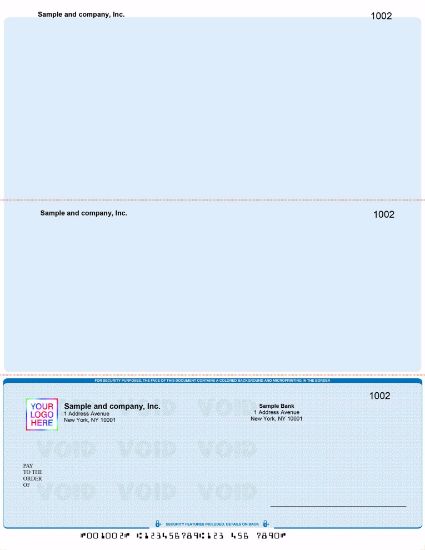
As soon as the new account details are final. When you order computer checks from Checks Next Day, the order asks for four details: your bank routing number, your account number, a starting check number, and your business name and address. Our guide to ordering business checks for the first time walks through each one.
What starting check number should you choose?
Pick a number that does not overlap with any check still outstanding from the old account. That keeps every payment easy to identify when it clears. Our check register guide explains why separate registers for separate accounts help.
Orders placed before 2:00 PM Eastern on a business day are produced the same day for next-day arrival when the details are complete and verified, as explained on our same-day production page. Prefer to write by hand? Manual business checks follow the same numbering rules.
What should you do with checks you already wrote?
Leave the old account open and funded until they clear. The CFPB checklist advises keeping enough money in the old account to cover checks that have not cleared. A check can reach the bank days or weeks after you mail it, and an ordinary check is generally stale after six months, though a bank may still pay it (UCC section 4-404). Our guide on how long it takes for a check to clear explains the timing.
| Column | What to record |
|---|---|
| Check number | The number printed on the check |
| Payee and amount | Exactly as written |
| Date mailed | The day it left your office |
| Cleared date | The day the bank posted it |
| Follow-up date | When to contact the payee if it has not cleared |
What if a payee has not deposited an old check?
Contact them. If it is lost or too old, follow the steps in our guide to stopping payment on a check, then issue a replacement from the new account under a new number. Our stale check guide covers the six month rule.
What should you do with unused checks from the old account?
Destroy them securely. They still show your business name, routing number and account number, and a stolen blank check is a fraud risk. Shred them, record the range of check numbers you destroyed, and keep a single voided sample if your accountant wants one. Our guide to whether blank checks expire explains why old stock should not sit in a drawer, and the article on check washing shows how account details get abused.
Will your new business account have deposit holds?
Possibly. Under Regulation CC, an account is new for its first 30 calendar days. For a new account, the first $6,725 of check deposits per banking day follows the normal schedule, and any excess can be held until the ninth business day after deposit (Regulation CC exceptions). Cash and electronic payments must still be available the next business day.
| Situation | Plan |
|---|---|
| You expect a large check in the first month | Ask the payer for an electronic payment or deposit the check early. |
| Payroll is due soon after opening | Fund the account with a transfer you can control. |
| Customers still pay the old account | Update payment details before moving the balance. |
| You are unsure which hold applies | Ask the bank for its funds availability policy in writing. |
How do you keep your records clean through a bank change?
- Download everything first. Save statements, check images and reconciliations for the old account.
- Reconcile the old account to zero. Do it before you close it.
- Keep one register per account. Do not mix numbering sequences.
- Note the switch date. Write it in your books and on the last page of the old register.
- Follow your retention schedule. See our guide to how long to keep business checks and bank records.
How do you handle payroll during a switch?
Run payroll from one account at a time and tell employees in advance. Keep the old account funded until every payroll check written from it has cleared. Our guides to making payroll checks and whether payroll checks can bounce explain the risks of a short balance.
What should you do next?
- List every outstanding check and automatic payment on the old account.
- Confirm the new routing number, account number and starting check number.
- Order new checks and set a date to stop using the old ones.
- Plan cash flow for the first 30 days of the new account.
- Shred old stock and close the old account only after everything has cleared.
If you need help choosing a check format, contact us and we will point you to the right one.
Why businesses order checks from Checks Next Day
Printed with your bank details. You enter your routing number, account number, starting check number, and business name and address when you order.
Same-day production on weekday orders. Orders placed before 2:00 PM Eastern, Monday through Friday (excluding holidays), are produced and shipped the same business day for next-day arrival, as long as the details are complete and verified.
Formats that match how you work. Choose computer checks, manual business checks or blank check stock to suit your software and workflow.
Faster reorders. Reorders usually move faster because artwork and specifications are already on file.
About the Author
The Checks Next Day team writes about business checks, check printing and check safety for small businesses.