- - -
- hours mins seconds
to get your checks by
Monday, Nov. 30th

 0
You have no items in your shopping cart.
Are Paper Checks Going Away? What the Federal Phase-Out Changed
Last updated: November 26, 2026
Since the federal government started phasing out the paper checks it sends, a lot of business owners have asked the same thing: does that mean checks are on the way out for everyone? Headlines about Social Security and tax refunds made it sound that way.
The short version is no. This guide explains what the federal change actually did, what has happened since, what it did not touch, and what a business that writes or receives checks should do now.
Quick Summary
Paper checks are not going away for private businesses and individuals. What changed is that the U.S. Treasury stopped issuing paper checks for most federal payments from September 30, 2025, under Executive Order 14247, with limited exceptions. Businesses can still write, mail, accept and deposit checks, and federal data shows billions are still written every year.
- The order covers money the federal government sends. Benefits, federal vendor payments and tax refunds moved to electronic payment, with waivers for people who qualify.
- Payments to the government are moving more slowly. The IRS still accepts mailed checks for now and says existing payment procedures continue until further notice.
- Private checks are not affected. No federal rule stops a business from paying a supplier, employee or landlord by check.
- Check use is falling, not ending. The Federal Reserve counted 9.2 billion checks worth about $24.45 trillion in 2024.
- Businesses still lean on them. An industry survey cited by the Federal Reserve found 87 percent of businesses used checks in 2025.
- Fraud controls matter more now. Checks remained the payment type most often targeted by fraud in the latest industry survey.
Here is the clearest way to see what changed and what did not.
| Area | What changed | What did not change |
|---|---|---|
| Federal payments out (benefits, vendors, refunds) | Electronic by default from September 30, 2025 | Waivers remain for people who qualify |
| Payments to the IRS | Being phased toward electronic over time | Mailed checks still accepted for now |
| Business to business checks | Nothing in the order | Legal to write, accept and deposit |
| Personal checks | Nothing in the order | Rent, contractors and bills can still be paid by check |
| State and local governments | Not covered by the federal order | Each sets its own payment rules |
| How banks clear checks | Under public review at the Federal Reserve | Checks continue to clear between banks |
This page is general information current to its publication date. It is not legal, tax or financial advice, and federal implementation is still moving, so confirm anything that affects a payment with the agency involved or your accountant.
If your business still pays by check, business checks with security features are the practical way to keep doing it safely.
What this guide covers
- What did the paper check executive order actually do?
- What has happened since September 30, 2025?
- Can you still pay the IRS by check?
- Can businesses still write and accept checks?
- Is the Federal Reserve getting rid of checks?
- What about personal checks, rent and Social Security?
- Why do businesses still use checks?
- What should businesses do now?
- Related reading
- What to do next
What did the paper check executive order actually do?
Executive Order 14247, "Modernizing Payments To and From America's Bank Account," was signed on March 25, 2025. It directed the Treasury to stop issuing paper checks for federal disbursements from September 30, 2025, to the extent permitted by law. That covers benefit payments, payments to federal vendors, tax refunds and payments between agencies.
The order also told agencies to move payments made to the government onto electronic methods as soon as practicable, and listed the options it expects to see used: direct deposit, debit and credit cards, digital wallets and real time payments.
Why did the government make the change?
The order gave two reasons: fraud and cost. It stated that Treasury checks are 16 times more likely than electronic payments to be reported lost or stolen, returned undeliverable, or altered, and that maintaining the paper payment infrastructure cost more than $657 million in fiscal year 2024.
Who can still get a federal paper check?
The order allows exceptions. It names people without access to banking or electronic payment systems, certain emergency payments where electronic payment would cause undue hardship, national security and law enforcement activities, and other cases the Treasury Secretary decides. People who qualify can request a waiver, and Social Security directs those requests to a Treasury phone line at 1-877-874-6347.
What has happened since September 30, 2025?
The switch has moved in stages rather than all at once. Treasury announced in August 2025 that checks would stop for most federal payments on the deadline and asked federal vendors to update their banking details in the government's contractor registration system, SAM.gov.
In April 2026, Treasury published a proposed rule to update the regulation that governs federal agency disbursements. The proposal makes electronic payment the default, moves hardship waivers to the paying agency, and removes an older waiver for people born before 1921. Treasury's figures in that proposal put electronic payments at about 97 percent of the more than 1.3 billion federal payments made each year, with 40.9 million paper checks still printed in fiscal year 2025.
Agencies report progress on their own timelines:
- Social Security. In July 2025 the agency said fewer than 1 percent of beneficiaries still received paper checks, and in June 2026 it said it planned to complete the transition during the year.
- IRS refunds. The IRS generally stopped issuing paper refund checks to individuals after September 30, 2025. A filer who gives no bank details receives a letter, and if there is no response within six weeks the IRS releases a paper check.
- Business tax refunds. The IRS says it is adding direct deposit to most business return types and that paper refund checks for businesses will be phased out over time.
Can you still pay the IRS by check?
Yes, for now. The IRS has said mailed payments, including checks and money orders, are still accepted and will be phased down over time, and an IRS update in September 2026 said existing forms and procedures should be used to make payments until further notice. Federal tax deposits for businesses already had to be made electronically.
If you pay by check, follow the payee wording and payment voucher instructions for the specific return, and keep the stub and the cleared check image as proof of payment. Your accountant can confirm the current rules for any return. Watch IRS announcements closely, because this is the area most likely to change next.
Can businesses still write and accept checks?
Yes. Executive Order 14247 governs federal payments, not private ones. Nothing in it stops a business from paying vendors, employees, contractors or landlords by check, or from accepting checks from customers, and banks continue to process them under the same check laws as before.
The data backs that up. The Federal Reserve Payments Study, released in July 2026, counted 9.2 billion checks worth about $24.45 trillion in 2024, down from 11.0 billion checks worth $26.37 trillion in 2021. That is a decline of roughly 16 percent in number but only about 7 percent in value, which means the checks still being written tend to be larger ones.
Do businesses still use checks in 2026?
Most do. Research published by the Federal Reserve Bank of Kansas City in September 2026 found business to business checks fell from 4.6 billion in 2015 to 2.7 billion in 2024, while their total value held at around $15 trillion. The average business to business check was worth $5,577. The same research cited an industry survey in which 87 percent of businesses used checks in 2025, down from 91 percent the year before.
| Measure | Earlier figure | Latest figure | Source |
|---|---|---|---|
| All checks written | 11.0 billion (2021) | 9.2 billion (2024) | Federal Reserve Payments Study |
| Value of all checks | $26.37 trillion (2021) | $24.45 trillion (2024) | Federal Reserve Payments Study |
| Business to business checks | 4.6 billion (2015) | 2.7 billion (2024) | Federal Reserve Bank of Kansas City |
| Businesses using checks | 91 percent (2024) | 87 percent (2025) | Industry survey cited by the Kansas City Fed |
| Federal paper checks printed | Not applicable | 40.9 million (fiscal 2025) | Treasury proposed rule, April 2026 |
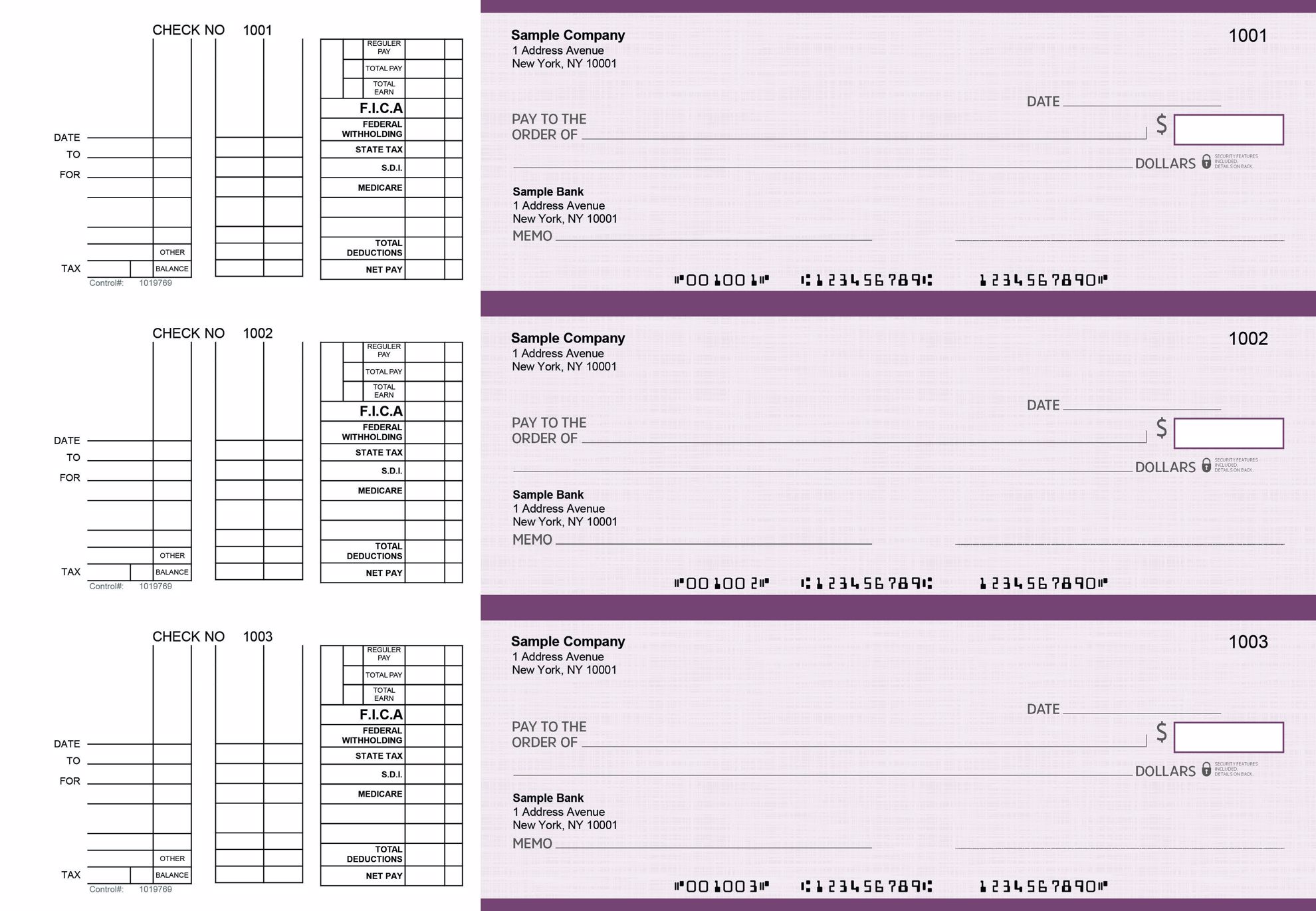
Multi-purpose business checks, three per page with detailed stubs. Payroll and vendor payments like these are untouched by the federal order, which only changed how the government itself pays.
Is the Federal Reserve getting rid of checks?
No decision to end checks has been made. In December 2025 the Federal Reserve Board asked for public comment on the future of the check processing services that the Federal Reserve Banks themselves provide to banks, including options to reduce or wind those services down. One Board member dissented, writing that checks remain important payment mechanisms.
It helps to be clear about what that review covers. It concerns how checks are cleared between banks behind the scenes, not whether businesses or people may write them. Keep an eye on official Federal Reserve announcements rather than headlines.
What about personal checks, rent and Social Security?
Personal checks are not affected by the federal order. You can still pay rent, contractors, utilities and property taxes by check wherever the payee accepts them. Research from the Federal Reserve Bank of Atlanta published in October 2026 found that about half of consumers wrote at least one check in the previous 12 months, with checks still common for rent, contractor and tax payments.
Social Security and other federal benefits are the part that did change. Recipients still receiving paper checks are being moved to direct deposit or a prepaid debit card, unless they qualify for a waiver. That affects how the government pays people, not how people pay each other.
State and local governments are outside the federal order too. Each one decides for itself whether it issues or accepts paper checks.
Why do businesses still use checks?
Businesses keep checks because they solve problems electronic methods do not always cover. The common reasons are practical:
- Not every payee takes electronic payment. Smaller suppliers, landlords and individuals often still ask for a check.
- A check carries its own paperwork. A voucher stub records the invoice, period and purpose with the payment.
- No banking details to share. Paying by check means you do not have to collect or store a vendor's account numbers.
- Control over timing. The payment goes out when the check is signed and mailed, on your schedule.
- A paper trail auditors understand. Signed checks, stubs and a register are easy to review.
The tradeoff is fraud risk. The Association for Financial Professionals' 2026 payments fraud survey reported that checks were again the payment method most often targeted by fraud. That is why the checklist below leans heavily on controls.
What should businesses do now?
A business does not need to stop using checks, but it should adjust where the federal change touches it and tighten controls where checks remain. Work through this list:
- If you sell to the government, update SAM.gov. Treasury asked federal vendors to keep their banking details current so payments arrive electronically.
- Add direct deposit to business tax returns where the IRS now offers it, so refunds are not delayed waiting for a paper check.
- Keep paying the IRS the way current instructions say, and watch for updates as mailed payments are phased down.
- List who still pays you by check and who you still pay by check, so you know where checks matter in your cash flow.
- Use check stock with security features. High security business checks make alteration easier to spot.
- Write a check signing policy. Our check signing policy guide covers approval limits and second signatures.
- Mail checks carefully and review cleared images. The check washing guide explains what thieves change.
- Keep records for the right period. See how long to keep business checks.
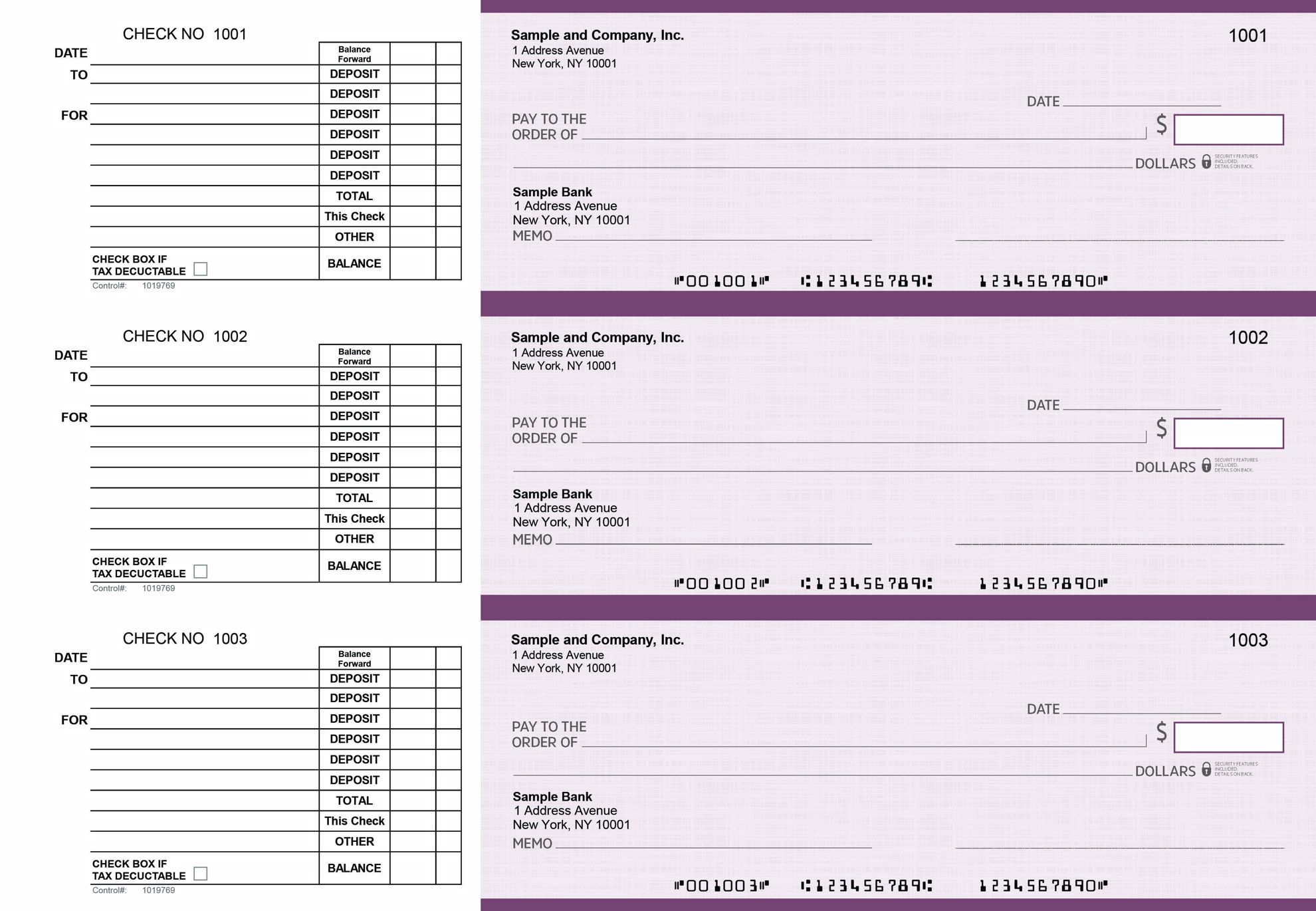
Manual three per page accounts payable checks. Handwritten business checks remain fully valid, and the stubs keep the record a business needs if a payment is questioned.
Related reading
- Types of business checks explains each format still in common use.
- High security business checks covers the features that resist alteration.
- Business checks vs personal checks explains when a company needs its own stock.
- How long it takes for a check to clear covers deposit holds and timing.
What to do next
If your business receives federal payments, make sure the government has your bank details. If it writes checks, carry on, but treat security and record keeping as part of the job rather than an afterthought.
When you need checks, computer checks for accounting software and manual business checks for handwritten payments are produced the same day for orders placed before the cutoff and shipped the next business day.
About the Author
Checks Next Day prints business and personal checks for U.S. account holders and ships them the next business day. Since the federal announcement, many customers have asked us whether their checks will still be accepted, and this guide is our answer based on the official record.
The facts here were checked against Executive Order 14247, Treasury announcements and its April 2026 proposed rule, Social Security Administration and IRS guidance, the Federal Reserve Payments Study, and research from the Federal Reserve Banks of Kansas City and Atlanta. Federal implementation is ongoing, so confirm the current rules with the agency involved.